As we step into 2026, Manchester Digital is proud to launch Picturing 2026 - a new series of essays from our members exploring the tech trends, opportunities and challenges shaping the year ahead.
In this piece, I-COM argues that 2026 will be the year organisations move beyond Operational AI towards truly Transformational AI, rethinking how audiences, products and brands are defined.
2026 is the year of Transformational AI.
➔ Audiences are no longer usefully defined by demographics
➔ Audiences are no longer usefully defined by the media they consume ➔ CMOs and CTOs are no longer usefully defined by the marketing technology used ➔ Brands are no longer usefully defined by competitors
➔ Products and services are experiences
The above statements are deliberately bold - but surely that’s the point of a prediction's POV. The opportunity for Brands and organisations to transition from Operational AI to Transformational AI in 2026 is genuine.
There’s a good chance that many 2026 prediction pieces will focus on the increased role of Agentic AI in organisations, the growth in synthetic data to model outcomes and statements like ‘2026 will be the death of TV’ or ‘Black Friday will be significantly less relevant’.
All the above will almost definitely continue to grow in importance in 2026. Understanding and framing the zeitgeist at a high level is part of my job and arguably a useful perspective in a sea of sameness.
As someone who’s been around for a while and has first-hand experience in the dying days of print journalism, the early days of programmatic, the rise of Video and the emergence of First-party data solutions, whilst working at The Telegraph, BSkyB and Google, sometimes you need to look back to look forward.
Re-Introducing JTBD
Jobs To Be Done (JTBD) is a way of thinking about why people buy or use something. People don’t actually buy products — they hire them to get a job done. The most simplistic example of JTBD is that people don’t buy a drill because they want a drill. They buy it because they want a hole in the wall.
A job usually has three parts, which, when combined creates genuine competitive advantage and an unrivalled customer experience:
- Functional – the practical outcome
- Emotional – how they want to feel
- Social – how they want to be perceived
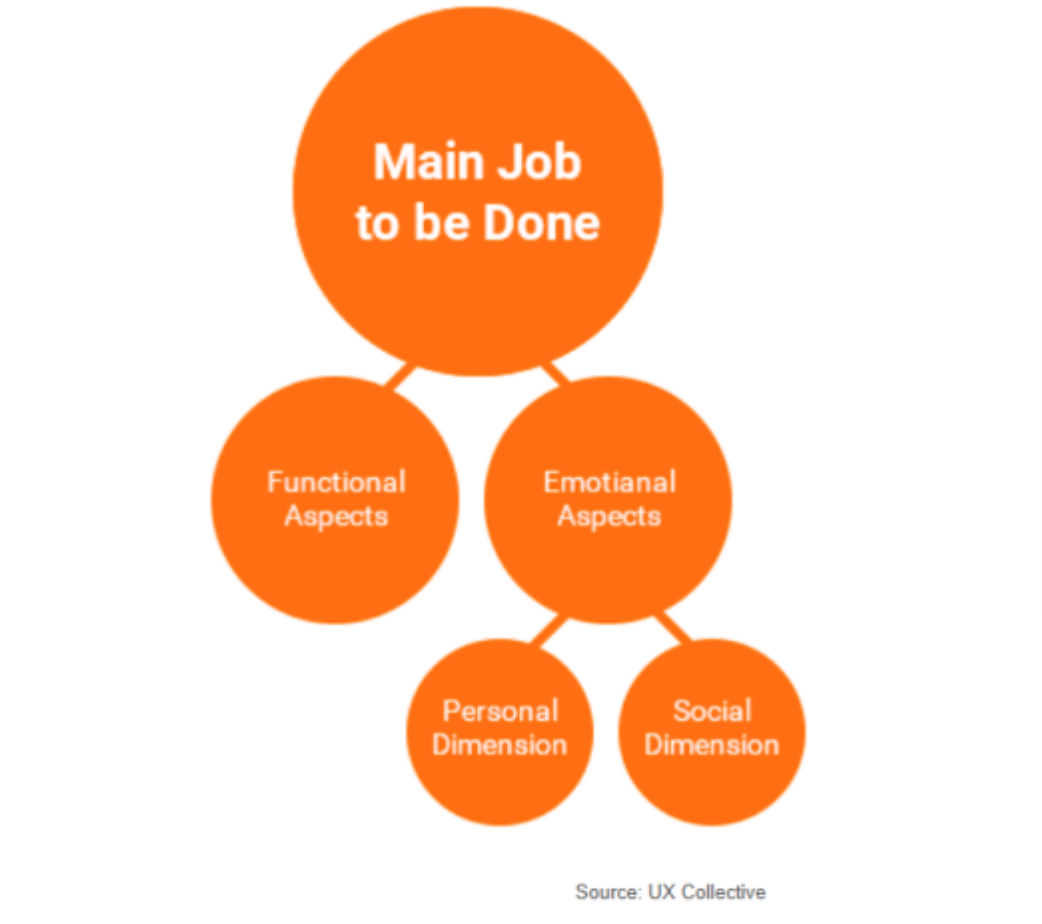
The JTBD framework enables technology and marketing stakeholders to be truly customer-centric, from product innovation to experience, and to be an enabler of cyclical growth:
- New customer growth through presenting your products and services as solutions for hire
- High level personalisation to support loyalty and advocacy
- Innovation and design inspiration from customer experience
The cumulative collaboration of data, tech and Strategy, which we can characterise as ‘Transformational AI’. 2025 was the year of ‘Operational AI’ - a focus on operational improvements, training and standardisation. JTBD is a cultural driver for business, with organisational structures, development, and L&D all interlinked.
Introducing PAE and its role in Transformational AI
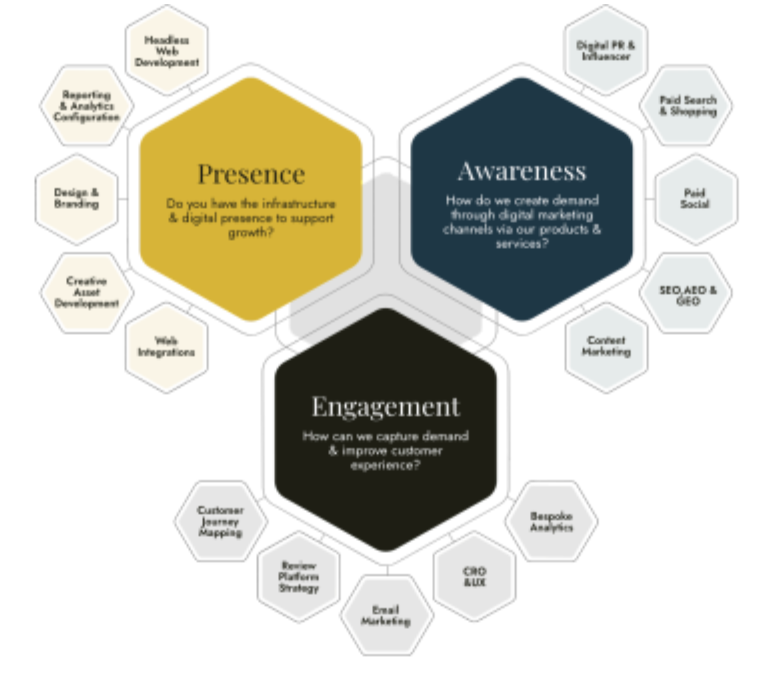
At I-COM, we focus on connected & tangible recommendations that will drive growth for brands in all sectors - PAE is our planning framework.
- Presence: Do you have the infrastructure & digital presence to support growth?
- Awareness: How do we create demand through digital marketing channels via our products & services?
- Engagement: How can we capture demand & improve customer experience? PAE works as a framework for Marketing Strategy and Marketing Delivery, which complements operational and Transformational AI. JTBD captures all of these with a focus on outcomes, growth, and customers, whilst embracing departments and individuals who are beginning to think AI-first.
 The algorithms also favour JTBD. Google is doubling down on deeper authority. The most recent core update favoured publishers and brands who demonstrate authority depth over breadth. ‘Query fan out’ is fundamentally how LLMs process a query and present results - each subquery built on authority and availability in question and answer formats. This means that the customer prompts will still be varied, and we will see prompts focus more on outcomes and recommendations than traditional search prompts.
In Summary
Whilst this is less of a prediction piece and more of a thought leadership point of view, it offers a solid near future and remarkably pragmatic approach to organisational growth - with customers and innovation at the core.
If you’ve read this far, watch this: https://www.youtube.com/watch?v=Stc0beAxavY
To find out more about I-COM click here.