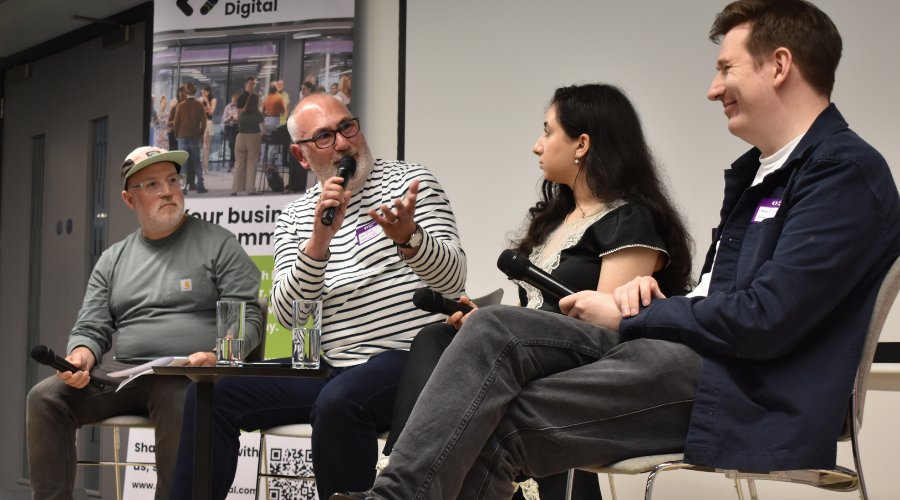
Manchester Digital hosted a lunchtime Tech Leader Talks on 11th June 2026, which was chaired by Pete Farrell, Technology Director at Autotrader. The panel topic was ‘Build, Buy or Rebuild at Scale’, which explored the ongoing challenges for engineers and tech leaders.
The panel brought together leaders from different types of tech businesses, which included: Richard Horvath, Lead Software Engineer at Lloyds Banking Group; Mariam Hussein, Software Engineer at On The Beach, an online travel agent and Chris Grice, Head of Engineering at Street Group, a property software organisation.
A key theme throughout the discussion was recognising the signals that it is time to move on from legacy software and to modernise tech stacks. Richard said the trigger often comes from customers rather than technology itself. At Lloyds Banking Group (LBG), a move to Google Cloud Platform was less about technical limitations and more about aligning with the organisation’s future direction. He said, “The decision to move actually comes from our customers. It was really good to be given breathing space to modernise our systems.”
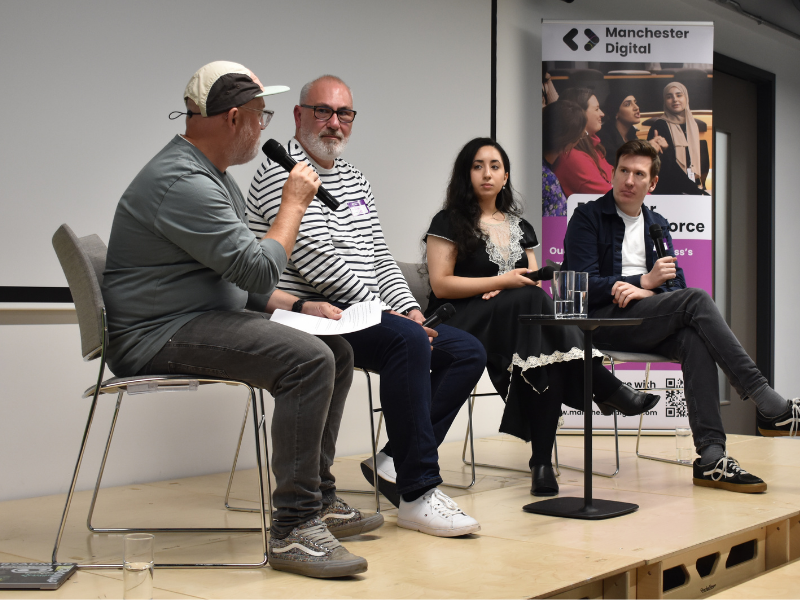 R-L: Peter Farrely (Autotrader), Richard Horvath (Lloyds Banking Group), Mariam Hussein (On The Beach), Chris Grice (Street Group)
Mariam pointed to developer experience and security as critical drivers for change. Systems built on older frameworks, such as early Ruby on Rails stacks, can become difficult to maintain or secure over time. She explained, “You don’t want to be running systems with outdated packages that you can’t update. The security layer was a key drive for us in updating our systems.”
Chris explained that with Street being a relatively new business, their challenge is different - they don’t have legacy tech but they are scaling at such a pace that growth is doubling or tripling every year. This means that early architectural decisions can be constraining, but he pointed out that you can’t scale too quickly, too early. He added, “We do need to build upfront to be load-focused, but really we just need to think about 5-10 times scaling, rather than thinking too far ahead.”
Discussion touched on bringing stakeholders on board with any upgrades or transformation. Chris and Mariam both reinforced the need for a strong narrative, effectively ‘selling’ the journey to non-technical stakeholders and bringing people on the journey with you.
Richard talked about pace of delivery, and said: “If you haven’t made the right decisions, the pace of delivery will change down the line. It can be difficult to discuss it with non-technical people but ultimately it’s important to have an open and honest conversion about the pace of delivery and ensure they understand the end benefits.”
AI’s impact was a recurring topic throughout this discussion. While enthusiasm is often high both within and outside of engineering teams, the panel agreed that its application must be considered, with the relevant guardrails, security and other checks applied.
Mariam described AI being used within On The Beach to automate content generation for hotel listings, replacing manual processes while maintaining oversight. However, she cautioned against releasing vibe-coded products into complex sectors like travel, where scale and accuracy are critical.
She expanded on this point, saying, “We’ve been challenging engineers to act more like consultants. We want to validate the proof of concept. If you want to put out an AI-built product to a customer, think about the scalability.
“When selling package holidays, the maths is insane, which involves the combination of multiple airports with multiple options of hotels. You can’t put a vibe coded product out there.”
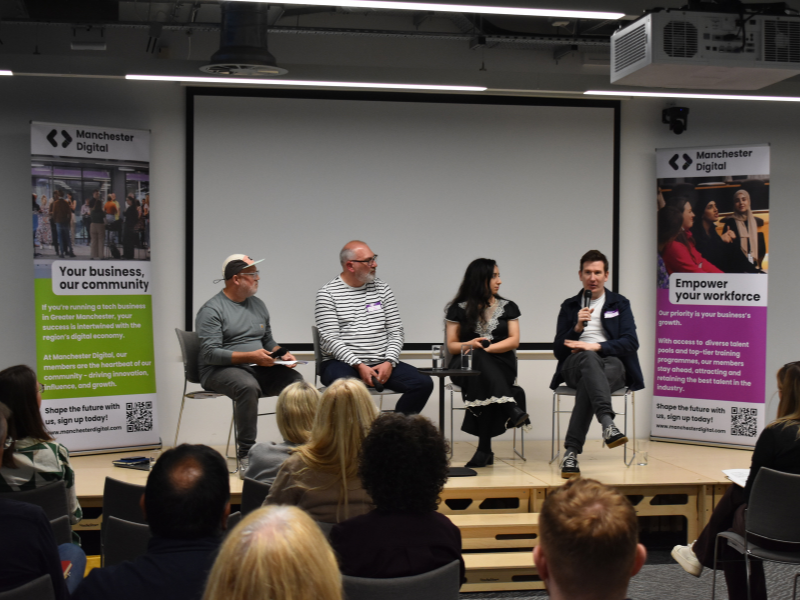 Chris Grice (Street Group) speaking at Tech Leader Talks
Chris observed that AI is reshaping team dynamics and processes. Output is increasing rapidly, but review and governance at both ends can become bottlenecks in using AI to speed up workflows. In response, his organisation is shifting towards smaller, more focused teams of two to three engineers, rather than teams of six.
Looking at the human side of engineering, Pete asked, what qualities in engineers matter the most?
Chris said that beyond the obvious technical skills, having an inherent curiosity about what the business is doing is essential. He added that resilience is also an important quality: “With AI, it’s really easy to start stuff, but harder to finish it.”
Moving onto how you measure effectiveness in teams, Richard said, “It’s not about what you can measure, it’s about ensuring the happiness of the team. As a manager, I have to protect my team to make sure they are happy in order to get the most out of them.”
Mariam added, “I like the concept of the ‘North Star’, which ensures everyone is aligned to a long-term vision. Everyone on our team should know what their role is and what they’re working towards. I want an autonomous team, and we allow people to want to improve products because they have found difficulties with them.”
In their closing reflections, each panellist shared lessons they’ve learned that they wish they’d known earlier.
Chris wished he understood the importance of understanding cloud boundaries and system limits early because that has caused them issues along the way.
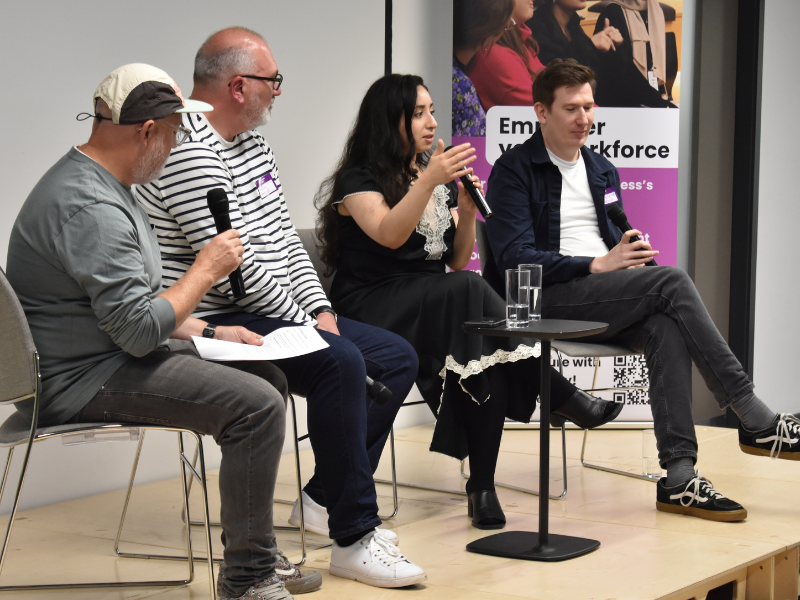 Mariam Hussein (On The Beach) talking at MD Tech Leader Talks 26
Mariam said she has learned that you can just change things if it doesn’t appear to work, you don’t have to stick to the original plan. She also wished she’d known that you have to bring people along on the journey with you to gain buy-in.
Richard said he wished he understood how and when leaders make decisions. He added that he’s really passionate about the next generation of software engineers, and said that he wanted people to listen more to the young talent coming in.
Ultimately, the discussion made clear that there is no universal answer to the build, buy, or rebuild question. Success lies in understanding context, embracing trade-offs, and leading both teams and stakeholders through complex projects with clarity and purpose.