There's a moment in The Curve's new report where a law firm owner compares the future of professional services to the shift from vinyl to streaming. If AI eventually commoditises the easy output, he argued, the thing left standing is the deliberately human, boutique relationship that clients actually choose. Not the result. The relationship.
It's the kind of observation that doesn't show up in vendor decks or conference keynotes. It shows up when you put twenty senior leaders in a room, take away the sales pitch, and ask them what's genuinely happening with AI inside their organisations.
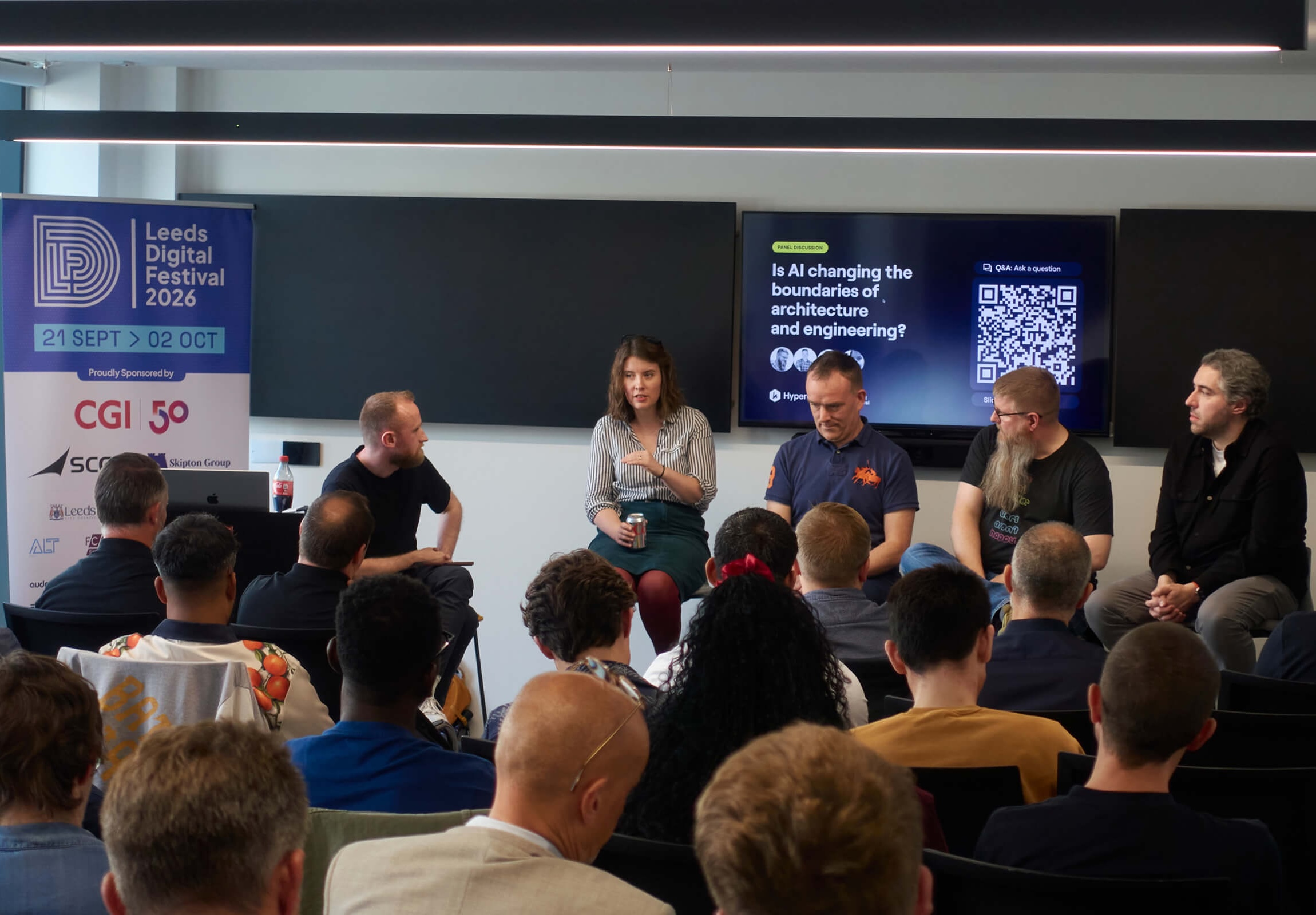
That's what The Curve did. Two roundtables, one in Sheffield and one in Leeds, bringing together leaders from law, financial services, professional and creative services, technology, retail, property, and the public and third sectors. No hype, no vendor agenda. Just an honest conversation about what's working, what isn't, and where the real difficulty lies. The result is a report called The AI Reality Check, and it's worth your time for one simple reason: most AI content is written by people selling something. This is closer to a transcript of what leaders actually say when nobody's pitching them.
The Question Has Already Moved On
The headline finding is the most useful one. For these organisations, AI adoption isn't a question anymore. The conversation has already shifted from whether to how.
A law firm has spent two years running AI transcription straight into its case management system, freeing lawyers to focus on the conversation rather than the file note. A funeral services operator now runs AI photo quality control across tens of thousands of services a year. None of it was a dramatic transformation. It was narrow, specific, unglamorous work, proven quietly before it was trusted, then extended.
That pattern repeats across every example in the report, and it's the clearest signal of where the leaders furthest ahead actually differ from everyone else.
The Part Nobody Talks About Publicly
Here's where it gets genuinely useful. Once an organisation gets past individual wins, the leaders described hitting the same wall: turning scattered, individual value into something coordinated is dramatically harder than the first step.
A procurement specialist in the room laid out the wasted spend bluntly. Licences bought and never used. Capable tools running on hardware too old to support them properly. And underneath all of it, something they called shadow AI. When people aren't given a good tool, they don't wait for one. They find their own, usually a free consumer tool sitting completely outside any policy, and company data starts getting pasted into systems the business can't see and doesn't control.
"If you do not give people good, approved tools, they will find their own." That line alone is worth the download.
What Genuinely Surprised Us
Not every insight in the report points where you'd expect. In one creative agency, it was the younger staff pushing back against AI on ethical grounds, while older colleagues embraced it. Elsewhere, the resistance came from senior technical staff, worried about what it meant for their own roles.
And one governance question stayed completely unresolved in both rooms: how do you train junior staff to spot when AI is wrong, when they don't yet have the experience to recognise a plausible-sounding falsehood? As one leader put it, "you don't know what you don't know." Nobody had an answer. That kind of honesty rarely makes it into a polished case study, which is exactly why it's worth reading in full.
The Money Conversation Is Coming
Measurement is still immature almost everywhere. Most of the organisations represented are tracking time saved by hand, not real business outcomes, and that's about to change fast as AI tooling gets more expensive and finance teams start asking harder questions.
One insight from the finance-background leaders in the room cuts right to it: efficiency only pays off if the time it frees gets converted into actual value. Otherwise, the business just quietly absorbs the cost of its AI tools and erodes its own margin without noticing. The report calls this an efficiency tax, and it's a phrase worth remembering.
There's also a sharp, practical warning buried in the commercial section about businesses rebuilding expensive software subscriptions internally using AI, and exactly where that becomes a legal and security risk rather than a saving. It's the kind of detail that only comes from leaders who've actually thought it through, not from a generic AI explainer.
Why This Is Worth Reading in Full
What's above is a fraction of what's actually in the report. The GP burnout story that reframes what happens to professional services when AI strips away the easy work and leaves only the hard cases. The specific golden rules one regulated firm has used to run a generative AI policy for two years without a single high-profile failure. The full breakdown of how data sovereignty decisions get made in practice, not in theory.
If you're a senior leader trying to work out whether your organisation's approach to AI is ahead of the curve or quietly behind it, this report is the most honest benchmark currently available. It's free to download, and it's considerably more useful than another AI explainer written by someone who's never sat in a room like the ones The Curve convened.
Download The AI Reality Check to read the conversations in full.