By Katie Gallagher OBE
It’s been a busy week at Labour Party Conference in Liverpool, with technology, growth and devolution featuring heavily in many of the conversations we’ve been part of.
In his first Conference speech as Prime Minister, Andy Burnham talked about devolving more power to places, backing businesses to grow and taking some of what has worked in Greater Manchester into a wider national approach. He also confirmed that AI will be a central focus of the UK’s G20 presidency next year, with the G20 Leaders’ Summit taking place in Manchester in 2027.
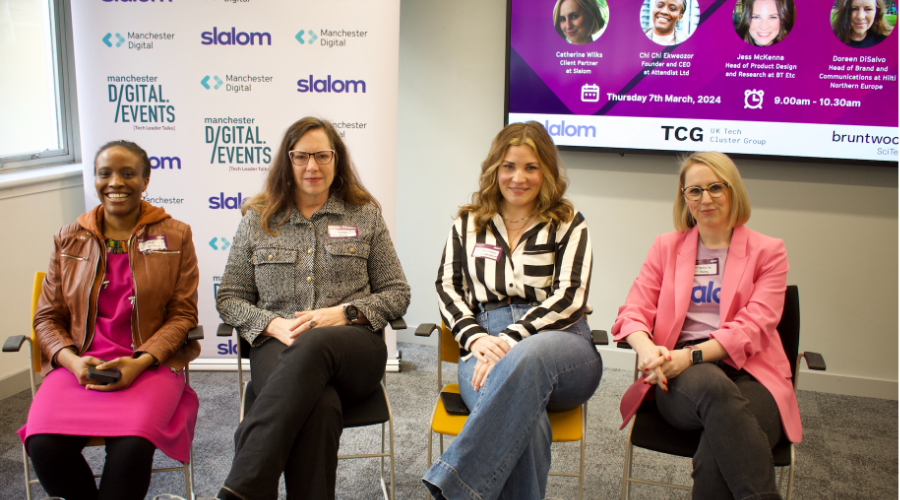
That felt particularly relevant following an event we hosted through the UK Tech Cluster Group with AI Minister Kanishka Narayan, North East Mayor Kim McGuinness and other regional leaders, looking at AI, devolution and local growth.
One of the clearest themes from the discussion was that devolution should not mean every place trying to build the same thing. Different regions have different strengths, assets and specialisms, and there was a strong view that greater collaboration between places could create bigger opportunities for UK businesses and the economy as a whole.
Procurement and buying local also featured strongly. The discussion highlighted the role public sector buying power can play in supporting regional businesses, helping successful pilots move into commercial contracts and strengthening UK capability in areas such as AI and cyber.
There was also a broader conversation about sovereignty and the UK’s role internationally. The discussion was not about trying to own every part of the AI stack, but about understanding where the UK already has genuine capability and where it makes sense to build more. Strengths in AI safety and security, cyber, chip design, research and advanced computing were all part of that picture. The UK’s early leadership on AI safety also prompted an interesting discussion about whether it can play the role of an honest broker internationally, particularly as countries grapple with questions around governance, human control and the pace of development.
Digital inclusion was another important part of the conversation. As AI adoption accelerates, there is a real risk that existing divides become wider, particularly for people and businesses already furthest away from technology. Skills, access and adoption therefore need to move together.
For Manchester, the discussion also raised some very practical questions about what comes next, the new government campus planned for Ancoats, will bring together around 8,800 civil servants from a number of departments, with a major focus on digital delivery and capability.
There was a strong sense that developments like this can do more than provide office space. The new government campus – officially the Manchester Digital Campus – could become an exemplar for how government investment supports innovation, start-ups, scale-ups and regional businesses, while creating better routes into procurement and making it easier for local companies to work with government.
Manchester Digital has a role to play in helping shape that, making sure the campus connects properly into the existing ecosystem and reflects the strengths, needs and opportunities already here, rather than creating something that sits alongside them.
With Manchester hosting the G20 in 2027, there is a real opportunity to connect some of these conversations, from what we build locally and how regions work together to the role the UK wants to play internationally.