Manchester Digital’s MD Future 26 conference brought together industry leaders, academia, founders, investors and policymakers, to look at the businesses and technologies shaping the next phase of the region’s tech economy.
Held at Campfield Studios, the newly restored former Victorian produce and exhibition hall, which was completed at the end of the city’s Industrial Revolution, the venue offered a striking backdrop for discussions about Manchester’s role in today’s AI and digital transformation.
Across a day covering physical AI, infrastructure, cyber security, health, space and quantum, some clear themes came through. The next phase of AI is likely to be much less about what a model can demonstrate on a screen and much more about whether businesses can deploy it securely, affordably and reliably in the physical world. That brings infrastructure, energy, data, skills and sovereign capability much closer to the centre of the conversation.
There is also an opportunity for Manchester and the wider North that goes beyond simply increasing AI adoption. The region already has strengths across advanced materials, computing infrastructure, cyber security, health innovation and emerging technologies such as quantum. The challenge is how we connect those assets and turn them into economic advantage for the region.
The previous day also saw an Innovation Day, where 20 of the region’s most innovative startups pitched to the biggest organisations working across defence, national security and technology, then took part in a number of Round Table discussions.
Here’s our write up of the full day’s conference:
AI Needs a Physical World
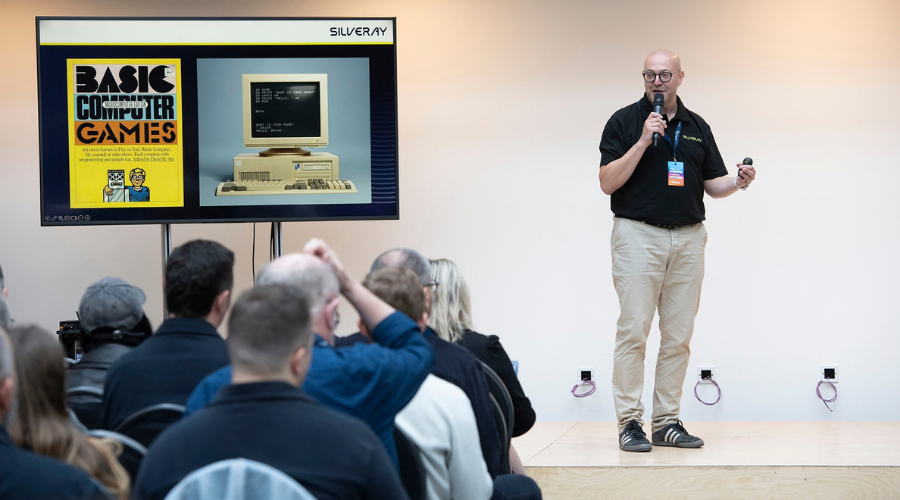
In his keynote, Silveray co-founder and CEO Dan Cathie argued that AI’s next revolution will move beyond screens and into the physical world. Dan traced the rapid evolution of transistors, processors and digital storage since the 1960s, framing today’s AI boom as the result of decades of expanding computing power and data creation.
He suggested that intelligence is no longer the primary constraint - the next challenge is enabling systems to sense, experience and respond to the real world in real time.
Dan positioned Silveray’s ultra-thin, flexible X-ray imaging technology, developed from semiconductor research, as part of this shift. The Manchester-based deep-tech company is creating digital X-ray film for medical and industrial radiography. As he put it, “The first generation of AI learned to talk, the next generation must learn to act and to act effectively, AI needs a physical world.”
Frontier Spotlight: CASA Space Technologies
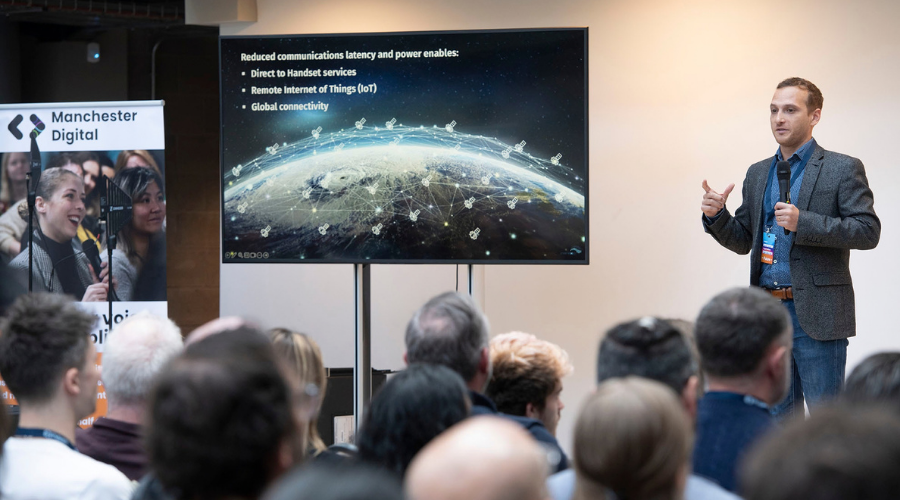
Dr Nick Crisp, co-founder at CASA Space Technologies, explored the potential of very low Earth orbit (VLEO), the largely untapped region around 200–450km above Earth. Operating closer to the planet could enable higher-resolution imagery, improved global communications and IoT services, plus new defence and national-security applications.
One of the challenges of operating in VLEO is the denser atmosphere, which creates drag that pulls satellites out of orbit, while atomic oxygen erodes spacecraft materials. CASA Space Technologies is tackling this through advanced 2D coatings, developed from research at the University of Manchester.
This initial research was involved in the launch of the SOAR satellite in 2021, Manchester’s first university-designed and operated satellite, which helped prove commercial readiness. Dr Crisp described VLEO as a new frontier, with the potential to unlock a trillion-dollar terrestrial market.
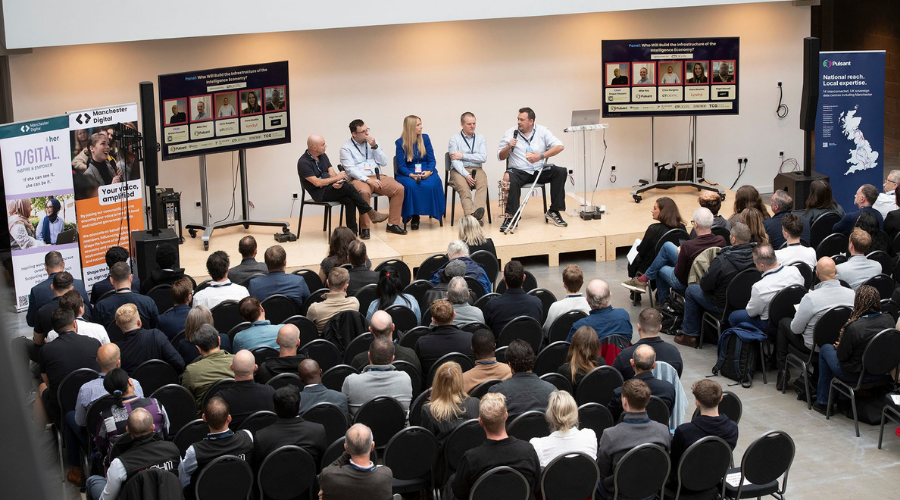
Panel: Who Will Build AI Infrastructure?
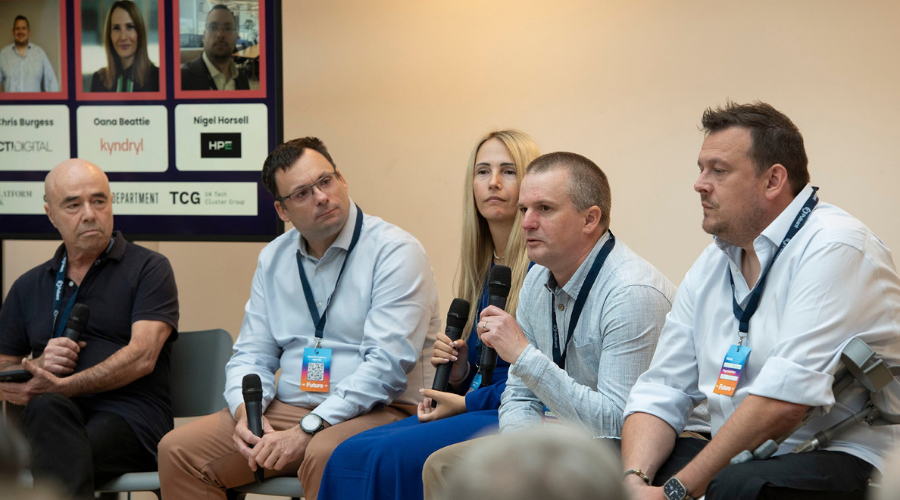
Chaired by Secretary and Founding Director of Manchester Digital and Secretary-Director of Co-operative Network Infrastructure Shaun Fensom, the panel examined the physical, digital and governance foundations needed for an intelligence economy.
The panel included: Nigel Horsell, Private Cloud AI Leader UK, Ireland, Middle East & Africa from HPE; Oana Beattie, VP Data and AI at Kyndryl; Mike Hoy, CTO at Pulsant and Chris Burgess, CEO at CTI Digital.
Speakers argued that AI infrastructure is more than data centres and includes fibre, data storage, skills, governance, resilience and clear ownership of intelligence.
However, the panellists warned that before spending money on AI, organisations must first define why they need AI, where their data sits and what capabilities they need to control. Skills and capability debt were identified as major barriers, alongside siloed decision-making.
The North could play a leading role, with Manchester a key data-flow location. However, local infrastructure must be sustainable, transparent about energy use and designed to deliver public value.
Frontier Spotlight: Sineco
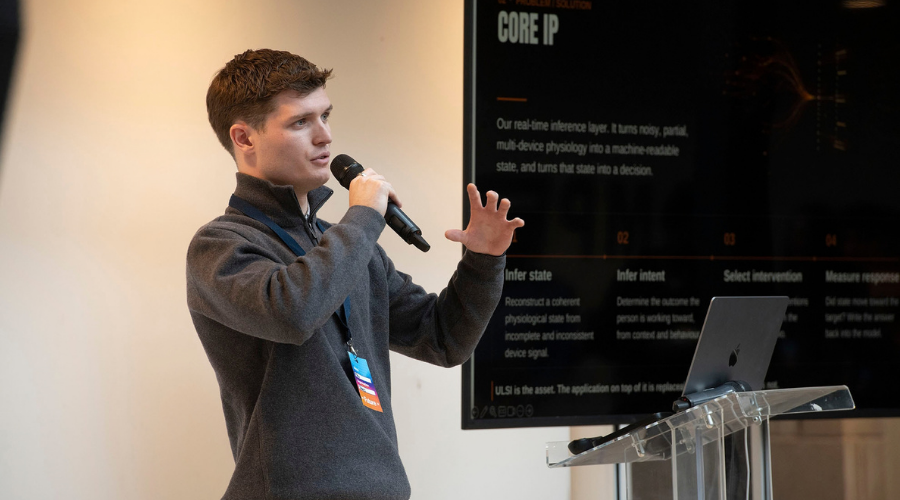
Ben Etches, Founder at Sineco outlined a platform designed to connect people and technology at a physiological level. Sineco uses wearable-device data to infer a user’s real-time state, select an appropriate intervention, such as music, and measure their response.
With wearable adoption growing, including among younger adults, and music already central to many people’s exercise routines, Sineco sees a rich data source for training and scaling its models.
Initial applications focus on running and fitness, where accessible participation continues to grow. However, the company sees wider potential in logistics, such as for identifying driver fatigue; gaming, through adaptive haptics and arousal management, and potentially healthcare by helping monitor how patients are feeling.
Beyond Today’s AI
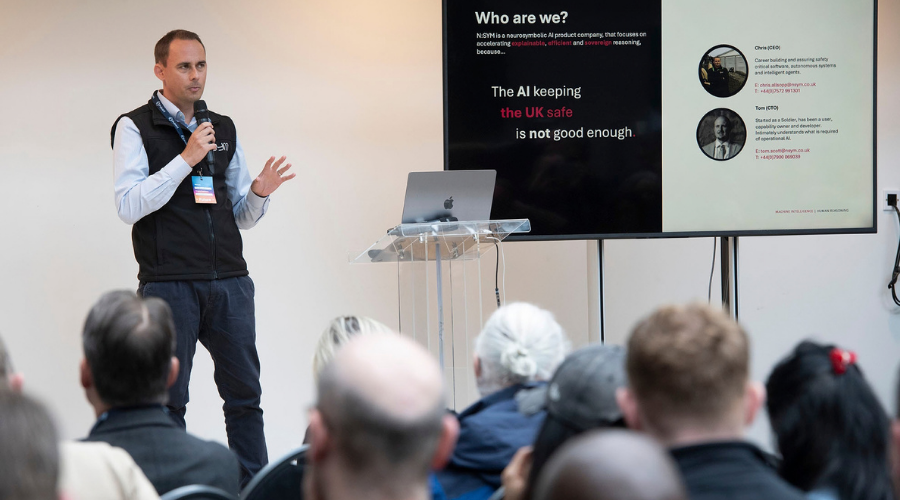
N:SYM CEO Chris Allsopp and CTO Tom Scott called for a UK approach to AI that is sovereign, explainable and suitable for mission-critical use.
Rather than competing to build a UK frontier model, Chris urged the country to build on its strengths: engineering talent, efficiency, collaboration and balanced regulation. With constraints around land, water, energy and raw materials, the UK should focus on AI that reflects national needs and values.
Tom outlined N-Sym’s response with neurosymbolic AI. The company has developed their product BeliefNet to provide a more trustworthy alternative to conventional neural networks. Their call to action was for industry, academia and government to identify the AI capabilities the UK should own and build collectively.
Panel: AI Integration: Beyond the Pilot
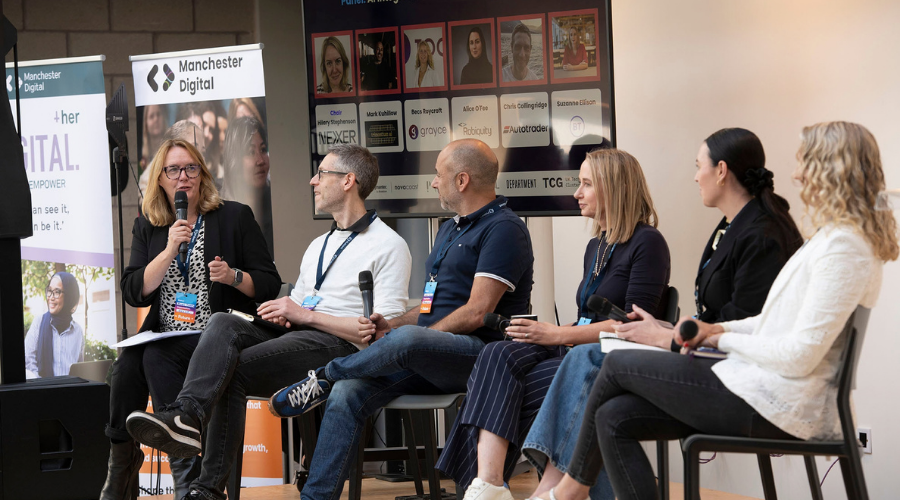
Chaired by Nexer Digital Managing Director Hilary Stephenson, the panel included: Chris Collingridge, Product and Technology Director at Autotrader; Mark Kuhillow, Founder at Trimontium AI; Suzanne Ellison, Strategy and AI Director at BT Group; Alice O’Fee, Delivery Lead at Robiquity; Becs Roycroft, CEO at Grayce.
The panel agreed that organisations often remain stuck in AI pilot mode when they prioritise experimentation over a defined business problem, measurable value and workforce adoption. Becs said, “The problem is that it's like the Wild West, some people are loving it, while other people are fearing for their jobs.”
Suzanne Ellison stressed the importance of starting with the problem, rather than AI hype, citing complaint-resolution delays as an obvious value case example.
Panellists also highlighted the importance of good governance, data foundations, investment and ROI tracking.
Frontier Spotlight: ARIA Therapeutics
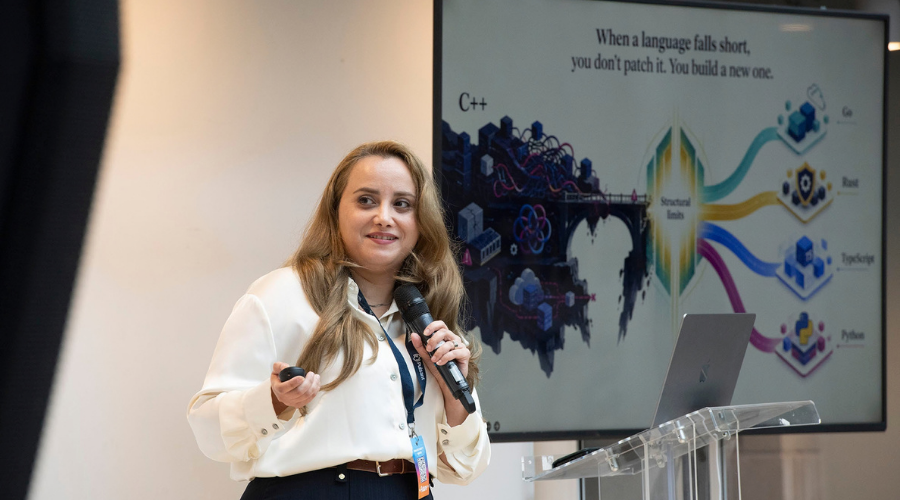
Shiva NickAria, translational TechBio scientist and founder of ARIA Therapeutics, discussed using machine learning to design a new generation of precision cancer therapies. While AI is accelerating molecular discovery, she cautioned that better-designed candidates do not automatically translate into better clinical outcomes.
ARIA’s approach aims to move beyond fragmented datasets and single-mechanism drug design towards “programmable” precision therapeutics. The company is developing context-aware interventions intended to respond to the complexity and adaptability of cancer biology, beginning with liver cancer, where it sees particularly strong biological evidence.
Shiva argued that the sector is entering a new phase. Rather than simply observing biology, researchers can increasingly model it and design targeted interventions. “When a language falls short, you don’t patch it. You build a new one,” she said, positioning ARIA’s work as an effort to create a new class of therapeutic modalities.
Securing the AI Frontier
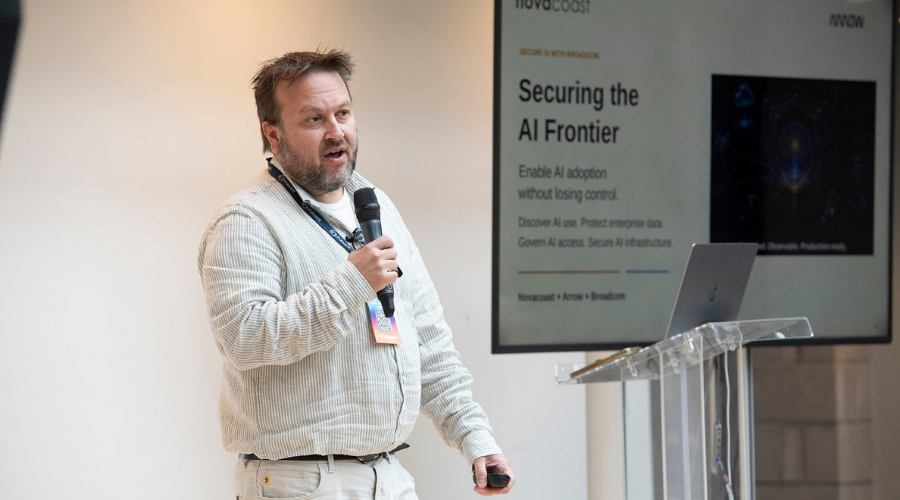
David Ramazetti, Director of Security Services at Novacoast, argued that organisations must secure AI on two fronts: everyday workforce use and enterprise AI embedded in business operations. While workforce AI includes familiar tools for tasks such as drafting emails, enterprise AI covers applications, agents, APIs and private platforms.
Novacoast’s proposed secure AI control fabric connects users, endpoints, cloud tools, data, networks, agents and security operations to support discovery, protection, governance and ongoing oversight. A key first step is identifying shadow AI, unapproved tools being used without visibility.
Organisations must understand who is using AI, protect sensitive data before it enters external systems, and implement clear permissions, usage limits and audit trails. AI agents should receive tightly scoped, time-bound and auditable access rather than broad, permanent authority.
Frontier Spotlight: SeeChange Technologies
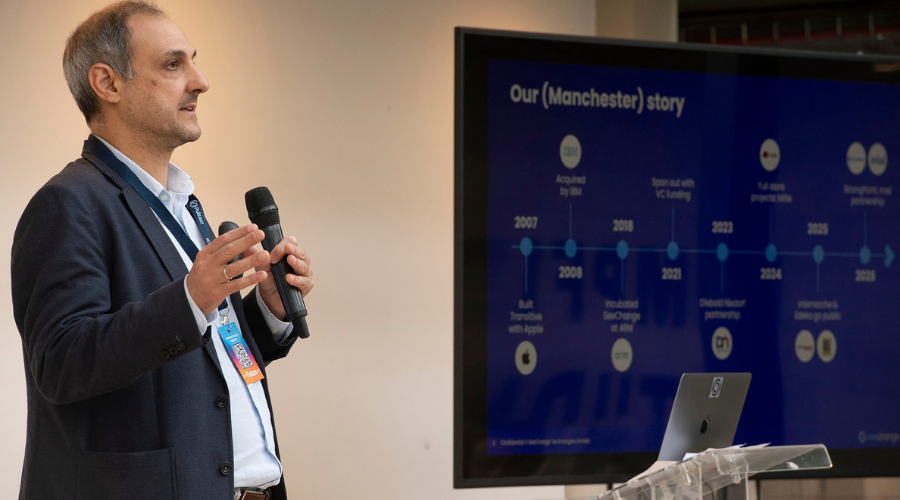
SeeChange founder and CEO Jason Souloglou explored the shift from vision AI to physical AI, embedding intelligence into cameras and sensors so they can trigger useful real-world action. Originating in Manchester through an IBM and Arm spin-out story, SeeChange is applying computer vision across retail, hospitality, banking, gyms and casinos.
Jason emphasised that operationalising AI is far harder than demonstrating it. Early slip-hazard systems, for example, had to distinguish real spills from floor markings, stickers and even shiny shoes to avoid false alerts.
Successful physical AI, he said, requires balancing three factors: accuracy, latency and cost. SeeChange’s approach can use lightweight, always-on processing to detect an event before activating more powerful computing resources, reducing costs and energy use.
Jason concluded that physical AI will become widespread, making responsible global collaboration essential.
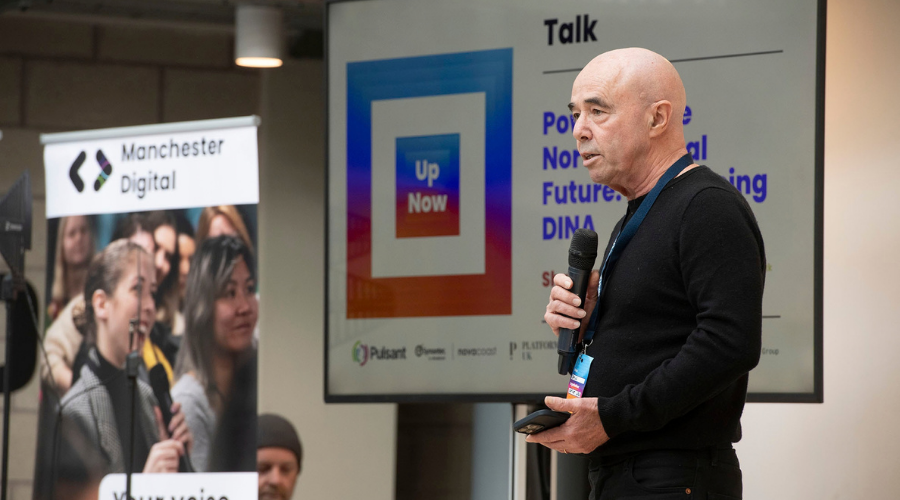
Powering the North’s Digital Future - introducing DINA
Shaun Fensom introduced the Digital Infrastructure North Alliance (DINA), a new collaboration focused on addressing the UK’s over-reliance on digital infrastructure in the South East.
He argued that this concentration presents a growing national resilience risk as the UK faces pressures including climate change, geopolitical conflict and rising digital demand. DINA’s proposed solution is collaboration and making better use of existing northern capacity, revitalising underused or decommissioned sites, and distributing computing demand more evenly across the country.
A stronger Northern infrastructure base, powered where possible by renewable energy and designed to support public-sector needs, could improve UK resilience while creating jobs, investment and economic growth beyond the South East.
Panel: What comes after AI? The next computing revolution
The final panel of the day was chaired by MMU’s Professor Jenny Shorely, and along with PsiQuantum’s Celia Cattelain and the Science and Technology Facilities Council Professor Kate Royse, they explored quantum computing as a potential next computing revolution.
Celia stressed that quantum computing is not simply a more powerful version of today’s machines, but a fundamentally different approach to classical computing systems, adding that it will complement rather than replace either conventional computing or AI.
Kate highlighted early commercial interest, including work with AstraZeneca. With drug development commonly taking around a decade, even a 10–20% improvement in selecting promising compounds or removing a stage from the workflow could have major impact.
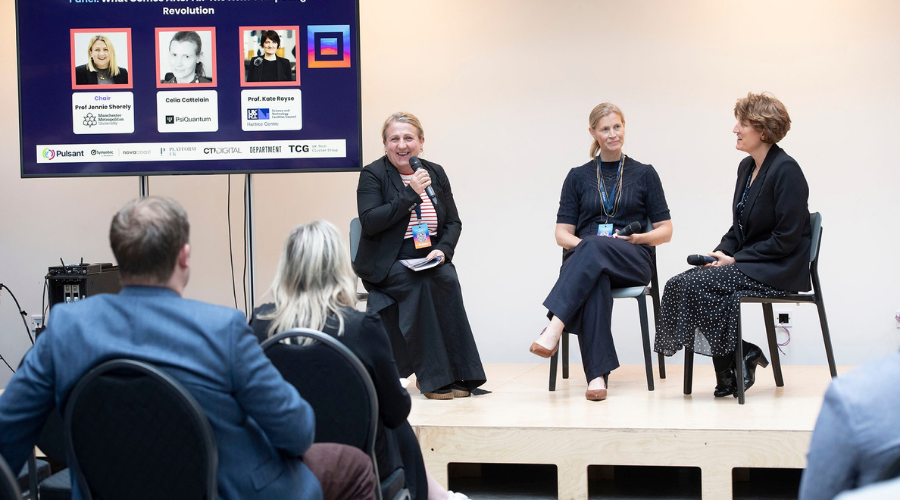
Celia explained quantum in layman’s terms, saying, “AI is big data, small computer; quantum is small data, big compute.” However, scalable quantum systems will require substantial infrastructure and investment, rather than desktop deployment.
The UK is well positioned globally, Celia argued, with policy measures supporting sovereign capability and infrastructure. Future skills needs will be based around physics and mathematics, as well as engineering.

What came through strongly during the day was that businesses now need to get beyond experimenting with AI and work out where it can genuinely make a difference. That means being clear about the problem they are trying to solve, whether there is a measurable return, and what skills, infrastructure and capability they need to build or retain themselves.
For Manchester and the wider North, the question is how we turn our existing strengths into more companies, more investment and more high-value jobs. That means better connecting our research, businesses, infrastructure and investment, and being clearer about the areas where the region has the potential to lead rather than simply participate.
We’d also like to say a huge thanks to sponsors Pulsant and Novacoast, plus CTI Digital and Platform Markets Group, and to Department for hosting us at Campfield Studios and to the UK Tech Cluster Group.
Our next event is Tech Leader Talks on 1st October, sponsored by Codurance. The topic is ‘From AI ambition to action - delivering measurable ROI. Aimed at senior leaders, this discussion will offer a candid view of decisions, foundations and trade-offs involved.
Sign up here: https://luma.com/5qqqfld6