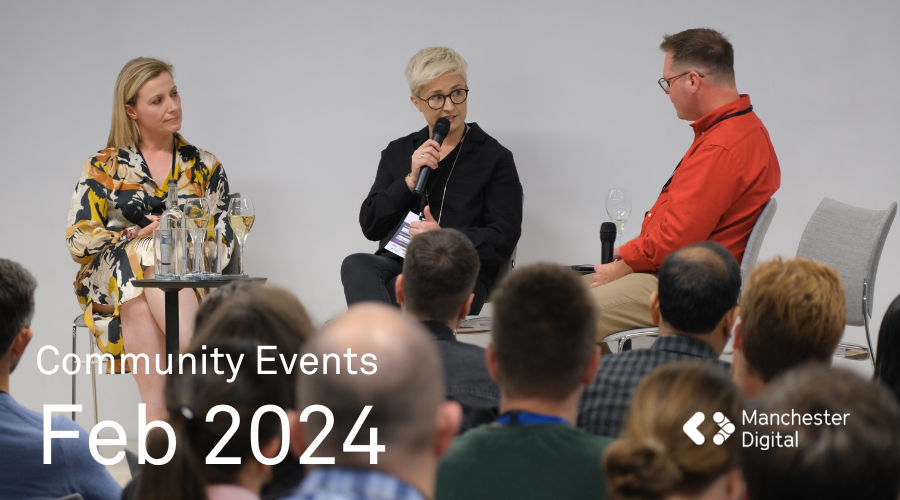
With the future of devolution, AI policy and regional growth firmly on the agenda, Manchester Digital Managing Director and UK Tech Cluster Group Chair Katie Gallagher OBE recently spoke to The Startup Coalition about what the next phase could mean for Manchester and the wider North.
From the potential impact of greater devolved powers in Manchester to the role of No.10 North, Katie explores how national and regional government can work more effectively with the tech sector - and why the North’s different tech ecosystems need to be better connected rather than treated as one homogenous market.
Andy Burnham has proposed a decisive expansion of devolved government power in Manchester. From a policy perspective, how do you think greater devolution will influence Manchester's tech ecosystem?
Greater devolution will be positive for Manchester’s tech ecosystem. It already has a strong tech base and devolution gives us a chance to align policy, funding and delivery more closely with what is happening on the ground.
To do that well, Combined Authorities and others need to understand that ecosystems are much broader and deeper than most public-facing institutions realise, that matters if they are going to make good decisions on skills, infrastructure, procurement and innovation support.
AI and emerging technologies clearly need focus because their impact will be felt across every part of the economy, but policy needs to keep pace with how those technologies are being used by businesses. Government and Combined Authorities will have more impact if they understand where the technology is heading, but focus their energy on the practical levers that help startups and the wider business community adapt, adopt and grow.
The new Digital Campus in Manchester is a good example of where this could become practical; a larger concentration of public sector digital capability in Manchester should create new routes for startups and scaleups to work with the government. It should mean earlier engagement with innovative suppliers, better access to public sector problems, data and procurement routes that smaller companies can navigate.
Devolution will be judged on whether it creates clearer routes for businesses, better use of funding and more joined-up delivery, rather than another layer of process. The Government is not known for its speed or adaptability in decision-making and both are needed to keep pace with a fast-moving tech industry.
What has the feedback been like from founders in Manchester about him becoming Prime Minister?
Founders are not all looking at this through a party-political lens, but the general sense is that Andy has been positive for the region. He has been supportive of the sector, interested in what businesses are building, and has helped ensure that tech and innovation are treated as regional priorities.
There is hope that he would carry that same enthusiasm into any national role, particularly if it meant a stronger focus on how AI, tech and innovation can support growth outside London.
The FT reported this week that Burnham's team is drafting a new AI strategy organised around a phrase they have been testing, making tech work for people. It has drawn a sharp response from parts of the founder community, some of whom read it as a turn away from the sector. The phrase is worth holding to a test, does it help businesses across the economy adopt AI well, improve productivity, create better jobs and open up new markets for UK tech companies?
For founders that means practical, high quality support they can navigate easily, including access to capital, customers, talent, data and procurement.
Manchester's tech sector has flourished in recent years. How do you envision No.10 North impacting the wider startup ecosystem across the North?
I am a strong believer in the role tech ecosystems can play in delivering wider prosperity. Strong regional ecosystems help create businesses, attract investment, develop talent and give people a route into the opportunities being created by new technologies.
The North is not one ecosystem. Manchester, Leeds, Liverpool, Sheffield, Newcastle, Hull and other places all have different strengths, characteristics and challenges. The aim should not be to flatten those differences into one generic northern offer, but to make sure there is much better connectivity and coherence between them.
That is where No.10 North could make a real difference. It should not just be about moving part of Whitehall to Manchester, it should change how national government understands and works with places and businesses outside London.
Businesses do not grow neatly within administrative boundaries; founders need access to the right investors, customers, supply chains, talent and support, wherever those relationships sit. Regional tech clusters already help make those connections, so businesses can scale from the places where they are based rather than feeling they have to move closer to London to access opportunity.
No.10 North should also help connect and integrate national programmes more deeply with the regional ecosystems they are trying to support. If organisations such as Innovate UK and ARIA work more closely with trusted regional ecosystem organisations, including UK Tech Cluster Group members, founders across the North will have better routes into support, funding, customers and partnerships. That would make public investment work harder and help avoid national programmes reaching only the companies that are already visible.
The same applies to AI Growth Zones and Tech Towns, rather than sitting in separate silos they need to be aligned around regional strengths, business demand, infrastructure, skills and long-term ecosystem capacity.
The opportunity is to use Manchester’s profile to build a more connected northern innovation economy, where each place can build on its own strengths and benefit from the strengths of others.
This interview originally appeared here.