If something in your Microsoft 365 tenant flagged a data risk tomorrow, do you know whose job it is to decide what happens next?
Most SMB IT managers don't. And most assume that's fine, because nobody's ever actually asked the question.
Microsoft Purview gets switched on, policies get left on default and the "who decides" part just never gets assigned to anyone.
The CloudGuard POV
you don't need a CISO or a Data Protection Officer to fix this (although it helps). You need someone in each part of the business who owns their own data, and a straightforward way to find out who that should be.
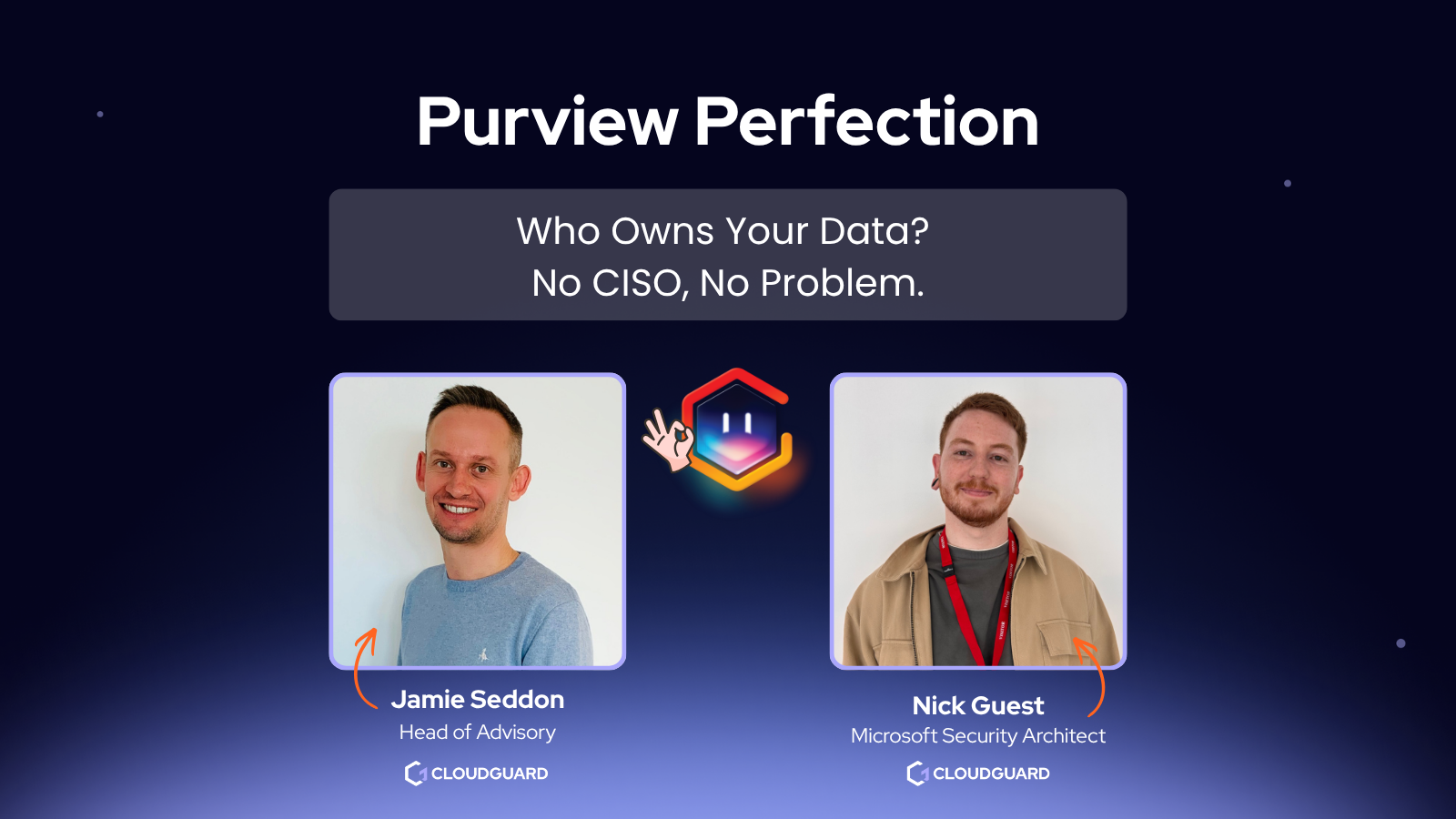
𝐈𝐧 𝐭𝐡𝐢𝐬 𝐬𝐞𝐬𝐬𝐢𝐨𝐧, 𝐲𝐨𝐮𝐫 𝐏𝐮𝐫𝐯𝐢𝐞𝐰 𝐊𝐢𝐧𝐠𝐬, 𝐍𝐢𝐜𝐤 𝐚𝐧𝐝 𝐉𝐚𝐦𝐢𝐞 𝐛𝐫𝐞𝐚𝐤 𝐝𝐨𝐰𝐧:
• Why "just turn it on" fails without an owner assigned first
• How to assign data ownership across departments, without hiring anyone or creating a new role
• The exact questions that get a straight answer out of someone (asking "what data do you have?" won't get you one, and we'll show you why)
• What this looks like if you already have a CISO or DPO in place, and where the model overlaps either way
• A clear action you can take this week, whatever stage you're currently at
𝐖𝐡𝐲 𝐬𝐡𝐨𝐮𝐥𝐝 𝐲𝐨𝐮 𝐜𝐚𝐫𝐞?
Purview without owner is 𝐧𝐨𝐭 𝐩𝐫𝐨𝐭𝐞𝐜𝐭𝐢𝐨𝐧. Get this wrong and you don't just waste the licence spend, you get sensitivity labels nobody applies, DLP alerts nobody reviews, and no one who can actually say what's sensitive and what isn't.
This is not just an enterprise-only problem.
If different parts of your business hold different kinds of sensitive data (and they do), the risk doesn't wait for you to have a governance team in place.
We're here to give you a straight up & practical walkthrough, from our Purview experts who help SMBs assign data ownership and roll out Purview every day.
If you're the person responsible for IT and security at your business, and nobody's ever laid out who's actually meant to own this, CloudGuard have got you covered!
Missed our last session on Microsoft Purview Licensing? Check it out.