When a business needs a video, one of the first decisions is whether to hire a freelance videographer or work with a video production company.
At first glance, the choice seems straightforward. Freelancers generally have lower day rates, while production companies offer a larger team and a more comprehensive service. If the budget is tight, hiring an individual can appear to be the obvious option.
But the day rate only tells part of the story.
The right choice depends on the complexity of the project, the number of deliverables, the deadlines involved and what happens if something goes wrong. For businesses across Greater Manchester, understanding these differences can help prevent unexpected costs and ensure the finished content delivers genuine value.
At Title Productions, we work across video production and wider creative media. Here is how businesses can decide which approach makes the most sense for their next project.
What Does a Freelance Videographer Really Cost?
A freelancer can be an excellent choice for a straightforward production.
If you need a customer testimonial, a talking-head update, a short interview or basic event coverage, an experienced freelance videographer may be able to handle the filming and editing without requiring a larger crew.
As an indicative planning range, a solo shooter-editor might charge around £300–£600 per day, depending on experience, equipment, location and the scope of the work. Actual quotes will vary, so businesses should confirm what is included before committing.
The advantages are clear: direct communication, flexibility and fewer people involved in the production process.
However, a freelancer's quote needs to be considered alongside the support the project requires.
If the videographer becomes unavailable on the scheduled filming day, there may be no immediate replacement. If the project requires specialist sound recording, animation, multiple camera operators or several rounds of edits, additional suppliers may need to be brought in.
That can leave the client coordinating several people, managing different schedules and ensuring the final content remains consistent.
For a small, low-risk project, this may be perfectly manageable. For a campaign with multiple deliverables and a fixed launch date, the additional coordination can become a significant consideration.
What Does a Video Production Company Really Cost?
A production company typically brings together the people, equipment and processes needed to manage a project from planning through to delivery.
Depending on the brief, that might include a producer, director, camera operator, sound recordist, lighting support and post-production team. Not every project requires every role, but having access to the right skills can make a difference when the production becomes more complex.
As a broad planning guide, a production day involving a crew and supporting equipment might cost around £1,000–£2,500 or more. This is an indicative range, not a fixed market rate; the actual price depends on crew size, filming requirements, locations, editing and the agreed deliverables.
The additional investment can provide more than equipment. It can support structured pre-production, coordinated filming, quality checks, managed feedback and a clearer delivery process.
This becomes particularly valuable when a video supports a product launch, recruitment campaign, major event or commercial announcement where delays could have wider consequences.
That said, a production company is not automatically the better choice for every project. If you need one simple video with a flexible deadline, a larger production setup may add cost without providing enough additional value.
The objective is to match the production model to the job.
The Real Comparison: Cost Per Usable Asset
Comparing a freelancer's day rate with a production company's project fee can be misleading. A more useful measure is the cost of each finished asset you can actually use.
Consider two illustrative scenarios.
A business spends £500 on a freelancer to produce one finished video. The cost is £500 per asset.
Another business spends £2,000 on a planned production that delivers a main film and ten shorter edits, with suitable subtitles and platform-specific formats. If all eleven deliverables are included in the agreed scope, the average production cost is approximately £182 per asset.
The second project has a higher initial cost, but it may provide better value if the business genuinely needs all eleven assets.
These figures are examples rather than like-for-like industry benchmarks. The time and resources required to create multiple edits will depend on the content, complexity and brief.
The important distinction is that more deliverables do not automatically mean better value. Each asset needs a clear purpose, an appropriate format and a realistic opportunity to be used.
For businesses planning regular marketing activity, thinking in terms of usable content rather than individual filming days can lead to better production decisions.
When Is Hiring a Freelancer the Better Option?
A freelancer is often a sensible choice when the project is relatively simple and the risks are manageable.
Consider hiring a freelancer when:
- You need one video with a clearly defined format.
- The deadline is flexible and rescheduling would not create major problems.
- Your budget is limited and the production requirements are straightforward.
- Someone in your organisation can provide a clear brief, coordinate feedback and manage approvals.
- The consequences of a reshoot or delayed delivery are relatively low.
For example, a business might need a short interview with a team member for its LinkedIn page. If the location, message and delivery requirements are straightforward, a capable freelancer could deliver exactly what is needed without the overhead of a larger production.
The key is to ensure the person you hire has the relevant skills, suitable equipment and a clear understanding of the brief.
When Should You Hire a Production Company?
A production company becomes more attractive when the project requires several moving parts to work together.
It may be the stronger option when:
- You need multiple videos, formats or campaign assets.
- The deadline is fixed, such as a product launch or major event.
- Several departments or stakeholders need to approve the content.
- The project involves multiple locations, contributors or specialist production requirements.
- The video carries significant commercial, reputational or recruitment importance.
- You want a repeatable process for planning, producing and delivering content.
Imagine a business preparing a recruitment campaign that includes an employer-brand film, employee interviews, shorter social videos and photography.
Coordinating all these elements through separate suppliers may be possible, but it creates additional management responsibilities. A production company can help plan the shoot around the complete set of requirements, making it easier to capture consistent content and organise delivery.
The value lies in the ability to manage the whole project, not simply in having more people on set.
The Hybrid Approach More Businesses Should Consider
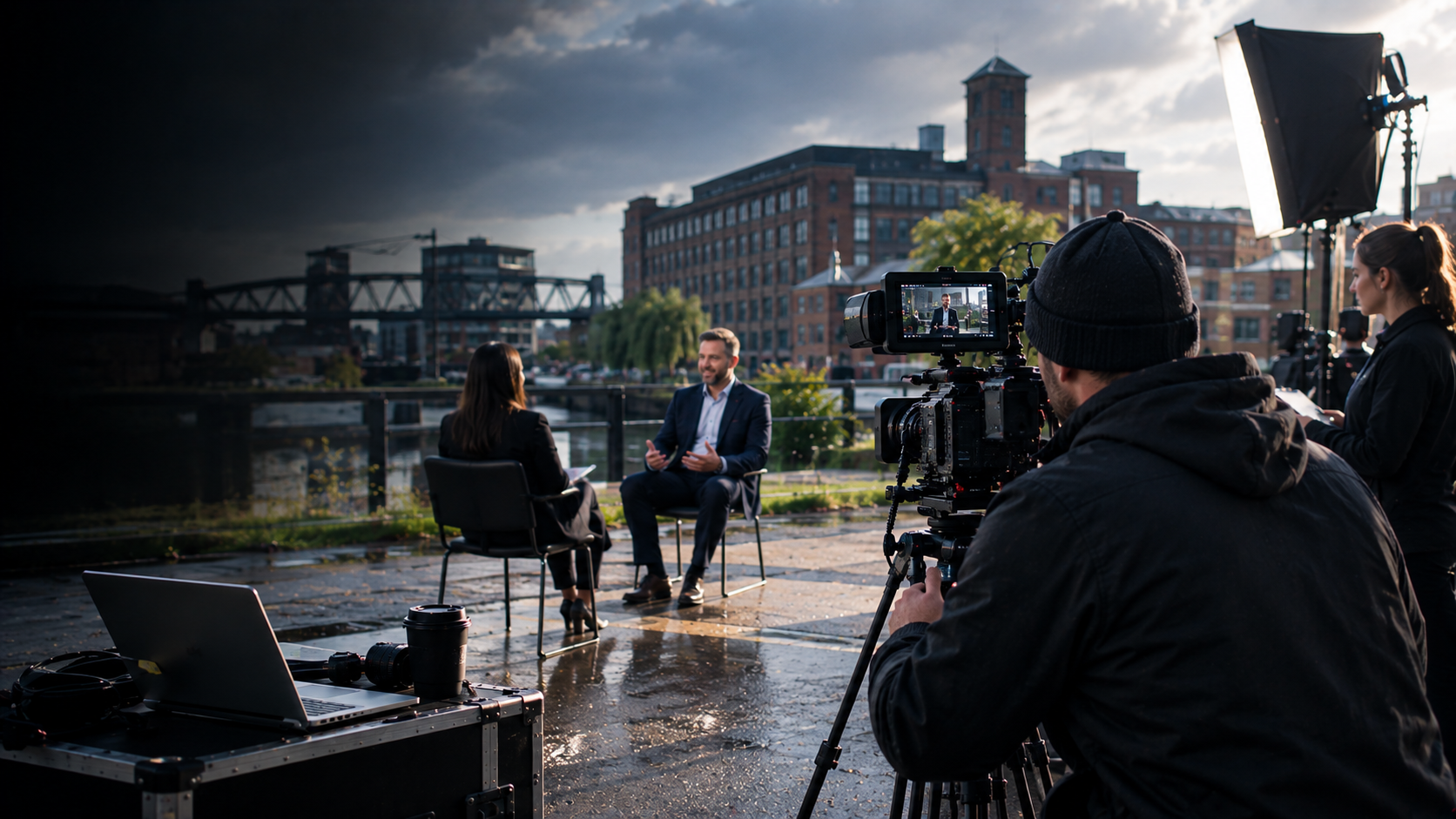
The choice does not have to be between a freelancer and a production company for every project.
Many businesses can benefit from using both, depending on the scale and purpose of the work.
A production company might manage a quarterly content shoot, a flagship corporate film or a major campaign. A trusted freelancer could then handle smaller updates, occasional interviews or simple pieces of content between larger productions.
This approach gives businesses access to broader production capabilities when needed without requiring every video to follow the same process.
However, there needs to be some coordination. Different suppliers may have different editing styles, visual approaches, file-handling practices and delivery standards.
To maintain consistency, establish clear brand guidelines, agree on formats and naming conventions, and decide who is responsible for creative direction and final approval.
The hybrid model works best when each supplier has a defined role and someone takes ownership of the overall content strategy.
Five Questions to Ask Before Making Your Decision
Before requesting quotes, consider these five questions:
What does the video need to achieve? A simple internal update has different requirements from a campaign designed to support recruitment, sales or a product launch.
How many finished assets do we need? Think beyond the main film and identify any shorter edits, alternative formats, subtitles or supporting photography required.
How important is the deadline? If the filming date cannot move, consider the production team's contingency arrangements and ability to manage unexpected problems.
Who will manage the project? Account for the time needed to brief suppliers, coordinate contributors, consolidate feedback and approve the finished content.
What happens after delivery? Confirm the revision process, file formats, usage rights, access to footage and the cost of future edits.
Answering these questions makes it easier to compare proposals fairly and choose a supplier based on the actual requirements rather than the headline price.
Choosing the Right Video Production Partner in Greater Manchester
There is no universal winner in the freelancer-versus-production-company debate. Both can produce excellent work, and both can represent poor value when the wrong supplier is selected for the job.
For a simple, low-risk video, a freelancer may be the most efficient option. For complex campaigns, multiple deliverables and deadlines that cannot move, a production company may offer the coordination and production support needed to protect the investment.
For businesses with ongoing content requirements, a hybrid approach can provide a practical balance between flexibility and production capability.
At Title Productions, we believe the best starting point is always the brief: what the business needs to communicate, who needs to see it and what the content must achieve.
If your organisation is planning its next video project, explore Title Productions' creative work or get in touch with our team to discuss the right approach for your requirements.