Cloud transformation has been talked about for over a decade. Most organisations have moved to the cloud in some form. Far fewer are confident they are getting real value from it.
That’s because cloud was often treated as a destination, not a business decision.
Cloud only creates value when it is deliberately aligned to outcomes – growth, resilience, speed, and efficiency. Without that alignment, it becomes expensive plumbing rather than a strategic enabler.
Cloud Isn’t the Goal – Outcomes Are
Successful cloud transformation does not start with vendors, architectures, or migration plans. It starts with clarity.
What outcomes are you trying to achieve?
Faster time to market
Lower operating friction
Better customer experience
Improved scalability or resilience
When cloud programmes fail, it is rarely because the technology didn’t work. It is because the organisation never agreed what success actually looked like. Cloud became activity without impact.
Cloud should be judged by the business value it enables, not by how much infrastructure has moved.
SaaS and Platform Cloud – Different Roles, Same System
Cloud comes in different forms, and the two most important are often misunderstood.
SaaS platforms exist to standardise, simplify, and remove complexity. They work best where differentiation is low and consistency matters – finance, HR, CRM, core operations.
Platform and infrastructure cloud exist to create flexibility, control, and differentiation. This is where organisations build, integrate, and scale what makes them distinct.
Most organisations need both. Problems arise when leaders assume one replaces the other, or when SaaS decisions are made without understanding their downstream impact on data, integration, and AI capability.
Value is created when SaaS and platform choices are treated as part of one coherent system, not separate programmes.
Cost Discipline in a Consumption World
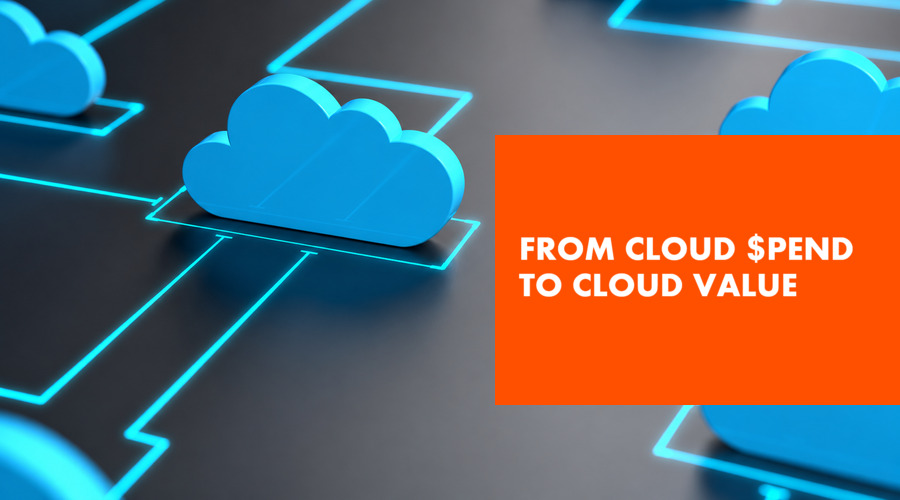
Cloud does not reduce cost by default. It changes the cost model.
Consumption-based pricing rewards discipline and punishes neglect. Without ownership, visibility, and governance, cloud costs quietly grow while value plateaus.
The organisations that succeed treat cost management as a leadership responsibility, not a finance clean-up exercise. Cloud spend must always be traceable back to outcomes – revenue enablement, efficiency, resilience, or risk reduction.
Cloud Unlocks AI – But Foundations Matter
AI does not sit alongside cloud – it lives within it.
Whether through AI embedded in SaaS platforms or AI services built on cloud infrastructure, cloud is the foundation that enables experimentation, scale, and speed.
But cloud alone is not enough. Poor data quality, weak architecture, and unclear ownership mean AI produces noise rather than insight. In those cases, AI amplifies existing problems instead of solving them.
The Bottom Line
Cloud transformation that creates value is not about being more modern. It is about being more deliberate.
Clear outcomes. Coherent architecture. Cost discipline. Strong foundations for AI.
When cloud decisions are treated as business decisions – not technology upgrades – cloud becomes a platform for growth rather than an ongoing cost conversation.
At Relentica, we help leaders cut through cloud complexity, align technology to outcomes, and build cloud strategies that deliver measurable value.