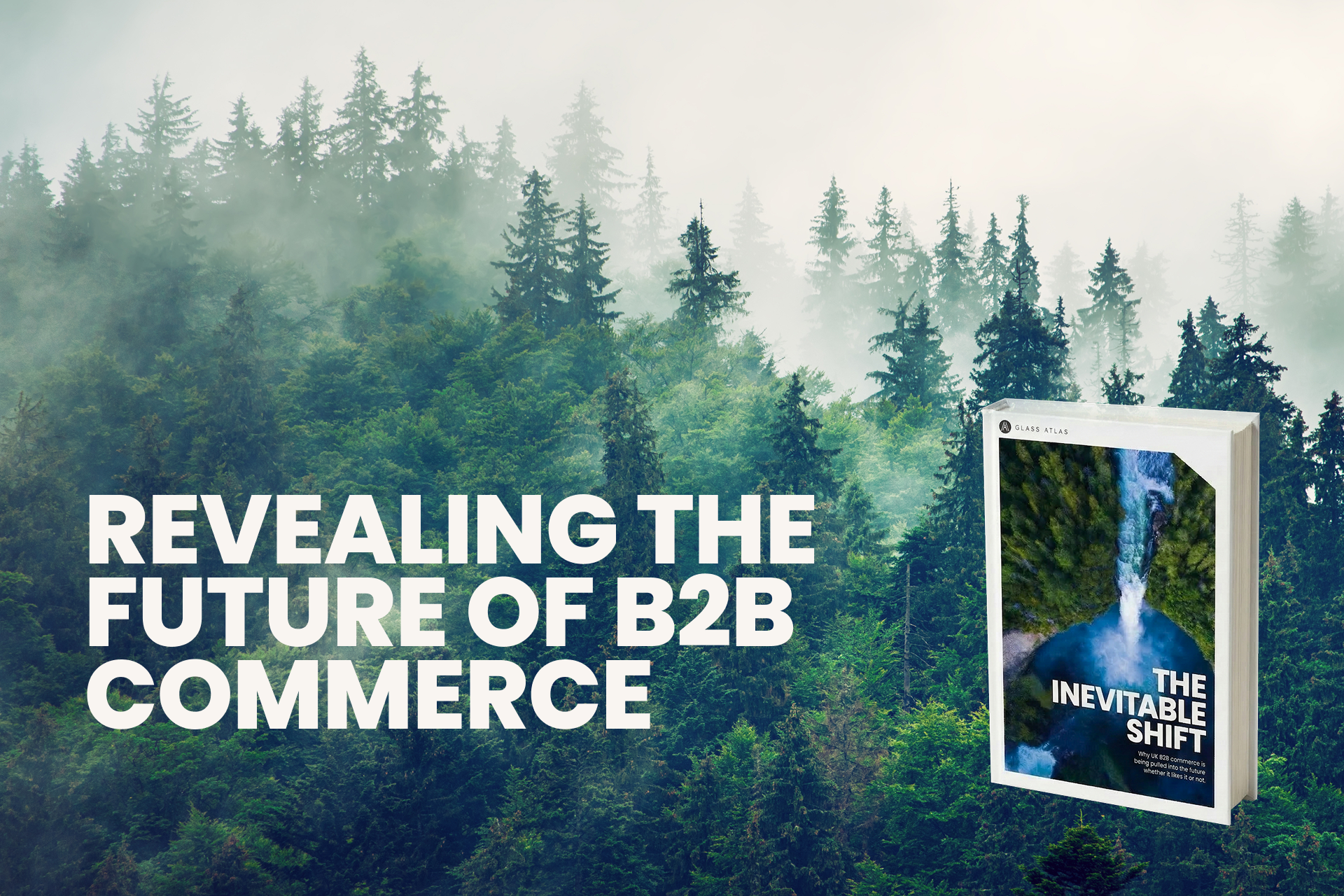
A major new industry report from leading digital agency Glass Atlas has revealed that nearly half (44%) of UK B2B organisations have stalled investment in new technology, highlighting a growing gap between ambition and execution across the sector.
The findings come from The Future of B2B Commerce 2026, an independent study conducted via YouGov and jointly commissioned by PayPal, Commerce and Glass Atlas. Authored by ecommerce veteran Vinny O’Brien, the report provides a detailed picture of how mid-to-large firms are navigating barriers to digital transformation, AI adoption, payments strategy and return on investment.
The research highlights a significant shift in where technology decisions are being made. Over a third (36%) of businesses say their CEO or board now leads technology strategy, compared to just 23% who cite digital or IT teams as primary decision-makers.
Despite widespread discussion around digital acceleration, the data suggests a more complex reality. Many organisations are pausing or slowing investment as they reassess priorities, manage risk and navigate increasingly layered technology environments.
This shift reflects the growing commercial importance of technology, but also raises questions about alignment between strategic ambition and technical execution.
O’Brien comments: “Digital transformation in B2B is no longer just a technology conversation, but rather a commercial one. What we’re seeing is a rebalancing of control, with boards taking a much more active role in the day-to-day of their businesses. The challenge is ensuring that this top-level ownership translates into practical, well-executed change on the ground.”
While artificial intelligence continues to dominate industry discourse, adoption varies significantly by sector. IT and Telecoms firms are leading the way on AI investment, while hospitality businesses lag behind, with just 1 in 10 currently investing in AI capabilities.
This disparity reflects differing levels of digital maturity, but also highlights the risk of widening competitive gaps between sectors. The report also reveals payments strategy as a critical, and often underutilised, driver of commercial performance.
Two thirds (65%) of large B2B organisations say that offering flexible payment options is essential to closing deals, underlining the role of payments in removing friction and accelerating sales cycles. As B2B transactions become more complex and buyer expectations evolve, payments are increasingly seen as a strategic tool, rather than a back-office function.
The findings of the report point to a landscape shaped by momentum, hesitation and structural constraint, particularly within organisations managing legacy systems and complex product catalogues.
Vinny adds, “There’s a tendency to talk about digital transformation as if it’s happening at the same pace everywhere. The reality is far more uneven. What this research shows is that many B2B organisations are balancing ambition with caution — and in some cases, hitting pause altogether. Understanding those constraints is key to unlocking meaningful, sustainable progress.”
Jon Woodall, CEO at Glass Atlas, says, “We’re working with B2B businesses every day who are trying to navigate a landscape that’s changing faster than most organisations are structured to respond to. What this research makes clear is that the opportunity isn’t just in adopting new technology, but in aligning it with a clear commercial strategy. The businesses that get this right in 2026 will be the ones that turn complexity into competitive advantage.”
“The ‘Future of B2B Commerce 2026’ report launched on Tuesday 24th March 2026 and you can view the findings in full at glassatlas.com.