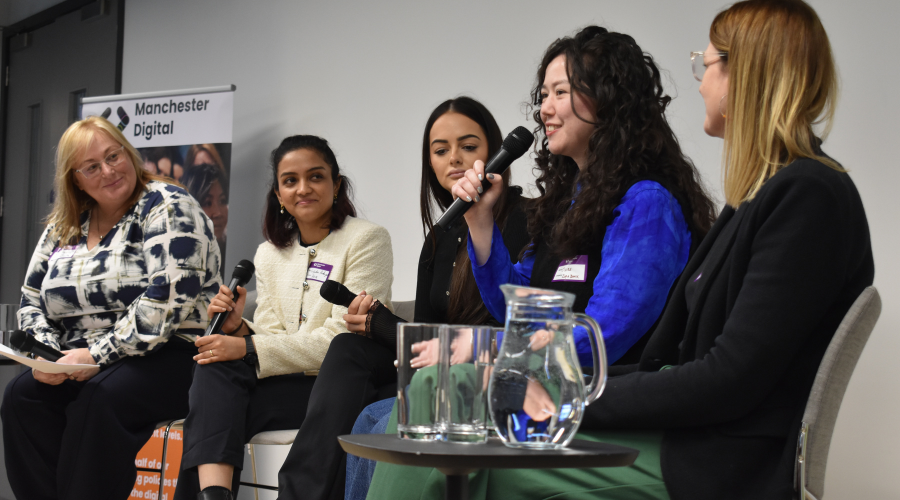
As part of our International Women’s Day celebrations for 2026, we dedicated our Tech Leader Talks panel to hearing the thoughts of five senior women in tech. The topic was leadership in AI, and the conversation extended to ethics and guardrails, leadership and management as well as supporting infrastructure for the growth of AI. This IWD event was hosted by Bruntwood at No 1 Circle Square, and our brilliant event sponsor was Softwire, a Manchester-based technology transformation partner and long-standing Manchester Digital member.
The panel was hosted by Cally Clifft, AI and tech delivery principal consultant at Softwire, who has 28 years experience in the tech industry, and she was joined by Claire Mitchell, Engineering Manager at Zopa; Crefeda Rodrigues, Staff Software Engineer at Arm, Lizzy McDowell, Director of Marketing at Kao Data and Sara Bowley, Digital Director for Health and Disability at the Department for Work and Pensions.
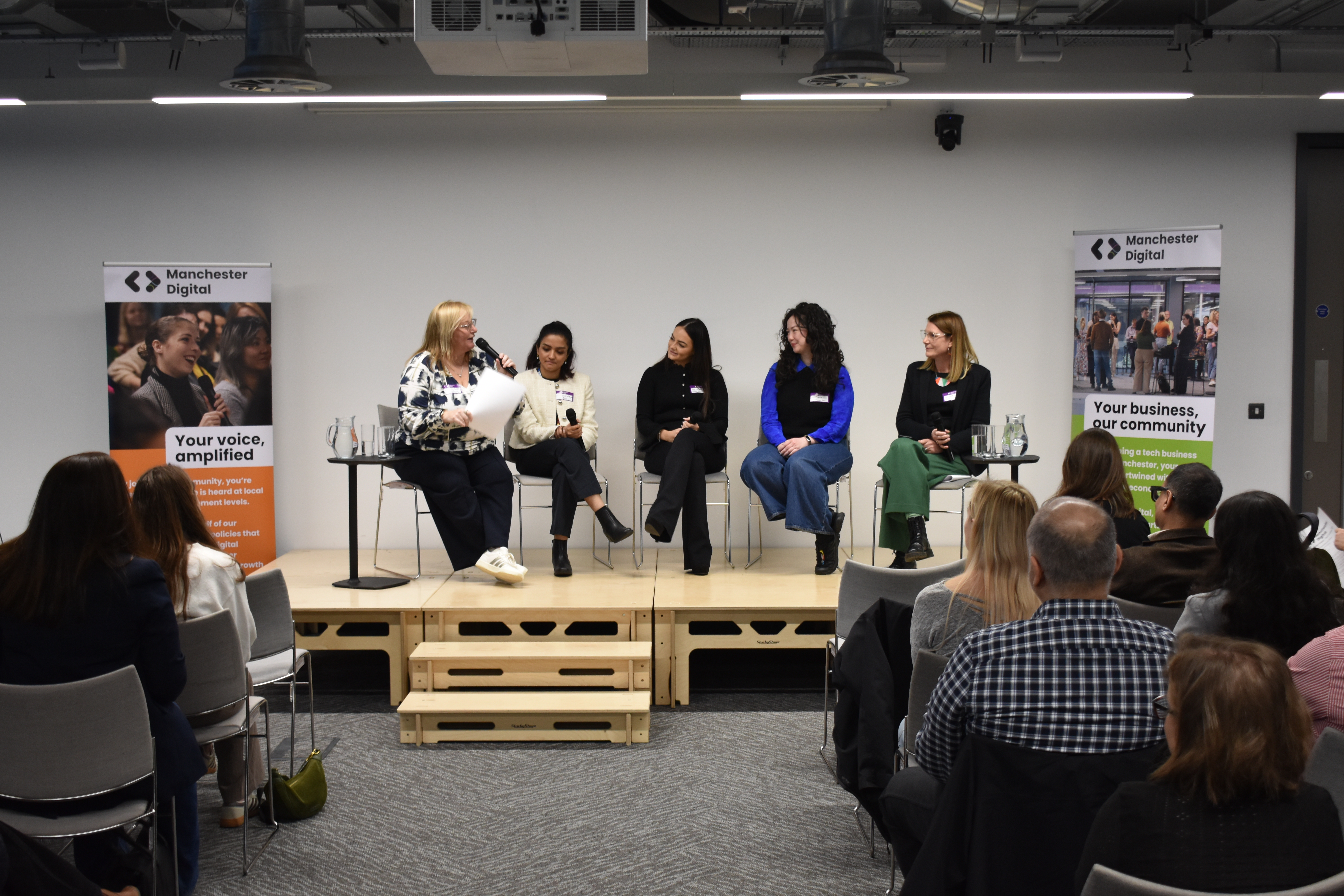 Cally Clifft kicks off the conversation at MD Tech Leader Talks
Cally kicked off the discussion by asking what does responsible leadership look like in practice? Sara reflected, “It means doing things with purpose, not just using AI for the sake of it. It’s so important to look at the value it brings and how it can deliver the outcomes you want.”
Claire added, “The interesting thing about working in fintech is that we want to embrace change. We’re not an incumbent bank, but we do have regulations to adhere to. I was new to banking and fintech two years ago, and I was initially worried about red tape. However now on reflection, I think we have a sensible amount of red tape. With AI, we have a good appetite to learn more, but we’re not at the bleeding edge.”
Lizzy gave the point of view from an infrastructure provider, “Historically, the data centre industry has been quite insular and our reputation also gets unfairly targeted by the media in terms of water and power usage. However, we do have a responsibility to the communities where we locate our data centres. At Kao Data, we are always ensuring that we’re pushing the boundary in terms of how we can be better. We want to lead with intention, create data centres that are better for the environment and be a better neighbour.”
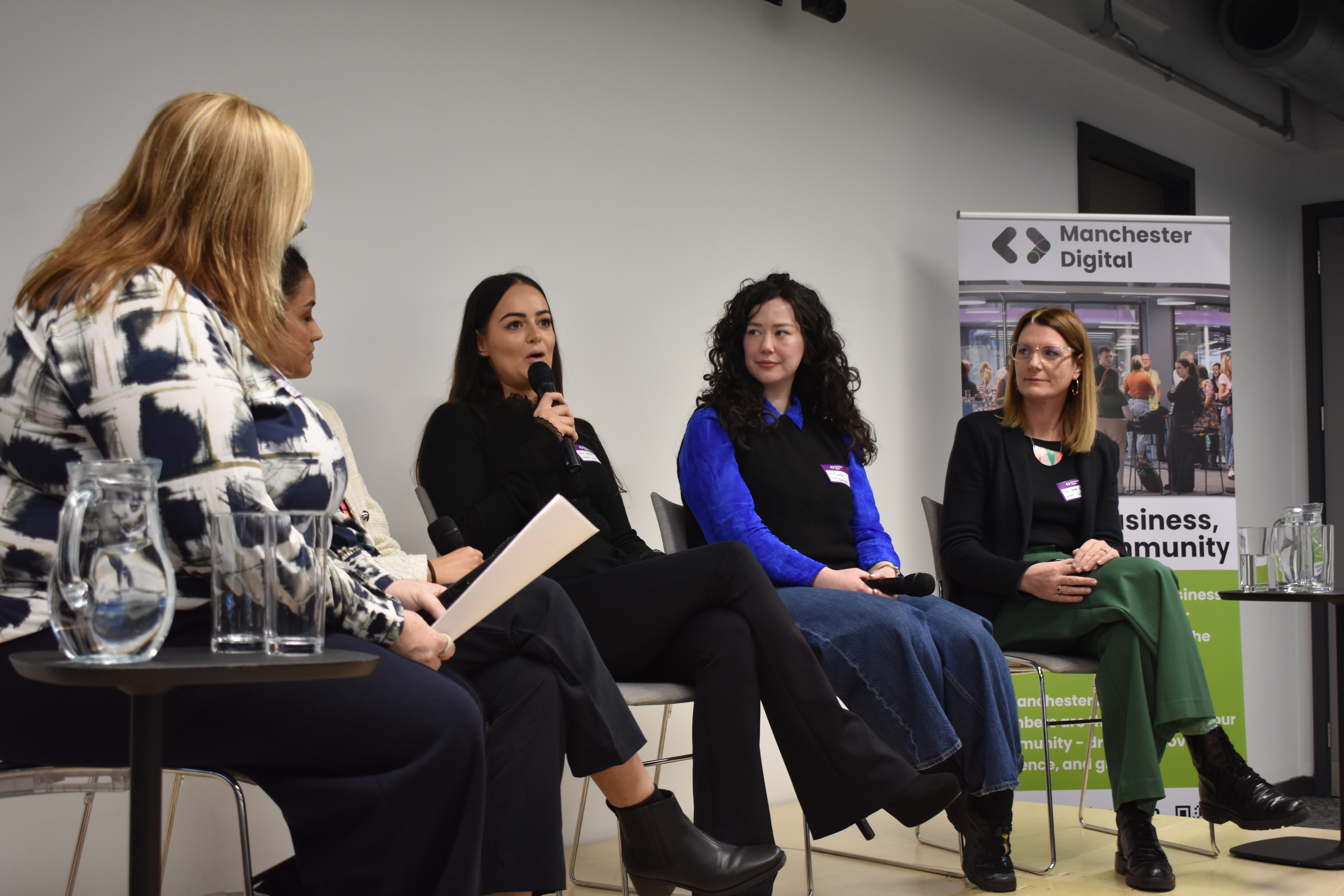 Lizzy McDowell, Kao Data speaking at MD Tech Leader Talks
Cally moved on to ask about pace versus practical reality in AI. Crefeda, who works at the bleeding edge of AI at Arm, the company that designs and licenses processor IP based on the Arm architecture, “There are a lot of new AI models coming through at a fast rate. It can be hard to keep up and there is a lot of hype, usually when there’s a new model released, but I look at the practical side of how they run, how they scale, and whether they’re viable in real-world deployments.”
Sara added, “There is an expectation that the Government is rapidly using AI to improve public services. However, we have 20 million people who use our services so it’s vital that we adopt AI usage in a safe way that can protect vulnerable customers too.
“We are making sure we have good foundations, such as using structured data. We’ve just published our Data Strategy, we have a responsible AI framework and we’re addressing legacy technology too.”
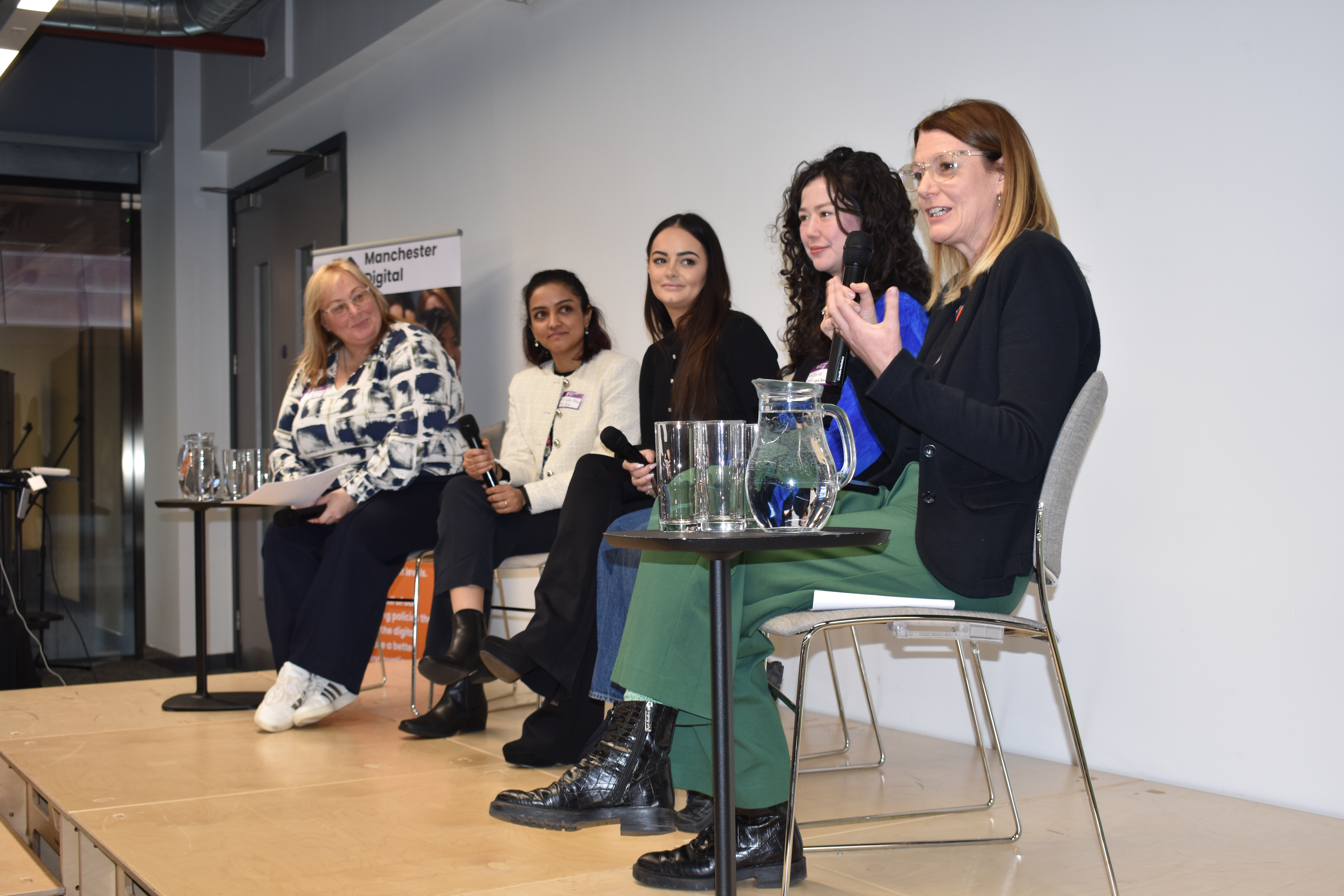 Sara Bowley, DWP Digital, shares her insights
Claire added, “As a fintech organisation, we do move at a fast pace at Zopa. We have recently launched an AI voice assistant which enables people to interact with our finance and banking app in a new way.
“This usability allows people, and particularly people with disabilities, to complete a financial transaction through talking intuitively to the app. This also includes other actions, such as splitting a bill, for example, where you can talk through the different items that people ordered and the app will work out everyone’s bill.”
Cally then asked the panel about creating foundations - “What does that look like in innovating and delivering change?”
Lizzy explained, “It’s a challenge to deliver the infrastructure required for AI, which is currently constrained around West London and Slough. Slough is the second largest data centre cluster in the world, and is now at capacity. We now need to diversify, so we have a campus in Harlow, where we’re building more data centres and we have a site under development in Stockport.
“We lobby Central Government to help them understand the opportunity that data centres can provide to keep their compute power in the UK. At the moment, a lot of AI training is done in France, for example. However, I would also add that GMCA is really visionary in working with the private sector - they really understand the opportunities for them. We really need that stewardship from the Government to capitalise on a fantastic opportunity for the UK.”
Cally went on to ask the panel about trust, ethics and guardrails within AI. Crefeda said: “A good example of this is when we adopted AI tools within hiring at Arm. We already know that AI has a lot of bias, but we have used AI to address certain issues, such as making sure language within job adverts is more tailored towards women. However, we always make sure there is a human within this workflow to oversee what’s coming out of it and use their judgement.”
Sara added, “Within Government, having guardrails and transparency are very important in earning and keeping public trust. We’ve developed an AI question and response tool to help work coaches navigate Universal Credit guidance so they can spend more time actually talking with customers to support them. This was tested in 30 job centres in Wales, and now we have that initial feedback, we’re extending that out to job centres across the UK.
Cally asked for opinions about entry level roles within the tech and AI industry. Lizzy responded, “One of the data centre’s trade press has said we will have a retirement tsunami on our hands, as there are so many people about to retire within the industry. However, in our industry, this isn’t just about software engineers, it’s about having electricians, plumbers and builders, so there’s a huge amount of jobs that are required.
“On top of that, it’s really important to challenge the female perception of how they see themselves. I know I had never seen myself in a STEM role when I was younger. To combat this, I launched our Critical Careers initiative, which showcases the real stories of women in the data centre industry and their career paths. It’s so important for us to communicate the wide range of roles in the tech industry to young women.”
And lastly, Cally asked the panel to think about AI done well and asked for an example where AI has delivered a better outcome.
Crefeda said: “At Arm we enable a lot of AI on our CPUs. We have seen examples of Arm CPUs being used by a university in Denmark where they’ve used a Raspberry Pi on drones and then used them within conservation areas in Kenya to check on the animals and also to see if any poachers are around.”
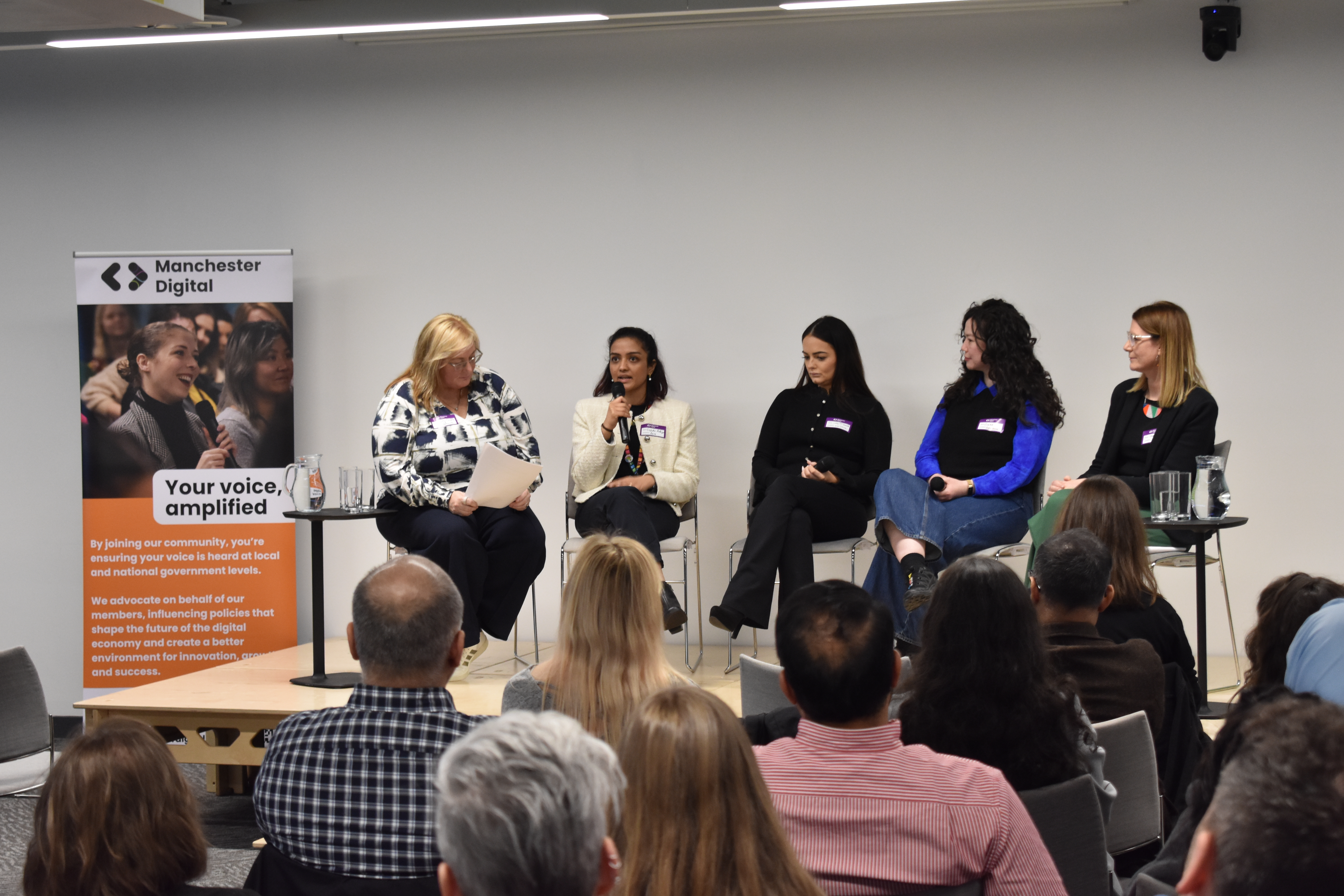 Crefeda Rodrigues speaking at MD Tech Leader Talks
Lizzy said “One of our data centre clients is an organisation that uses AI to improve cancer treatment. It’s so important to realise that AI isn’t just limited to chatbots and ChatGPT.
Claire said “My example is a bit different - I was talking to another manager, who was dictating her thoughts to Claude AI for an employee review. It made me realise we can customise these tools, allow them to use our own tone of voice and use them for us. Not to clone you but to empower you.”
Sara said “At DWP, we receive 25,000 physical letters a day with queries from people. To help process this, we’ve recently launched a vulnerability scanner, so that now a process that took weeks can now be run in a day. The AI scans letters for vulnerable customers and fastracks them, which is so important.
Overall, this was a really in-depth talk about how AI is being embedded into our work and leadership, right from the data centre infrastructure and the GPUs that power AI right through to how customers and service users can benefit from AI, sometimes without even knowing it.
We’d like to say a huge thanks to our panel host and guests and especially to our event sponsor: Softwire, a technology change partner. Also thanks to event partners Bruntwood SciTech.
Cally and the Manchester team at Softwire welcome the opportunity to continue the discussions from the event, reach out to cally.clifft@softwire.com
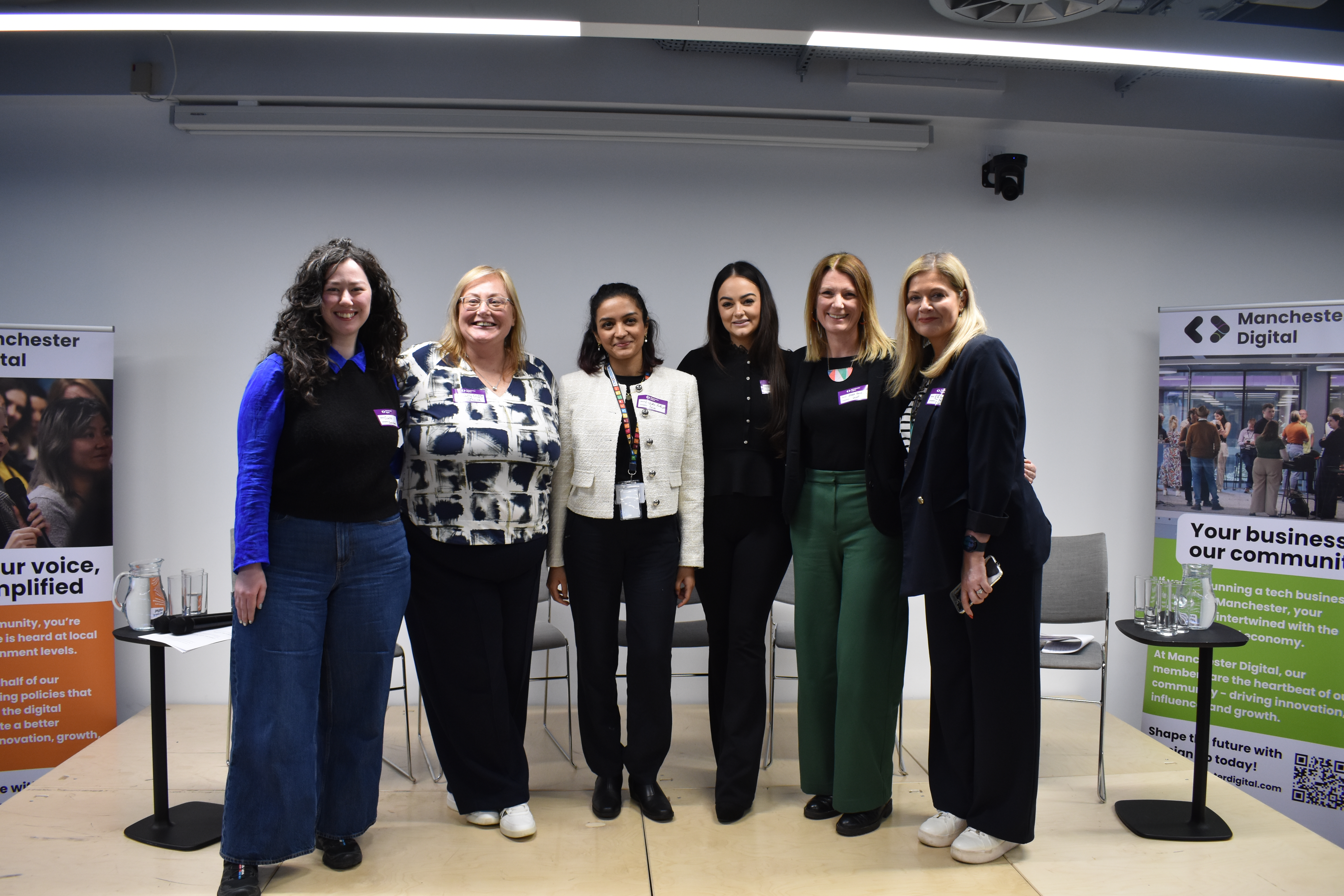 L-R: Claire Mitchell, Cally Clifft, Crefeda Rodrigues, Lizzy McDowell, Sara Bowley, Kate Wilson
When: Thursday, March 26
Where: Sister, Renold Building, Manchester, M1 7JR
More info & tickets: (free for Manchester Digital members) https://www.manchesterdigital.com/event/manchester-digital/md-ecom-26