AI is transforming the tech industry, but what does that mean for our careers, the skills we need, and the opportunities ahead?
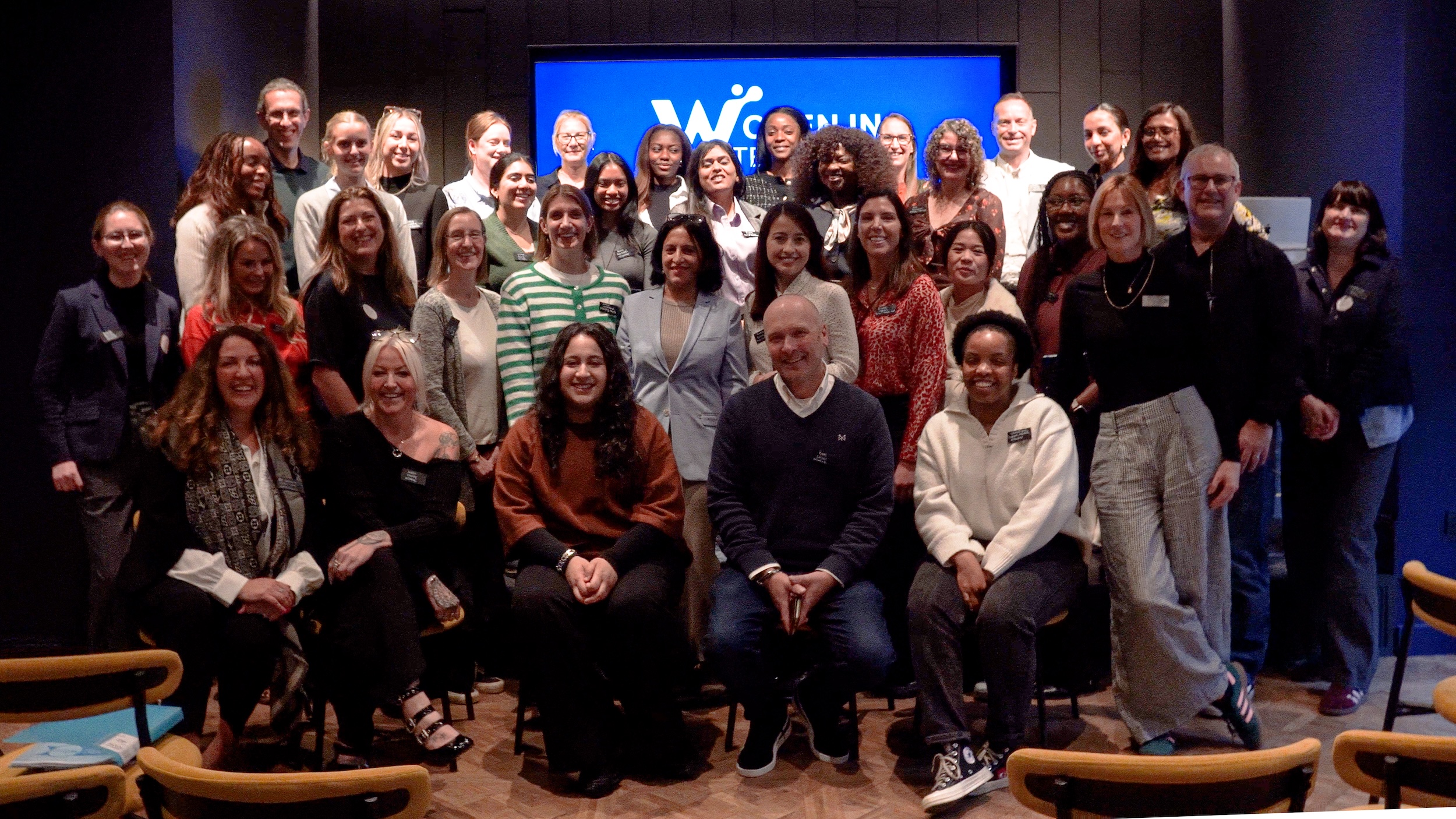
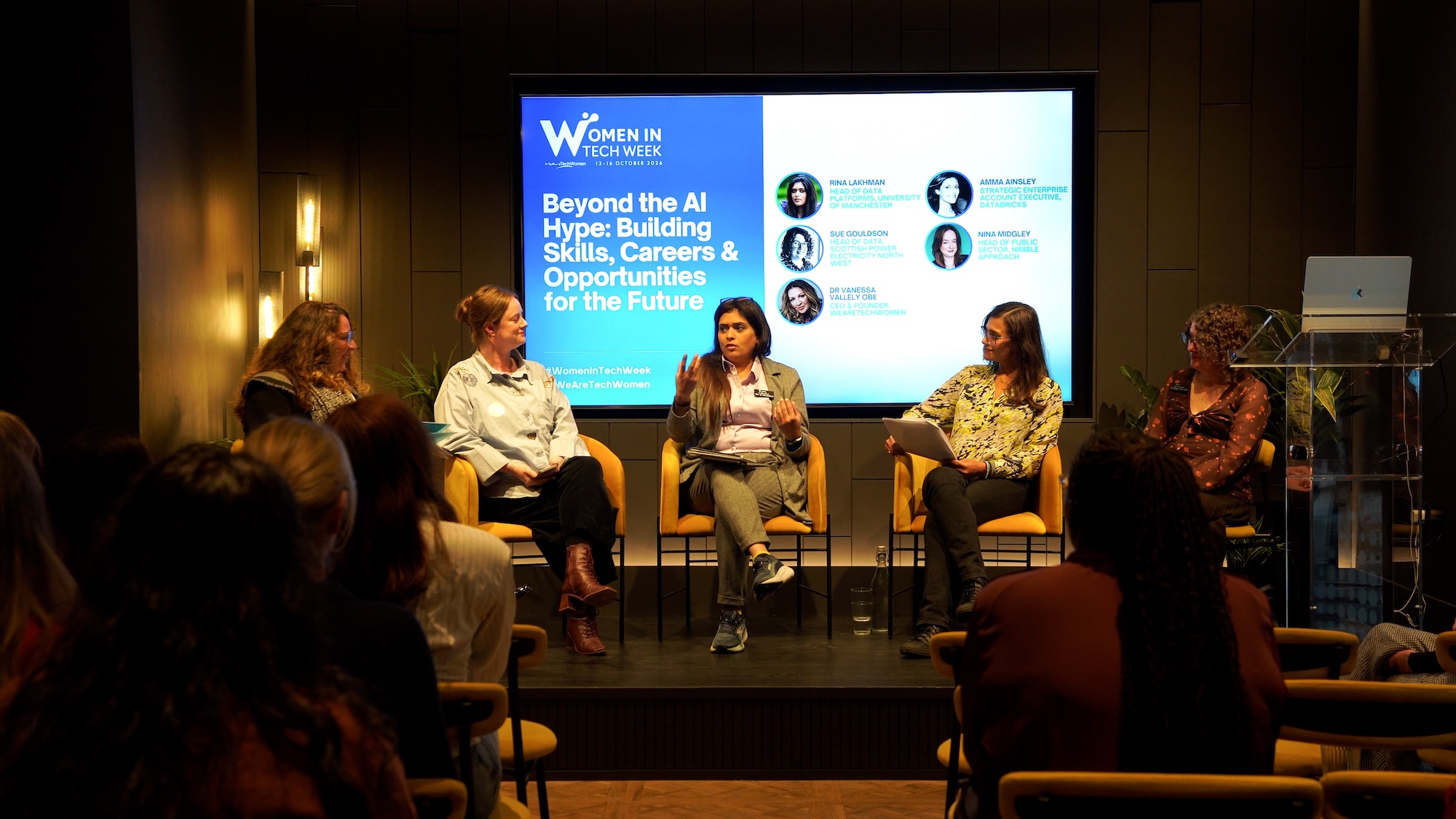
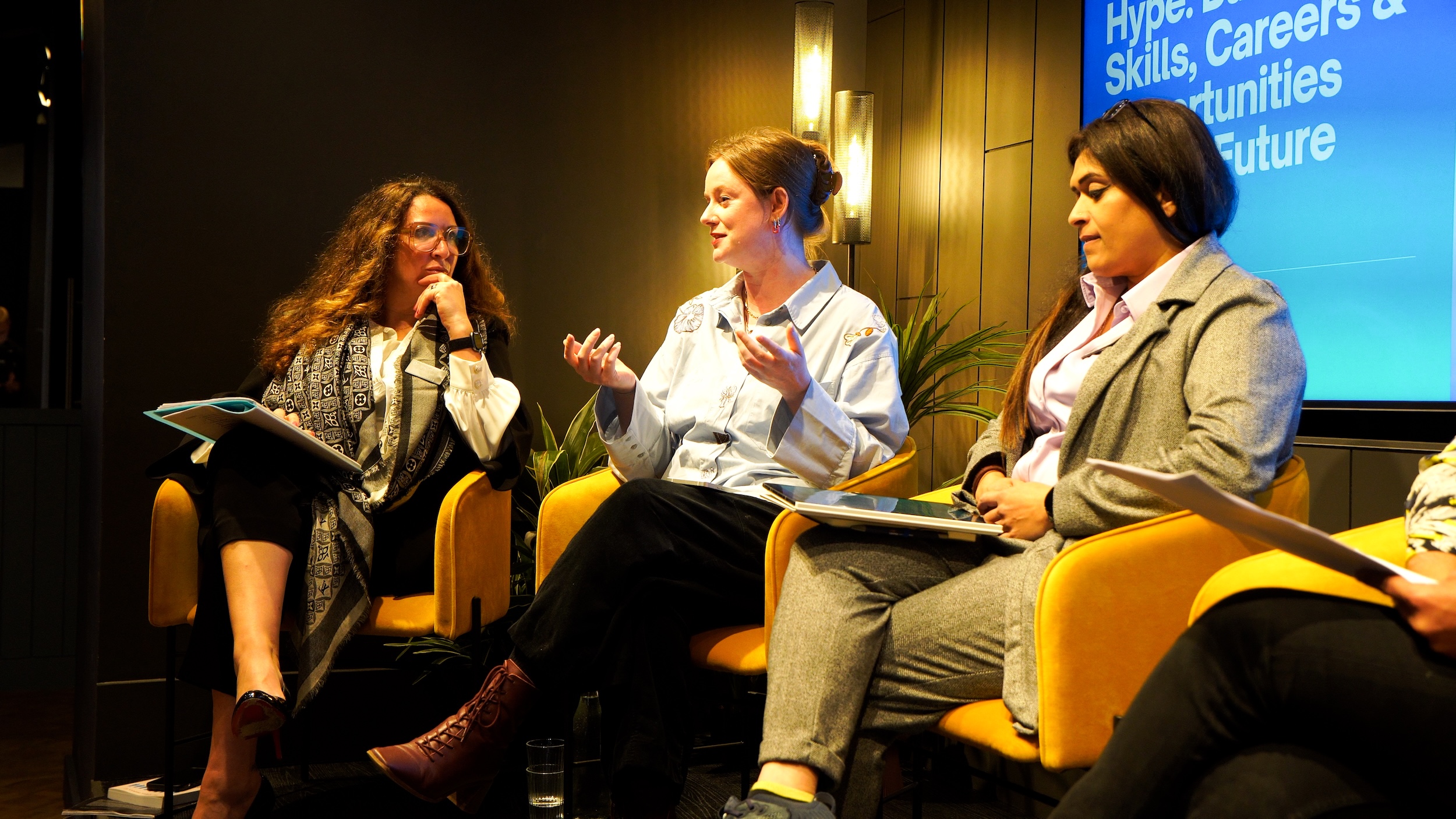
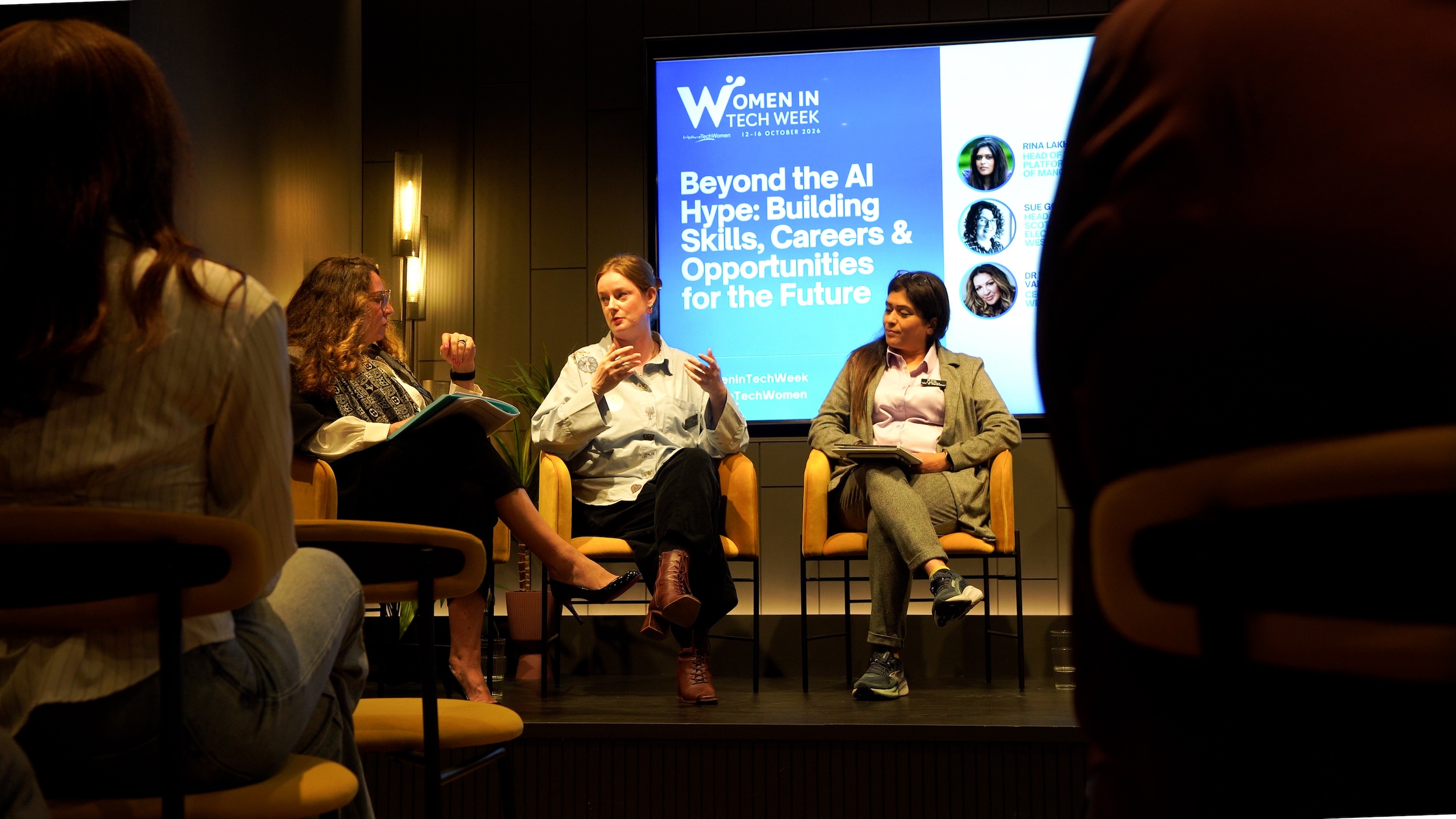
As part of Women in Tech Week, we brought together leading voices from across the tech and data industries for Future-proofing your career in the age of AI & Data, hosted in partnership with WeAreTechWomen. The panel explored the realities of AI adoption, why strong data foundations matter, and how to build a resilient, rewarding career in an industry undergoing rapid change.
The panel featured Dr Vanessa Vallely OBE, Founder of WeAreTechWomen; Rina Lakhman, Head of Data Platforms at the University of Manchester; Sue Gouldson, Head of Data at Electricity North West; Nina Midgley De-Jong, Head of Public Sector at Nimble Approach; and Amma Ainsley, Strategic Enterprise Account Executive at Databricks.
Here are seven key takeaways from the discussion.
1. Get the data foundations right before embracing AI
AI might be dominating conversations, but successful adoption starts with good-quality, well-governed data.
The panel highlighted how organisations often rush to implement AI without understanding where their data comes from, how reliable it is, or whether it answers the right questions. Siloed departments and disconnected systems can make it difficult to turn large volumes of data into meaningful insights.
The advice? Start with the business problem, not the technology. Understand what people need to achieve, then identify how data and AI can help deliver that outcome.
As Sue put it:
“Always start with what the business problem is.”
What you can do: Before starting your next data or AI project, define the problem you’re trying to solve, the people it affects, and what success will look like.
2. Focus on problems, not shiny new technology
Not every challenge needs an AI solution. As the panellists discussed, organisations risk becoming overly dependent on AI when simpler, more affordable tools could achieve the same result.
Successful adoption means choosing the right tool for the job, rather than implementing technology simply because it’s new or attracting investment.
The same principle applies to data teams: talk to the people using the data, understand their day-to-day challenges, and make sure the solutions you build genuinely help them.
What you can do: When considering a new tool, ask whether it solves a genuine problem and whether a simpler, more cost-effective solution could achieve the same outcome.
3. Human skills will become even more valuable
As AI automates more tasks, skills such as creativity, critical thinking, judgement, communication, and collaboration will become increasingly important.
AI can help generate ideas, summarise information, and streamline administrative work, freeing up time for higher-value activities. But it cannot replace the importance of questioning assumptions, understanding context, and making informed decisions.
As Amma explained, the value of AI lies in what it enables us to do next:
“It’s taking off all of those things that I’ve never enjoyed doing and giving me the freedom to spend more time with my clients and having those conversations about solving business problems.”
The opportunity isn’t just to learn what AI can do, but to understand where human expertise makes the difference.
What you can do: Identify one repetitive task AI could help you streamline, then use the time saved to strengthen relationships, solve problems, or develop your creative and critical-thinking skills.

4. Stay curious and make continuous learning a habit
The pace of technological change means that no one can afford to stand still. The panel encouraged people to remain curious, experiment with new tools, and develop their skills throughout their careers.
That doesn’t mean learning everything at once. Start by exploring how AI could support your current role, take advantage of accessible training resources, and ask questions when something is unfamiliar.
Crucially, keep thinking critically about what AI produces. Use it to broaden your understanding, not narrow it, and remember that its answers still need to be challenged and evaluated.
What you can do: Set aside time to explore a new tool, complete a short course, or investigate a topic outside your usual area of expertise. Stay curious, but question what you learn.
5. Your career doesn’t need to follow a straight line
Several panellists shared how their careers had evolved through unexpected opportunities, sideways moves, and experiences outside their original areas of expertise.
You don’t need to be a software developer or data scientist to build a career in technology. Commercial awareness, customer service, communication and the ability to translate complex ideas can all be valuable strengths.
Nina highlighted the importance of recognising your own strengths and finding ways to apply them as technology evolves.
Rather than trying to fit a traditional career path, identify what you’re good at and consider how those skills could create value in new roles and environments.
As Nina explained:
“Find out what it is that you’re really good at. Don’t assume that that won’t have a place in the future.”
What you can do: Write down three strengths you bring to your work and consider how they could transfer to a new role, a different team, or an emerging area of technology.
6. Build diverse teams and create opportunities for early talent
Diversity isn’t simply a tick-box exercise. Different perspectives help teams challenge assumptions, solve complex problems, and make better decisions.
The panel emphasised the importance of asking a simple question: Who’s missing from this room?
This is particularly important as AI changes how people enter and progress in the workplace. Automating entry-level tasks could remove valuable opportunities for early-career professionals to learn through experience.
Organisations must therefore think carefully about how to build training, mentoring, and practical learning into new ways of working, while creating more accessible pathways into data and AI careers.
What you can do: In your next project meeting, look around and ask: “Who’s missing from this room?” Consider whose experiences, perspectives, or expertise could help you make better decisions.
7. Find your people and don’t be afraid to be yourself
One of the strongest messages from the discussion was the value of connection. Mentors, supportive networks, and conversations with people from different backgrounds can open doors, build confidence, and reveal opportunities you might not have considered.
The panel also spoke candidly about imposter syndrome and the tendency to underestimate our own abilities. You don’t need to know everything to contribute meaningfully. Recognising your strengths, asking questions, and learning from others are all part of growth.
As Dr Vanessa Vallely OBE reflected on her career, knowing when something is no longer serving you – and having the courage to walk away – is an important lesson in building a career on your own terms.
The panel also highlighted the importance of building connections and learning from others. As Nina shared:
“The magic happens when someone with one perspective just shares an idea with someone from another perspective.”
What you can do: Reach out to a colleague, find a mentor, attend an industry event, or join a professional community. Start one conversation that could help you see a new perspective or opportunity.

The future belongs to the curious and collaborative
The conversation reinforced that future-proofing your career isn’t about predicting every technological change or becoming an expert in every new tool.
It’s about building strong foundations, staying adaptable, understanding your unique strengths, and working with people whose perspectives differ from your own.
Whether you’re starting out, changing direction, or progressing into leadership, the message is clear: stay curious, keep learning, find your people, and bring your strengths to the table.
Because while technology will continue to evolve, the ability to connect people, ideas, and opportunities will remain invaluable.