By Paul Lockwood, Senior Software Engineer at Nimble Approach
I have worked in software engineering for more than 20 years, but the pace of change in AI means there are still plenty of opportunities to feel like a beginner again.
That was one reason I joined four colleagues for NVIDIA’s Hack for Impact in Sheffield on Friday 13th November. The challenge was to build an agentic application using open models and an NVIDIA DGX Spark – all within a single day.
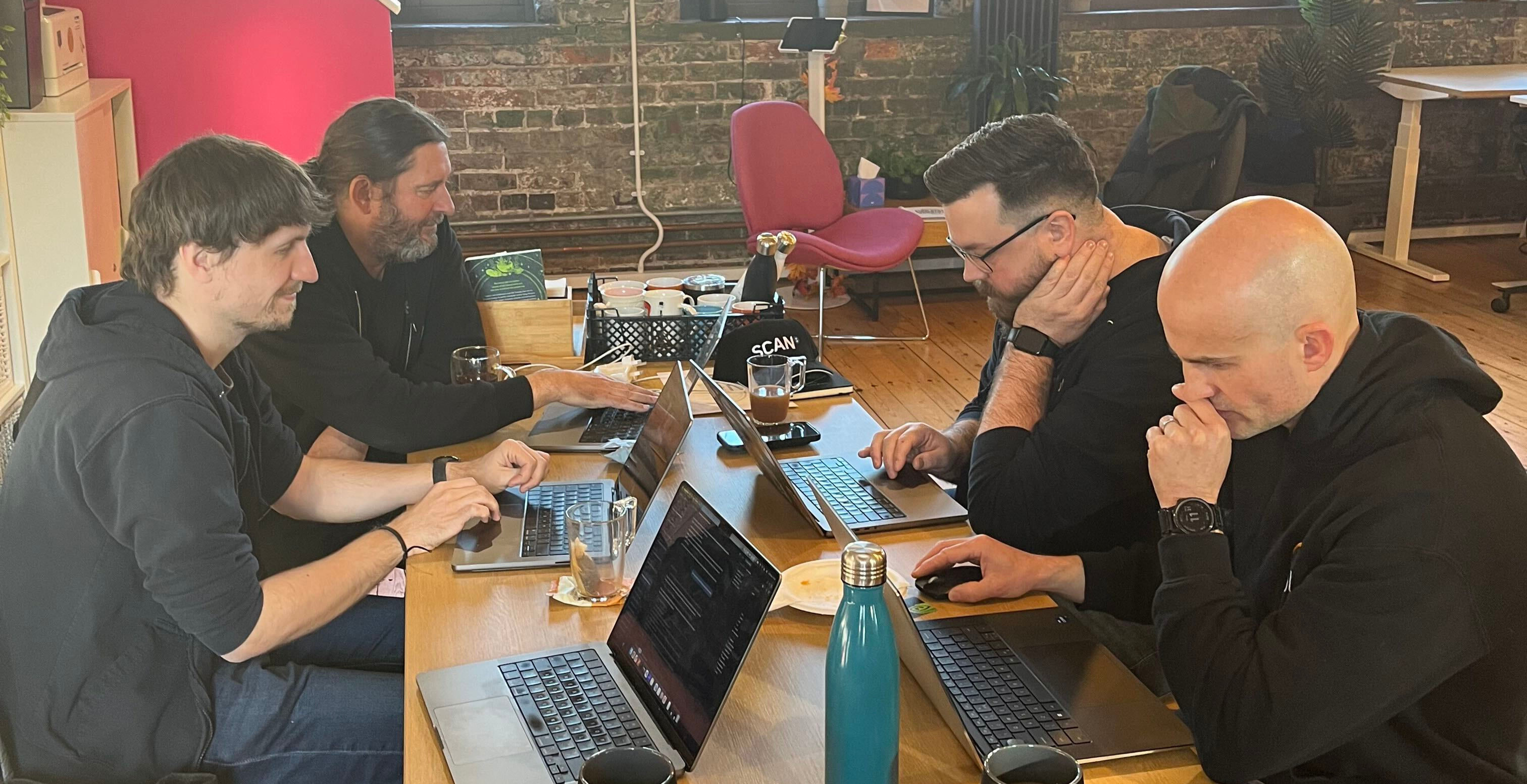
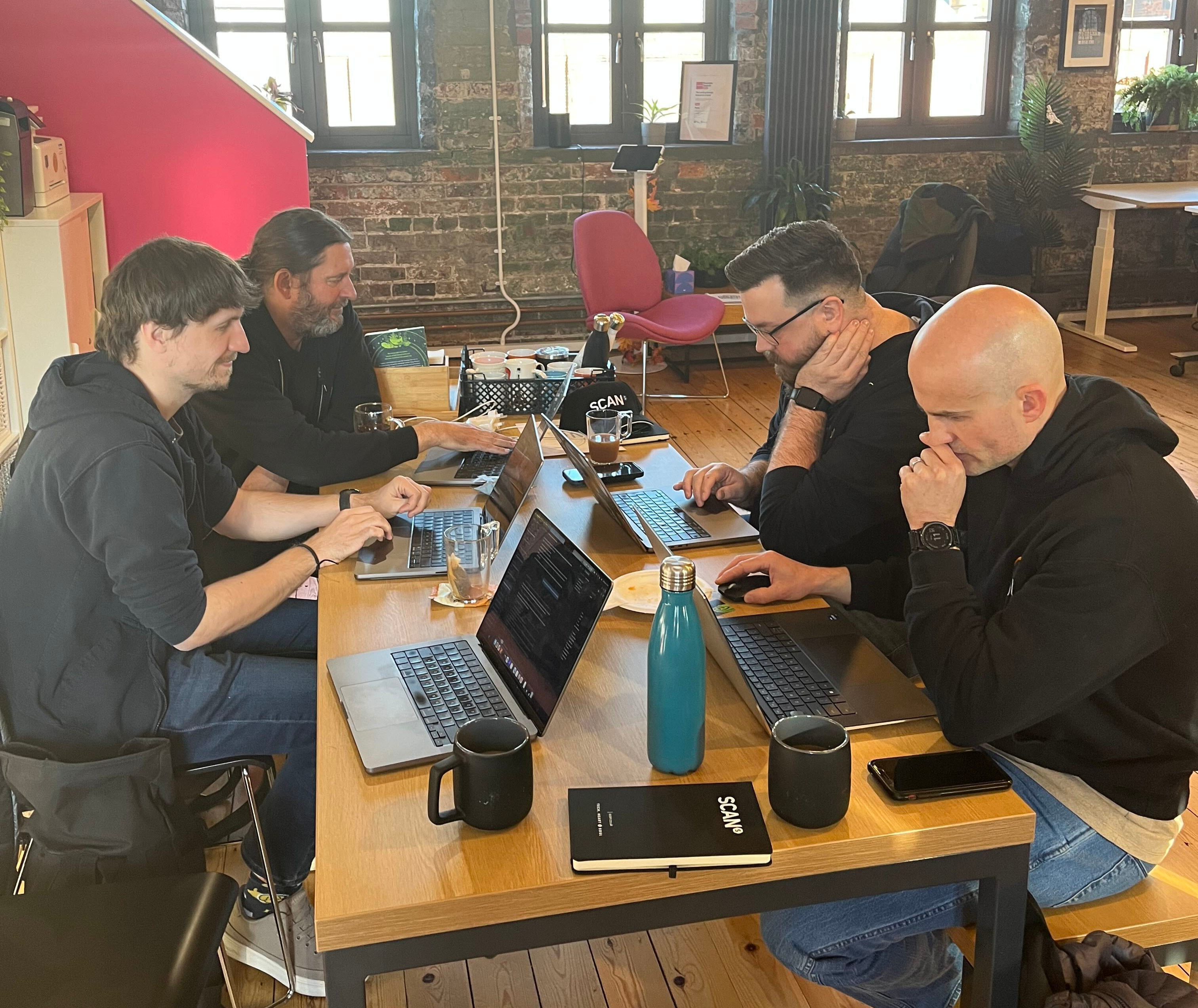
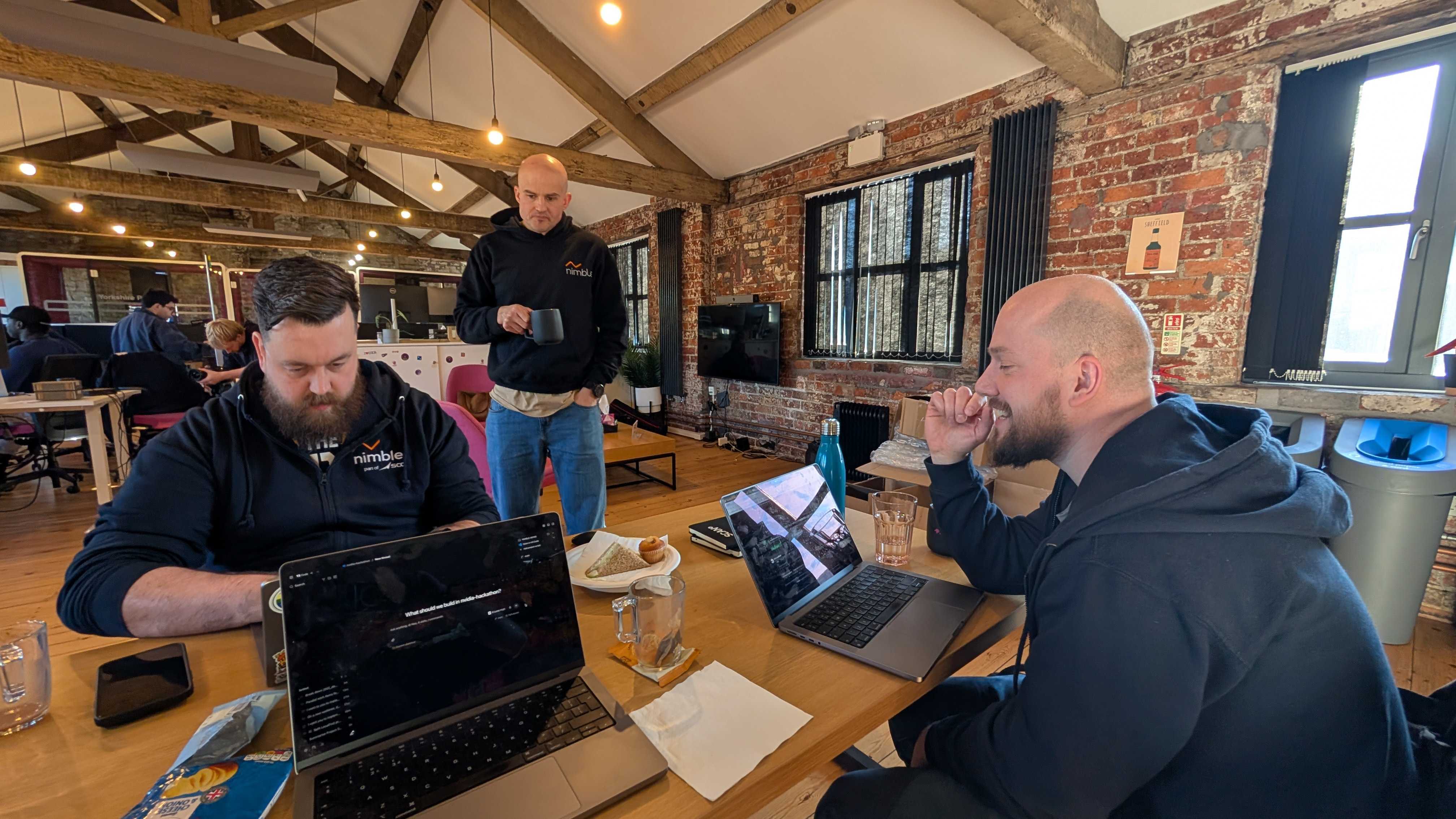
Our team comprised Rob Rosebury, Gareth Hallberg, Chris Sherlock, Brad Reaney, and me. In a nod to Nimble, we dubbed ourselves ‘Team Bimble’. Rob and Gareth brought more recent, hands-on experience of building AI agents and working with our chosen technology stack. Chris, Brad, and I contributed our broader engineering experience, while also taking the opportunity to learn from the others and deepen our knowledge of the technologies involved.
Finding a problem worth solving
We entered the Economic Systems track, which focused on helping people and organisations make better economic decisions, unlock opportunities, and optimise costs.
Our idea was called LocalFirst.
Public-sector tendering can be difficult for smaller businesses. SMEs may be well suited to a contract but lack the dedicated tender and compliance teams available to larger organisations. At the same time, local authorities want to spend effectively and create more value within their regions.
LocalFirst was designed to help bridge that gap. It takes a public tender and an SME profile, analyses the requirements, performs deterministic eligibility checks, and produces an evidence-grounded draft response for human review.
The human remains firmly in control. The system prepares a review pack; it does not submit anything on the company’s behalf.
Dividing a large idea into workable pieces
We had discussed the idea before the event, so the overall direction remained fairly stable throughout the day. The challenge was turning it into something demonstrable before the 6pm deadline.
We divided the specification into 15 numbered work packages covering areas such as shared data contracts, tender ingestion, local inference, eligibility checks, response drafting, workflow orchestration, and the user interface. We then split those packages into smaller tasks that could be developed in parallel.
As work became available, we took turns picking up the next viable piece and breaking it down further where necessary. It was a practical way for five people – and several AI coding agents – to contribute to one codebase without spending the whole day waiting for one another.
That did not make integration effortless. One of the difficulties was specific to my setup. I was the only team member using Windows, and I ran into problems getting T3 Code and the GitHub CLI to work together reliably. In hindsight, I should have verified before the event that I could pull, commit, and manage branches through T3. It was a useful reminder that basic tooling can quickly become expensive when every minute counts.
There was also some anxiety about the sheer volume of code the AI tools were producing. Under hackathon pressure, more output did not automatically mean more progress. The bottleneck shifted from writing code to directing the tools, reviewing their output, and integrating it safely. The engineer remained responsible for understanding the system and maintaining its quality and reliability.
That felt less like a hackathon-specific problem and more like a glimpse of the future of software development. I came away wanting to understand how teams can manage that volume in real-world projects – through smaller tasks, clearer acceptance criteria, automated tests, and regular review – without losing the speed that makes these tools so valuable.
A lot of computing in a small box
Each team was provided with an NVIDIA DGX Spark, powered by the GB10 Grace Blackwell Superchip.
My first reaction was just how small it was. It packs an extraordinary amount of computing power into such a compact form factor. I only wish we’d had more time to explore the wider NVIDIA tooling and ecosystem and get a better feel for what they have to offer.
We deployed LocalFirst to the DGX Spark using Docker. Tender analysis and response generation ran locally using the nemotron-3.5-lightning:30b model.
For development, we used T3 Code and OpenCode connected to OpenRouter. That distinction matters: OpenRouter supported the tools we used to build the application, whilst the application itself used local inference on the DGX Spark.
Learning how to select models for different development tasks – and how to get useful results without allowing costs to run away – was a valuable part of the day.
The difficult final hours
The submission requirements didn’t arrive until after 3pm, leaving us less than three hours before the 6pm deadline. This introduced additional pressure at precisely the point when we needed to focus on integration and getting a reliable demonstration working.
When I had to leave at 5:15pm, we still hadn’t managed to get a working end-to-end demo.
The remaining team members somehow pulled a rabbit out of the hat. They got the codebase into a demonstrable state and produced the submission video with just four minutes to spare – cutting it rather closer than any of us would have liked.
Unfortunately, there were issues with the video, so the judges had to assess our entry largely from the codebase. We didn’t win, but the feedback was that we had produced a good, full-stack solution. Given where things stood less than an hour before the deadline, that was an achievement in itself.
Type two fun
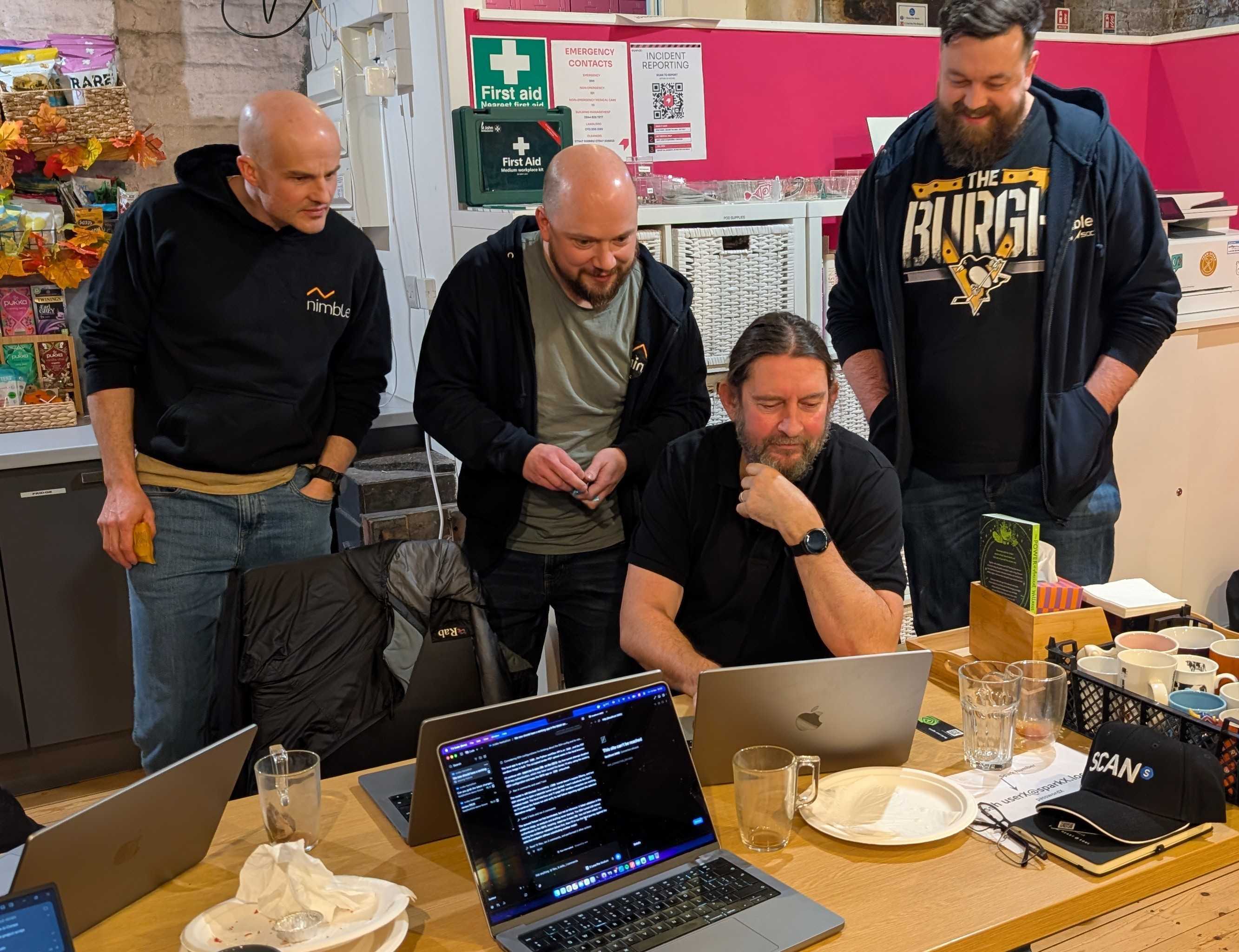
I described the experience afterwards as “type two fun”.
It did not always feel enjoyable in the moment. It was pressured, occasionally stressful, and full of uncertainty. In retrospect, though, it was a rewarding day and something I would gladly do again.
What surprised me most was the sheer amount that can now be achieved when capable people, powerful hardware, and the right AI tools are brought together in the right environment.
I learned a great deal about building agentic systems from the ground up, managing model access, and matching different models to different tasks. I also came away with a better understanding of the discipline still required: break the problem down, define clear boundaries, verify the output, and keep a human responsible for the final decision.
If we approached it again, I would make greater use of the NVIDIA ecosystem and spend more time understanding the tools available on the DGX Spark. LocalFirst was not intended to become a commercial product after the event, but its codebase could provide a useful template for approaching similar agentic systems.
Most importantly, it was a genuine team effort. There was immense satisfaction in working together to create something substantial, to a good standard, and in such a short space of time. It was only afterwards, once the pressure had lifted, that I fully appreciated just how much we’d enjoyed the experience.ers every day.m, and giving teams the time and structure to explore ideas can be a powerful way to start.