Artificial intelligence is dominating almost every leadership conversation right now. Boards are discussing it, investors are demanding it, and technology teams are racing to implement it. Every organisation wants to improve productivity, accelerate delivery, reduce cost, or create competitive advantage through AI.
Yet amid all the noise around automation, platforms, copilots, and data, organisations are at risk of forgetting something fundamental. People still make transformation work.
AI does not create high-performing teams. Technology does not create accountability. Data does not create trust. Platforms do not create alignment. Leadership does.
The organisations delivering meaningful results from transformation are rarely the ones with the most tools. They are the ones with leadership teams that create clarity, trust, focus, and momentum.
That matters because most transformation programmes do not fail because the technology is impossible. They fail because teams become fragmented, priorities drift, decisions slow down, accountability weakens, or people stop working together effectively.
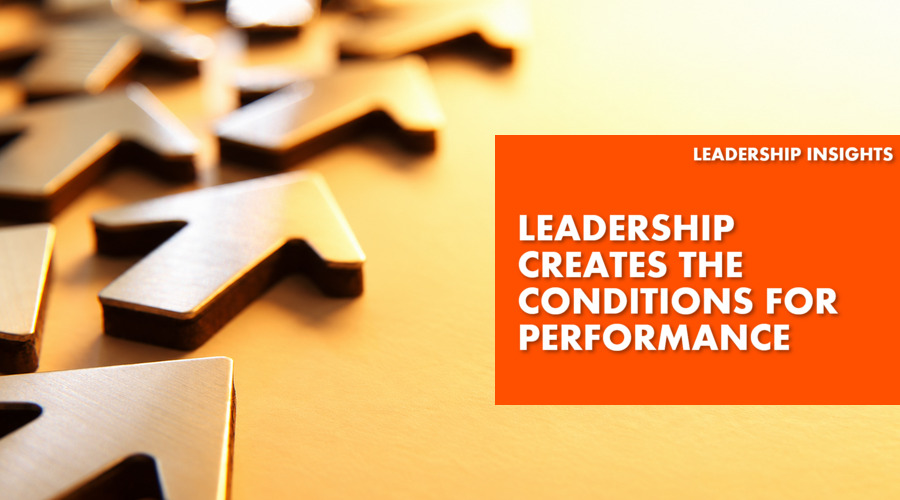
Leadership creates the conditions where performance can thrive.
At Relentica, we see this repeatedly across technology, AI, delivery, operational change, and transformation programmes. The technical challenges are often solvable. The leadership and team dynamics are where value is won or lost.
High-performing teams are intentionally built
Many organisations talk about building high-performing teams as though they appear naturally once talented people are hired. That is rarely true.
High-performing teams are designed deliberately over time. They are nurtured through leadership behaviour, clear direction, coaching, challenge, accountability, and shared purpose. Strong leadership teams understand that performance is not simply about individual capability. It is about how people operate together under pressure.
Strong leadership teams understand that performance is not simply about individual capability. It is about how people operate together under pressure.
One of the most useful leadership models here remains Bruce Tuckman’s team development framework – forming, storming, norming, and performing. While simple, it reflects a reality many leaders still struggle to accept.
Teams do not become high-performing instantly. In the early stages, teams are polite, cautious, and often unclear on expectations. Then comes friction. Different opinions emerge, priorities clash, communication styles collide, and pressure exposes weaknesses.
Many leaders panic at this point.
They mistake challenge for dysfunction.
In reality, healthy conflict is often evidence that a team is becoming real.
The best teams are not built on artificial harmony. They are built on trust strong enough to handle disagreement without losing alignment.
That distinction matters enormously in leadership teams.
Too many organisations reward consensus instead of constructive challenge. The result is groupthink, slow decisions, weak innovation, and poor execution.
Diversity of thought is one of the most powerful drivers of performance.
That does not only mean diversity in background, culture, gender, or experience – although all of these matter. It also means diversity in thinking styles, communication approaches, strengths, and problem-solving.
Frameworks such as DISC can help leaders better understand how people contribute differently within teams. Some individuals naturally drive action and pace. Others focus on relationships and communication. Some create stability and consistency. Others focus heavily on detail, quality, and risk.
High-performing teams need balance.
An organisation full of aggressive drivers creates chaos. A team full of cautious analysts slows progress. A leadership team full of people who think the same way creates blind spots.
Strong leaders build teams that challenge each other productively while remaining aligned around outcomes.
Trust and accountability drive execution
Trust is often misunderstood in organisations. It is not about everyone liking each other, avoiding difficult conversations, or creating a permanently comfortable environment.
Trust is confidence. Confidence that people will deliver, that leaders will support the team under pressure, that mistakes can be surfaced early without blame becoming the default response, and that people can challenge ideas honestly.
Patrick Lencioni’s Five Dysfunctions of a Team remains relevant because it highlights how quickly performance deteriorates when trust disappears.
- Without trust, teams avoid difficult conversations.
- Without difficult conversations, weak decisions survive.
- Without commitment, accountability weakens.
- Without accountability, results suffer.
This becomes even more visible during transformation.
Large programmes create pressure. Priorities shift, timelines tighten, teams become stretched, AI adoption introduces uncertainty, and new operating models create discomfort. Under pressure, leadership behaviour becomes highly visible.
- Do leaders create clarity or confusion?
- Do they encourage challenge or silence?
- Do they support teams when things go wrong or immediately search for blame?
- Do they maintain focus or constantly change direction?
The emotional temperature of an organisation is often set by leadership whether leaders realise it or not.
Fear slows delivery.
Politics destroys momentum.
Confusion creates waste.
Lack of accountability weakens execution.
Clarity, trust, and focus accelerate performance.
This is one reason why organisations struggling with delivery often do not have a capability problem first.
They have a leadership alignment problem.
Growth, coaching, and creating future leaders
High-performing organisations do not simply extract value from people.
They grow capability continuously.
One of the clearest indicators of leadership quality is whether talent is developing inside the organisation.
Strong leaders create environments where people can grow, contribute, challenge themselves, and step into bigger responsibilities. That requires coaching, mentoring, trust, and opportunity. It also requires leaders who are secure enough to let other people succeed.
Weak leadership often becomes territorial. Information is protected. Decision-making becomes centralised. People are managed tightly instead of developed.
That approach limits scale.
Organisations that sustain performance over time usually create leadership depth throughout the business. Knowledge is shared. Teams learn together. Capability spreads beyond a handful of individuals.
This matters even more in modern global organisations.
Many businesses now operate across multiple regions, cultures, and time zones. Teams are increasingly hybrid or remote, and delivery may involve offshore capability, international operations, distributed leadership teams, and external partners.
That complexity creates additional leadership responsibility. Inclusive leadership is no longer optional.
Leaders must consciously create environments where remote teams are included in conversations rather than treated as secondary participants. Global teams need clarity, communication rhythm, visibility, and cultural awareness.
Simple leadership disciplines matter. Acknowledging time zones, rotating meeting burdens fairly, creating visibility across regions, communicating consistently, giving people context instead of only tasks, and building relationships intentionally all contribute to stronger global performance.
Many global organisations fail not because the model is wrong, but because leadership treats distributed teams like disconnected resources instead of integrated parts of the business.
High-performing global teams require thoughtful leadership.
Leadership is the multiplier
Technology continues to evolve rapidly. AI will reshape operating models, delivery approaches, decision-making, customer experience, and productivity over the coming years. Organisations that ignore that reality will fall behind.
But technology alone will never create sustained business performance. Leadership remains the multiplier.
The strongest organisations create environments where people understand the vision, trust each other, challenge constructively, grow continuously, and stay aligned around outcomes.
They balance commercial focus with human leadership.
They understand that delivery excellence is not created through pressure alone. It comes from clarity, accountability, capability, trust, and disciplined execution.
Most importantly, they understand that high-performing teams are not created in a single workshop, transformation launch, or leadership offsite.
- They are built slowly.
- Through consistency.
- Through leadership behaviour.
- Through shared experiences.
- Through trust earned over time.
In a world increasingly obsessed with AI, automation, and technology platforms, that human reality still determines whether transformation succeeds or fails.
At Relentica, we help organisations align leadership, strategy, delivery, and transformation to create measurable business outcomes.
Because technology matters.
But leadership is what turns capability into performance.