Somewhere in your business right now, someone is probably using AI you don't know about.
Not maliciously. Just because there's no sanctioned way to do it properly, so people quietly route around the gap. That's not a discipline problem. It's a design problem.
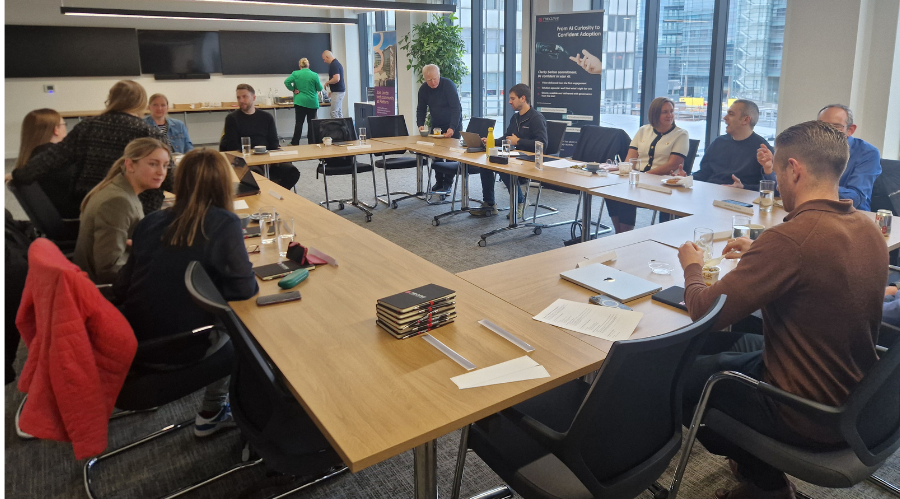
Earlier this year, The Curve brought senior leaders together in Sheffield and Leeds to talk honestly about what AI is actually doing inside their organisations. Governance came up in every room, not as theory, but as something leaders were already living with day to day: shadow AI, unclear ownership, and the question of who is accountable when an AI-assisted decision turns out to be wrong.
One question came up in both rooms that nobody had a good answer to: how do you train and supervise junior staff who can't yet tell when AI is wrong?
This session picks up exactly where that conversation left off.
For many growing businesses, the reality today looks something like this:
Staff using personal AI accounts because the approved tool isn't good enough, or doesn't exist
Governance policies written for how the business worked twelve months ago
No clear owner for what happens when an AI-assisted decision turns out to be wrong
Regulation, from the EU AI Act to sector-specific reviews, moving faster than internal policy can keep pace
The opportunity is real. So is the exposure.
This is not a session on AI hype, and it isn't a lecture on legislation. It's a small, closed-door discussion for senior leaders about what governance actually looks like once AI is already live inside a business, sanctioned or not.
Rather than focusing on theory or the letter of the law, the discussion will explore what governance looks like in practice:
Where AI is already running in your business, sanctioned or not, and what that's exposing
Sizing governance to real risk, not applying blanket process for its own sake
Where data sovereignty genuinely belongs on the spectrum, and where it doesn't
Building governance that survives change: model drift, regulatory drift and growing teams
What "good" looks like once governance moves from principle into daily practice
The goal of the session is simple: to help leaders move from ungoverned or informal AI use toward confident, defensible control, without pretending every business needs the same answer.
This will be a Chatham House ruled event. Places are limited to encourage open discussion. Breakfast will be provided.
Register here: https://thecurve.io/resources/events/the-ai-governance-reality-check-manchester/