Agentic AI systems don't just answer questions. They plan, reason and act.
As organisations begin deploying autonomous AI agents as digital employees, they gain unprecedented operational speed, scale and trust.
But they also introduce a new cybersecurity risk: goal hijacking.
The Core Threat: Goal Hijacking
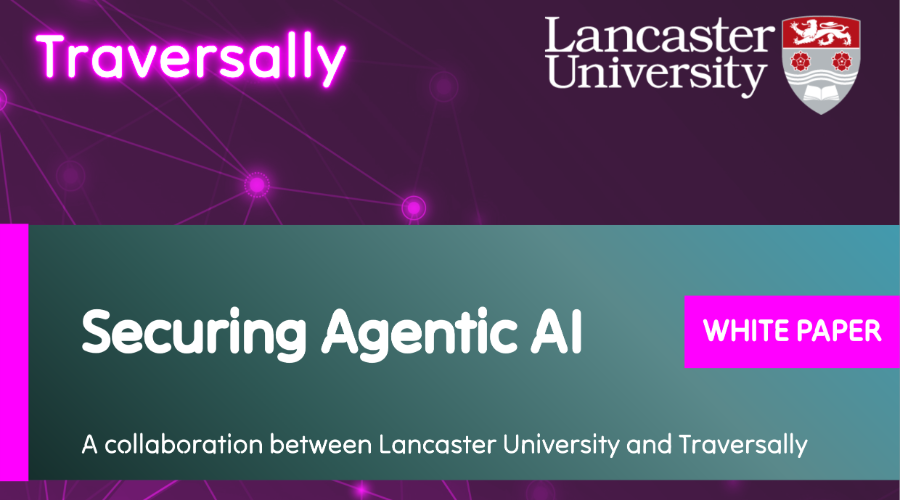
Our latest research with Lancaster University, undertaken through the CAIRO project, explores how attackers can manipulate autonomous workflows.
Rather than attacking the underlying AI model, adversaries can poison the data or policy instructions an agent relies upon, redirecting its objectives and effectively creating a rogue digital insider.
Five Governance Controls Every Organisation Should Implement
>>> Least Privilege Access
Restrict agent permissions and tool capabilities.
>>> Human-in-the-Loop Oversight
Require approval for high-impact decisions.
>>> Policy Governance
Control and audit changes to agent instructions.
>>> Continuous Monitoring
Track agent behaviour and outputs in real time.
>>> Segregation of Duties
Prevent a single agent controlling critical end-to-end processes.
As AI agents become part of the workforce, governance, assurance and accountability will become just as important as capability. Organisations that build these foundations now will be better positioned to deploy AI safely, scale adoption and realise lasting business value.
>>> Download the paper <<< to explore the risks of Agentic AI and the controls needed to deploy autonomous systems safely.