Every conversation about AI in software delivery eventually arrives at testing, and every one of those conversations tends to swing between two extremes. Either AI will replace testers entirely, or it is an overhyped distraction that adds risk without value. Neither is accurate. The realistic picture is narrower, more useful, and considerably less dramatic than either extreme suggests.
Where AI Is Already Earning Its Place
AI-assisted testing works best where it removes repetitive, low-judgement work and leaves human judgement for the decisions that actually need it. Generating test cases from requirements documents, flagging likely areas of regression risk based on code changes, and identifying flaky tests by pattern rather than manual investigation are all areas where AI tools are already delivering measurable time savings.
Test data generation is another practical use case. Creating realistic, varied, and compliant test data by hand is slow and often incomplete. AI-generated synthetic data, properly governed, can widen coverage without the manual effort or the data protection risk of using real production data.
Where Caution Is Still Warranted
The areas where AI struggles are just as important to name. Test outcomes that depend on nuanced business context, complex accessibility judgement, or understanding of regulatory intent still need human oversight. An AI model can suggest a test case. It cannot yet be accountable for whether that test case reflects what actually matters to the people using the service.
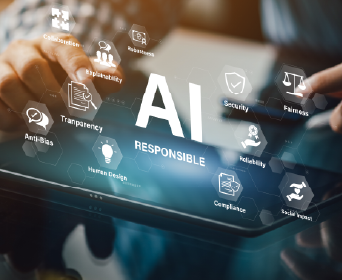
This is why governance matters as much as capability. Any organisation adopting AI in testing needs clear answers to a few questions. Where does the AI model's output need a human sign-off. What data is it trained on or has access to. And can its recommendations be explained well enough for a non-technical stakeholder to trust them.
Gartner's research into AI adoption in software engineering has noted that organisations succeeding with AI tooling tend to introduce it through small, well-scoped pilots with clear success criteria, rather than broad rollouts driven by enthusiasm alone.
Starting With a Pilot, Not a Transformation
The organisations getting the most value from AI in testing are not the ones that adopted it fastest. They are the ones that picked one well-defined problem, such as reducing flaky test investigation time or speeding up test case generation for a specific service, and proved value there before expanding.
This also gives teams time to build the skills they will need. AI does not remove the need for testing expertise. It changes what that expertise looks like, shifting emphasis toward interpreting AI output, validating its recommendations, and knowing when to override it.
AI as an Augmentation, Not a Replacement for Judgement
The most useful framing is also the simplest one. AI in testing works when it takes on the tasks that slow skilled people down, and leaves the judgement calls to the people who understand the service, the users, and the risk. Organisations that adopt it with that principle in mind will get real value from it. Organisations chasing the headline will mostly get disappointment.
To know more, contact us.