Why confidence, capability, and clarity will define the year ahead
2026 is shaping up to be a pivotal year for hiring across tech, AI, digital, and marketing.
After an extended period of caution through 2024 and much of 2025, something has started to shift. Budgets are being revisited, projects are being restarted, and conversations that were previously paused are back on the table. This is not a sudden surge or return to aggressive growth. It is a recalibration toward smarter, more intentional hiring in an AI-plus economy.
At Adria Solutions, we see this shift daily through the roles clients are discussing, the skills candidates are prioritising, and the questions leaders are now asking.
Market confidence is returning, but in a different form
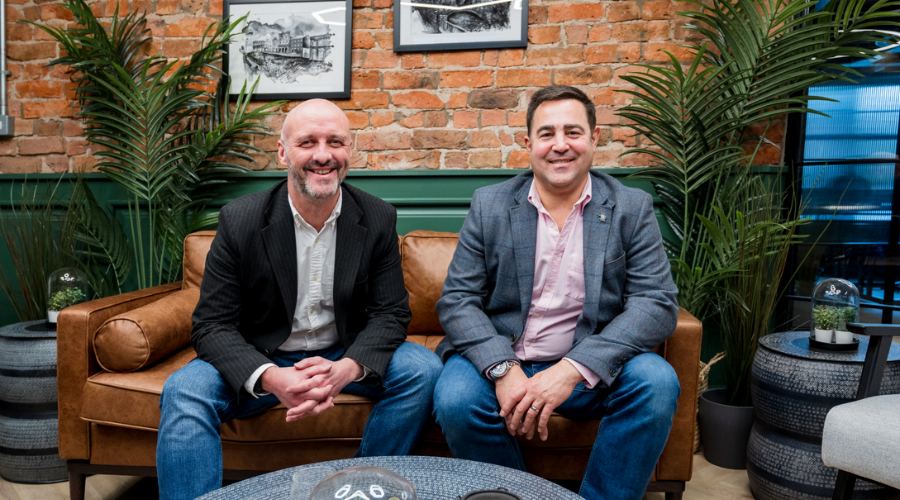
Nick Derham, Director at Adria Solutions, believes the most important change heading into 2026 is psychological rather than dramatic.
“I expect to see market confidence reappear. As that happens, business leaders will restart projects that have been paused, and that will naturally flow into hiring plans further down the line.”
That confidence is beginning to show up in the data. Private-sector hiring showed signs of recovery toward the end of 2025, and early outlooks for 2026 point to cautious but real job growth. Many organisations that froze recruitment did not abandon their plans. They delayed them.
Now, as economic conditions stabilise and pressure builds around digital transformation, those plans are being reactivated.
A lesson from 2012 that still matters
Nick often draws a comparison with 2012, when Manchester began to be recognised nationally as the UK’s leading tech hub outside London.
“The confidence that brought to the region was unbelievable. Investment followed, new businesses started, and recruitment grew as a result.”
The parallel is useful, but 2026 is different in one crucial way. Manchester, and other regional hubs like it, are no longer proving themselves. They are established. Venture investment, infrastructure development, and a mature talent pipeline mean businesses are not taking a leap of faith. They are building on something that already works.
That distinction matters because hiring accelerates faster when the foundations are already in place.
Controlled growth, not a return to chaos
David Berwick, Director at Adria Solutions, offers an important note of realism.
“The last eighteen months have been difficult due to numerous factors that affected confidence. Toward the end of 2025, we started to see more vacancies return. For 2026, I foresee more controlled growth, with demand focused in specific areas.”
Those areas are becoming clear. Data, AI, core technology roles, healthcare, and financial services are all seeing renewed investment. Growth is expected to be moderate rather than explosive, which is healthier for employers and candidates alike.
This is not a market driven by volume hiring. It is driven by need. Roles are tied to outcomes, delivery, and long-term capability.

Tech and AI demand remains structurally strong
Looking into 2026, tech roles are still projected to grow faster than the wider labour market. AI, data science, cloud, and cybersecurity continue to show low unemployment relative to other sectors.
Recent labour market reports highlight AI-centric roles such as AI engineers, consultants, and data modelling specialists among the fastest-growing positions. Competition for these roles has intensified, with applicant volumes increasing sharply since 2022.
What is changing is how employers hire for them.
Skills-first hiring becomes the default
One of the clearest shifts heading into 2026 is the move away from rigid credential-based hiring. Skills-first evaluation is becoming mainstream.
Employers are placing greater weight on capability, practical assessment, and demonstrable experience. Micro-credentials, skills testing, and portfolio-based evaluation are increasingly replacing traditional filters.
At the same time, candidates are prioritising development. Many professionals now value structured upskilling and progression over short-term pay increases. In response, organisations are ring-fencing budgets for internal training as a strategic tool for retention and long-term resilience.
AI creates jobs, but changes how work is done
AI remains the defining force shaping hiring patterns, but its impact is more nuanced than headline narratives suggest.
Research shows that organisations adopting AI are seeing higher revenue growth per worker and sustained wage premiums for AI-related skills. Rather than eliminating demand, AI is shifting it. Employers are recruiting different profiles, combining technical depth with the ability to apply AI in real business contexts.
Some functions will change. Certain back-office and security tasks are becoming more automated. But the net effect is not contraction. It is transformation.
Flexibility and project hiring shape resourcing strategies
Another defining feature of 2026 hiring is flexibility. This goes beyond remote versus office debates.
Organisations are increasingly using contract and project-based hiring to access specialist skills quickly while managing risk. Cloud migrations, data platform builds, AI implementations, and cybersecurity programmes are often delivered through blended teams combining permanent and contract expertise.
This approach allows businesses to move forward without overcommitting, while giving skilled professionals access to high-impact work.

What this means for employers and candidates
For employers, 2026 is about preparedness. Those with clear priorities, realistic timelines, and a strong understanding of required skills will move first and hire best.
For candidates, it is a market that rewards depth, adaptability, and continuous learning. Employers are selective, but they are hiring with purpose.
Nick puts it simply.
“This time, the opportunity is not just coming. It’s already beginning.”
The bottom line
2026 will be defined by transition, not stagnation. Market confidence, AI integration, and evolving hiring models are converging to reshape recruitment across tech, digital, and marketing.
Organisations that focus on skills, flexibility, and long-term growth rather than short-term volume will lead the next phase of hiring. The door is opening again, but those who walk through it successfully will do so with clarity, not haste.