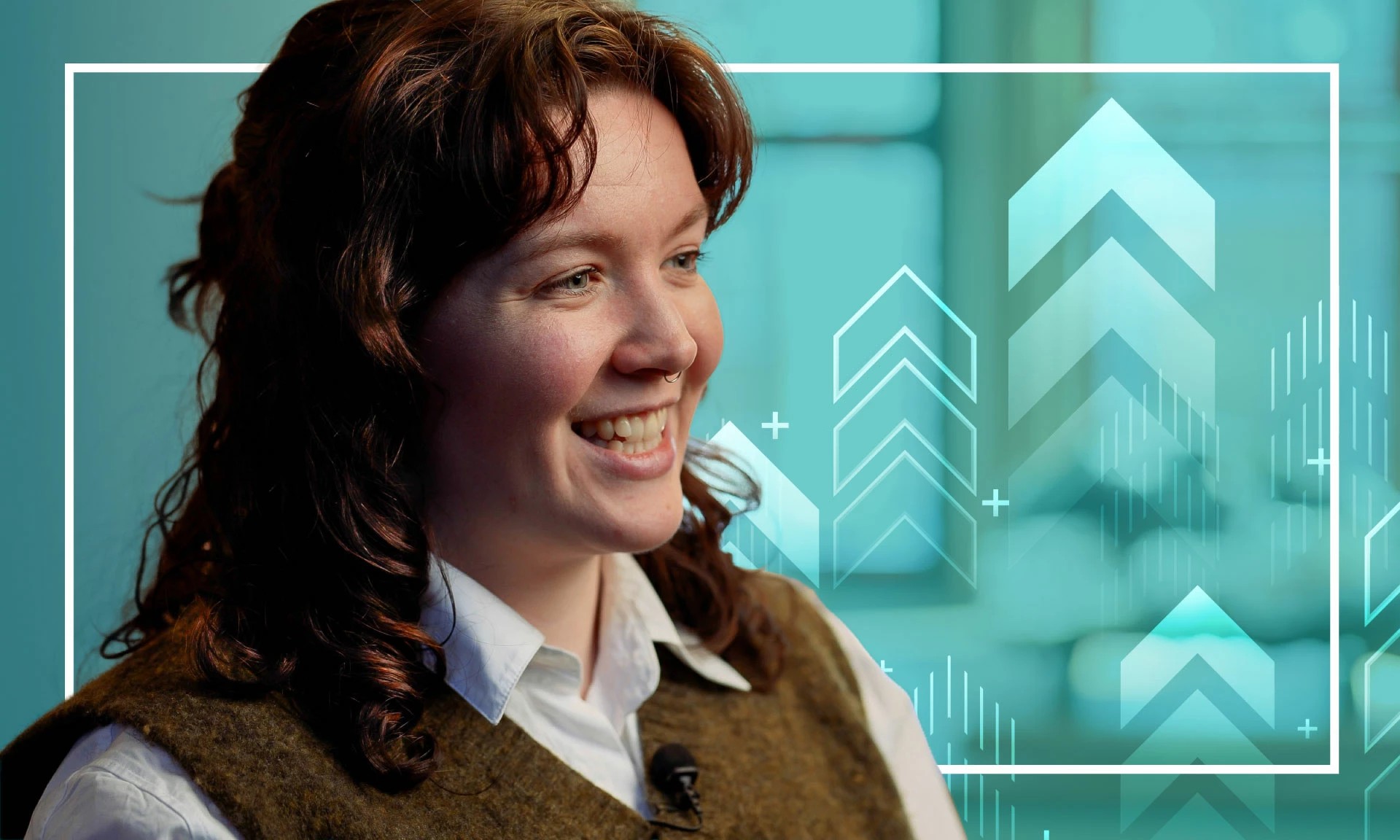
Colette Marshall, Lead User-Centered Design Consultant
When I was thinking about the next step in my career, I knew I was looking for something quite specific, even if I did not have everything fully mapped out at that point.
I wanted to keep developing as a practitioner, but I also wanted more variety in the work I was doing, more responsibility, and the sense that what I was contributing to was making a real difference. Just as importantly, I wanted to enjoy where I worked and feel like it was somewhere I could see myself building a longer-term career.
That combination is not always easy to find, but it is what led me to Informed.
Before joining, I had already started to move into user-centred design and had a good grounding in the fundamentals. What I was really looking for next was somewhere that would help me take that further, not just by continuing to build my skills, but by giving me the opportunity to apply them in different contexts and grow through real delivery.
Consulting appealed to me for that reason, but what stood out about Informed was the chance to do that in the Tech for Good space. I wanted the work I was doing to have a tangible impact, not just in theory, but in a way that you could actually see reflected in the world around you.
Hear more about my journey and progression in the video below:
Building confidence through early responsibility
I joined Informed around two years into my career, and one of the things that struck me quite quickly was the level of trust that was placed in me early on.
I initially came in as a user researcher, which was an area I was keen to develop further, but I was also interested in building a broader skill set across user-centred design. What I found was that there was genuine support for that. I was not confined to one area or expected to stay within a narrow remit.
I was given the freedom to take on meaningful responsibility early in my time here, with plenty of support along the way. Whether it was leading user research sessions, working directly with clients, or owning parts of the work, I was encouraged to get involved rather than wait on the sidelines. That combination of support and trust made a real difference.
As I moved between projects, that continued, and where one engagement might focus more heavily on user research, the next would give me the chance to develop my interaction design skills again. That variety, alongside the trust and support, helped build both confidence and capability in a way that felt natural and progressive.
Growing into a Lead role
I have now been at Informed for almost five years, and over that time my role has evolved quite significantly.
What started as a focus on developing my research and design skills has gradually expanded into something broader. As a Lead user-centred design consultant, I am still involved in the work itself, but I also have responsibility for how that work is delivered more widely.
That includes making sure the overall quality of what we deliver is where it needs to be, supporting the people in the team, and ensuring that everyone has the opportunity to develop in the same way that I was supported earlier in my career.
It is not something I necessarily set out to do from the beginning, but it is a part of the role that I have come to really value. Being able to contribute to other people’s development, as well as continuing to challenge myself, adds a different dimension to the work.
Alongside project delivery, I am also involved in shaping our user-centred design discipline. That might involve helping define how we work, contributing to standards, or supporting colleagues across the business, all of which has broadened my perspective beyond individual projects.
Seeing the impact of the work
One of the main reasons I wanted to move into this space was to work on things that felt meaningful, and that has been a consistent part of my experience at Informed.
A project that really stands out for me is the work we did with the Scottish Government’s Agricultural and Rural Economy Directorate. The programme focused on rethinking how funding and support is provided to farmers and crofters, while also contributing to net zero and climate targets.
It was a complex and high-profile piece of work, which made it both challenging and exciting to be part of.
I was leading the user research for that programme, working directly with farmers, crofters, and land managers to ensure their perspectives were properly reflected. It also involved shaping how that research was carried out, from how participants were engaged to how we approached the work in a consistent and sensitive way.
What has stayed with me is not just the scale of the programme, but the fact that the approaches we developed are still being used. There is a sense that the work continues beyond the life of the project, which is incredibly rewarding.
More broadly, that is what matters most to me about the work we do. It is about being able to look back at the end of the day and feel that you have contributed to something worthwhile, rather than just delivering for the sake of it.
A collaborative and supportive environment
The pace of work can be demanding at times, particularly when you are working towards key milestones or deadlines, but what makes a difference is how that work is approached.
There is a strong sense of collaboration across teams, and a shared responsibility for delivery. When things become more challenging, people tend to come together rather than working in isolation, which changes the experience quite significantly.
Spending time in the office has also played an important role in that. Being able to have informal conversations, ask questions quickly, or simply observe how others approach their work has been a big part of my own development.
Those day-to-day interactions help build stronger relationships within teams, and that in turn improves how we work together and the quality of what we deliver.
Taking ownership of your development
Something I have learned over time is that while there is a lot of support available, you do need to take an active role in shaping your own development.
There are plenty of opportunities, whether that is through project work, internal initiatives, or getting involved in the wider industry, but they are not things that are imposed on you. There is a lot of support available, but curiosity and proactivity make a big difference in how much you get out of them.
That balance works well. It means you are supported but also trusted to take some ownership of your capability development and over time, to understand the kind of career you want to build.
Looking ahead
As the business continues to grow, so does the variety of work and the opportunities that come with it. For me, that has meant taking on responsibilities that I would not have expected earlier in my career, and gradually building the confidence to step into them.
Looking back, that progression has not come from waiting until I felt completely ready, but from being trusted to take things on and learning through doing. That is probably the biggest difference I have found.
If you are early in your career and looking for somewhere to develop, it is not just about the work you do, but how quickly you are given the chance to contribute to it in a meaningful way. For me, that has been a combination of early responsibility, supportive colleagues, and the opportunity to work on things that genuinely matter.
That is what has allowed me to build my career here so far, and what continues to make me excited about what comes next.
Learn more about life at Informed here: https://www.informed.com/careers/why-informed/