A Cheshire-based medtech business has secured £4.5m of investment and grant funding to revolutionise treatment for the most common type of primary brain cancer in adults and extend potentially thousands of lives each year.
QV Bioelectronics has created a world-first implantable device to improve outcomes for patients affected by hard-to-treat glioblastoma (GBM), which Cancer Research UK states accounted for around 32% of all brain tumours diagnosed in England between 1995 and 2017.
Affecting around 2,200 UK adults each year, GBM is an aggressive disease with very limited treatment options – only 3% of patients diagnosed with the condition live for five years from diagnosis, while less than 1% live for 15 years, highlighting its terminal nature.
According to The Brain Tumour Charity, patients currently survive an average of 12-18 months after diagnosis. It is also the same cancer that took the life of former Labour MP Dame Tessa Jowell, who died in 2018 a year after being diagnosed.
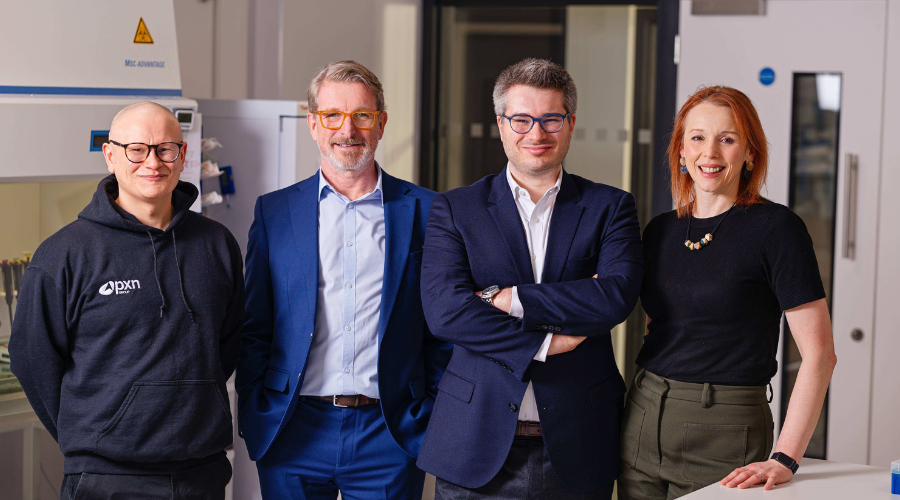
Developed by founders Dr Christopher Bullock, a biomedical engineer, and Dr Richard Fu, an NHS neurosurgeon, QV Bioelectronics’ flagship implant technology GRACE, which stands for Glioma Resection Advanced Cavity Electric Field therapy, uses electric field therapy to kill residual brain cancer cells following brain tumour surgery. Using continual therapeutic electric fields helps to prevent GBM, which has a 90% re-occurrence rate within two years, from growing back.
GRACE seeks to improve survival whilst maintaining quality of life for patients going through treatment for newly-diagnosed and recurrent GBM. Early laboratory testing has helped to validate QV Bioelectronics’ approach, and the Alderley Park-based firm will now use the funds to continue its clinical trial work, including its first-in-human clinical study in mid-2026.
Dr Christopher Bullock, CEO and co-founder of QV Bioelectronics, said: "Brain cancer is a devastating diagnosis, and for too long patients and families have had few treatment options. Our mission at QV Bioelectronics is simple but ambitious, to develop technology that can meaningfully extend life and give people more time with those they love. This investment allows us to take a major step towards that goal, progressing into first-in-human studies and generating the vital evidence needed to bring a new treatment approach to the patients who need it most. We are incredibly grateful to our partners and investors for supporting this vision."
The investment round was led by PXN Ventures, which has recently launched following the merger between Praetura Ventures and Par Equity. PXN invested via the GMC Life Sciences Fund by PXN Ventures, which it manages on behalf of the fund’s limited partners Bruntwood SciTech, Enterprise Cheshire and Warrington and Greater Manchester Combined Authority.
Investment also came from NPIF II – PXN Equity Finance, which is managed by PXN Ventures as part of the Northern Powerhouse Investment Fund II (NPIF II). Empirical Ventures and angel investors also contributed to the round, with non-dilutive support from the National Institute for Health and Care Research and from Innovate UK.
Dr Kath Mackay, Chief Scientific Officer at Bruntwood SciTech, said: “The North West is a hotbed of life sciences innovation – Christopher and Richard embody that. Their work shows why the UK is an R&D superpower and their technology is poised to improve and save lives. Securing this level of funding is a major vote of confidence in both the team and their pioneering approach. At Bruntwood SciTech, we’re proud to be part of the support network helping QV Bioelectronics take this vital next step – providing the specialist infrastructure, connections and ecosystem access that they need to accelerate their growth at Alderley Park and advance groundbreaking new treatments.”
Sue Barnard, Senior Investment Manager at British Business Bank, said: “QV Bioelectronics is a great example of the ambitious, high-impact innovation we want to support through NPIF II. Developing breakthrough medical technologies at this stage is complex and capital intensive, but the potential patient benefit is enormous. This funding will help and strengthen the North West’s reputation as a leading hub for life sciences innovation.”
Dr Johnathan Matlock, Co-Founder and General Partner at Empirical Ventures, said: “Securing funding at the preclinical stage for Class III medical devices is notoriously difficult, and this round underscores the grit and determination Chris and the team have demonstrated during this critical transition. QV is developing the world’s first implantable brain cancer therapy, leveraging a clinically de-risked mechanism of action. This funding will enable the company to generate first-in-human data, an inflection point that, combined with the significant unmet need in brain cancer treatment, presents a compelling opportunity.”
Dr Nicky Huskens, CEO of the Tessa Jowell Brain Cancer Mission, said: “As participants in the inaugural Brain Tumour Research Novel Therapeutics Accelerator (BTR-NTA) review, we would like to congratulate the QV Bioelectronics team on securing this investment. Brain tumours remain one of the most difficult cancers to treat, so investing into companies in the sector is critical.”
QV Bioelectronics’ mission is to develop a therapy that can meaningfully extend life without adding further burden to patients already undergoing intensive treatment. GRACE has been designed to integrate into existing care, offering continuous therapy at the point where it is needed most, with the potential to shift the standard of care for future generations of patients.
Lawyers DWF advised PXN Ventures throughout the deal, with QV Bioelectronics advised by Spencer West.