I was in a coaching session this week with a senior leader at a growing agency. They had just lost someone to a competitor. Not a difficult conversation that had been coming, not a surprise from someone who had been struggling, but someone genuinely good, someone they thought was settled and invested in what the business was building. "I had no idea they were even thinking about it," they told me. "As far as I knew, everything was fine."
It's always 'fine'. Until it isn't!
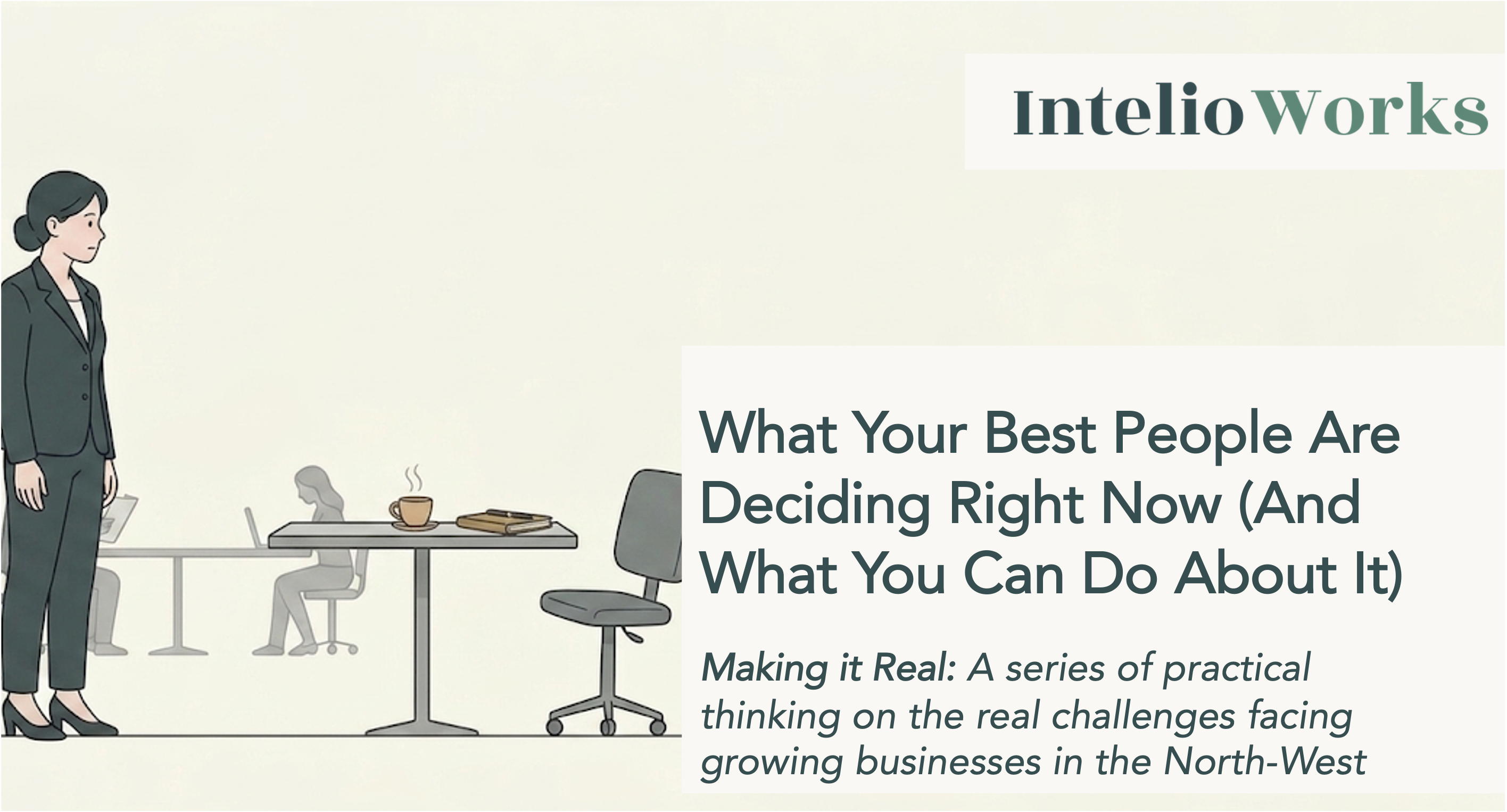
Making it Real: practical thinking on the real challenges facing growing businesses in the North West. This article is part of a series exploring the issues business leaders are navigating today, and the practical steps that drive results.
The best people in your business are unlikely to tell you they are thinking about leaving. They will carry on doing good work, showing up to the meetings, hitting their targets, while quietly working through a decision that, by the time you hear about it, has already been made. This is not disloyalty, it is simply how people work, and it is one of the most consistently underestimated risks in growing businesses. CIPD research found that more than 6.5 million people in the UK expect to quit their job in the next 12 months, with those reporting the poorest job quality the most likely to be considering a move. Critically, pay is not the only driver...and for many people, not even the primary one. That matters, because it means the solution is rarely as straightforward as a (proabably too late in the day, see below)salary review.
What the decision is actually based on
When they think about retention, leaders often default to thinking about compensation. Yes, pay matters, especially if someone is being significantly underpaid relative to what the market offers. But for the majority of people who leave businesses they were once genuinely committed to, salary tends to sit further down the list of reasons than most leaders assume. What tends to sit underneath the decision is one or more of three things: they cannot see clearly where they are going within the business, the work has stopped feeling purposeful or stretching, or they have quietly lost confidence that the leadership around them will be straight with them when it matters. All three of those are within a leader's gift to address, and none of them require a compensation review to get started.
The signals most leaders miss
By the time the resignation letter arrives, the decision behind it has typically been made months earlier. What precedes it is a pattern of small but consistent behavioural shifts that are visible to a leader who is genuinely close to their people and paying the right kind of attention. People who are moving toward the door tend to stop proactively contributing. They will answer questions in meetings but stop volunteering ideas or raising issues. They become more transactional in their interactions, present but not really invested. They stop pushing back, and in a healthy team the absence of challenge and disagreement is worth noticing rather than enjoying. They begin protecting their time and energy in ways that are subtle but, once you know to look for them, fairly consistent.
Annual engagement surveys are not well designed to catch any of this. By the time a survey runs and the results are analysed at 'team level', the window for intervention may already be narrowing. The signal lives in day-to-day behaviour, and reading it requires leaders who are genuinely embedded in the experience of their teams rather than managing them at arm's length.
Five things that actually move the dial
Have the conversation most leaders avoid. The single most effective retention action available to any leader is regular, direct and honest conversations with the person about where they see themselves going and what the business is prepared to do to support that journey. Most leaders shy away from this. Not because they do not care, but because it feels exposing. The person might raise things that are uncomfortable to hear, or signal that they are already looking elsewhere. That discomfort is precisely why the conversation matters. People who feel genuinely heard by their leadership, and who trust that the conversation will be honest rather than managed, tend to make very different decisions to those who feel invisible or handled. You don't have to have all the answers in the room, but you'll get a load more respect by starting the converastion and having an honest, onoing dialogue.
Look honestly at what the role is actually offering. The most durable retention lever is whether the role itself is still growing and still mattering. People who are learning, stretching, and building toward something tangible tend to stay considerably longer than those who are comfortable but essentially static. Growth alone is not always enough though, people also need to feel that the work they are doing has genuine impact, that it connects to something larger than the task itself and that their contribution is visible and valued within the business. If the role has plateaued, or if the person has quietly concluded that what they do does not really change anything, they will eventually go and find somewhere it does. The question worth asking is not simply "are they happy?" but whether the role is still genuinely challenging them, whether it feels like it matters, and whether they can see how what they are doing today links to the companies straegy.
Pay attention to who is getting the interesting work. One of the quietest drivers of disengagement is the uneven distribution of meaningful work. The best people notice very quickly when the stretching assignments, the visible projects, and the opportunities to work alongside senior leadership are consistently going to the same small group. Variety and visibility matter, not just for development, but as a signal that the business sees someone's potential rather than just their current output. A good leader knows who is getting the interesting work and who is not, and asks themselves honestly whether that distribution reflects the talent they actually have in the room.
Do not underestimate the impact of the manager directly above them. It is often said that people do not leave businesses, they leave managers. It is slightly reductive, but lived experience backs this up. The quality of the relationship between a person and their direct manager is one of the most consistent predictors of whether they stay or go, and it is an area most senior leaders underinvest in because it feels like a layer removed from their direct responsibility. Investing in the capability and self-awareness of the middle management layer is a retention strategy with a measurable commercial return, and one that compounds over time in ways that one-off initiatives rarely do. Part of this is also trusting and empowering your middle managers - ensuring they are clear on strategy and give them freedom to operate in a framework that you all agree upon.
Make the commercial case before the resignation, not after. Clearly you should have a proactive approach to remuneration and reward to ensure team members are feeling fairly paid and valued. But when a valued person is showing early signs of disengagement, the leader's job is to build any investment case for that person internally while there is still time to act on it. Total replacement costs can easily reach 200% of annual salary once you factor in lost productivity during the gap, recruitment costs, and the time it takes a new person to genuinely get up to speed. When looking at the investment case, don't focus simply on salary - think about the overal motivators and construct real value in areas that matter.
What Actually Works: How Intelio Works Can Help
Retention is rarely solved by a single initiative or intervention. It is an outcome of how consistently a business leads, develops and engages its people over time and whether the structures, conversations and routines that support that are genuinely embedded rather than deployed reactively when someone hands in their notice.
Overtime, you should be aspiring to build a culture where teams feel inspired, valued and that their work has impact - when those building blocks are in place you can avoid being reactive and disrupted.
This is one of the core areas where I work with leadership teams in service and knowledge businesses:
- Leadership effectiveness: helping senior leaders develop the habits, quality of conversations, and presence that build genuine trust and retain talent over time, rather than assuming good intentions are enough on their own
- People and culture strategy: working with businesses to understand what is actually driving disengagement beneath the surface, and building a practical response that goes well beyond away days and initiatives
- Organisational design: ensuring roles are structured in ways that offer real growth, genuine impact and a visible path forward rather than expanding responsibility without direction
- Interim and advisory support: working alongside leadership teams through periods of change and uncertainty, when retention risk tends to be at its highest and the pressure to focus elsewhere is most intense
The best time to have the retention conversation is before you need to have it. We're operating in challenging times - with high levels of disruption and uncertainty. Chances are, someone in your team will be having a wobble. Don't leave it to chance - get a head of it and build the muscle in your business.