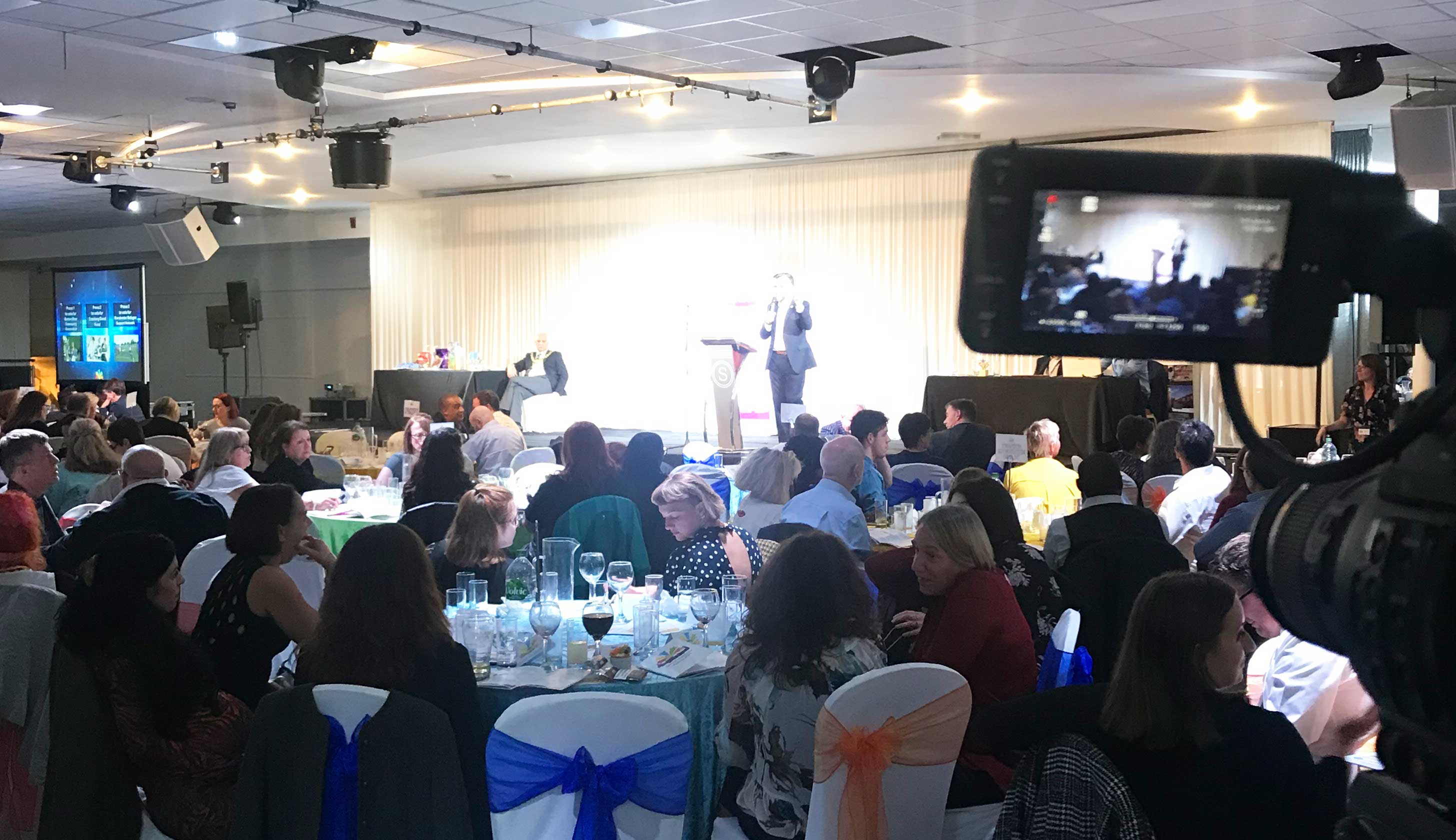
One of the biggest mistakes businesses make when planning a filming day is focusing entirely on the number of videos they want to produce.
A better starting point is understanding what their audience needs to see, learn or understand.
A useful content strategy should cover several stages of the customer journey.
Awareness content introduces the business to new audiences. This might include industry insights, short educational videos, company introductions and commentary on relevant developments.
Consideration content helps prospective customers understand the organisation's expertise. Explainer videos, product demonstrations, employee interviews and behind-the-scenes footage can help communicate how a business works.
Decision-making content gives prospective customers additional reasons to trust the organisation. Customer testimonials, case studies, project showcases and detailed service explanations can provide valuable reassurance.
Planning content around these different purposes creates a more balanced collection of videos. It also helps marketing teams avoid publishing the same type of promotional message repeatedly.
Repurposing Video Without Repeating Yourself
Another advantage of batch filming is the opportunity to repurpose original recordings into different formats.
A 15-minute interview with a company director, for example, might contain several useful insights. Rather than publishing the entire interview as one video, the marketing team could identify individual topics and edit them into shorter, self-contained clips.
A customer case study could become a longer website video, shorter social media extracts and supporting content for a marketing campaign.
Similarly, footage captured during a product demonstration could be used in social media posts, website content and sales presentations.
However, repurposing should involve more than simply cutting a longer video into smaller sections. Each version needs to communicate a complete idea and make sense to the audience encountering it.
Businesses should also consider the different requirements of each platform, including video dimensions, subtitles, duration and presentation.
This is where a structured editing and post-production process becomes important. Professional post-production services can help turn existing recordings into finished videos suitable for different platforms and marketing purposes.
Measuring Whether Your Content Strategy Is Working
Producing more content doesn't automatically mean a business has a better content strategy.
Marketing teams need to understand whether their videos are achieving the objectives they were created for.
Depending on the purpose of the content, useful performance indicators might include:
Video views and audience retention.
Engagement, comments and shares.
Website visits generated by social media content.
Enquiries and conversions.
Engagement with specific products or services.
Recruitment interest generated by employer-focused content.
For example, an educational video might receive fewer views than an entertaining social media post but generate more meaningful enquiries from potential customers.
Equally, a recruitment video might not generate significant public engagement but prove useful when shared directly with prospective candidates.
The important consideration is whether the content is reaching the right audience and contributing to the intended business objective.
Performance data should also influence future filming sessions. If particular topics consistently attract relevant engagement, businesses can use those insights to identify what they should record next.
When Should Businesses Consider Professional Video Production?

Some businesses have the equipment and internal expertise to produce content themselves. For straightforward updates, informal recordings and occasional announcements, this may be sufficient.
However, when video becomes an important part of a wider marketing strategy, professional production can offer additional value.
A production team can help businesses develop concepts, plan filming schedules, manage interviews, capture professional footage and deliver edited content in formats suited to different marketing channels.
This is particularly useful when several employees need to participate, multiple content themes need to be covered or the finished videos must maintain a consistent standard.
For example, Title Productions' video production services cover the planning, filming and editing stages, helping organisations develop content around their communication objectives.
The importance of planning is also evident in larger projects. Title Productions' GBS UK Graduation 2026 case study demonstrates how a coordinated production programme can deliver films, website content and social media assets across multiple locations.
The same principle applies to businesses of different sizes: production should be organised around the content the organisation actually needs.
Creating a Content Production System That Lasts
Consistency is easier to achieve when content creation becomes a planned business activity rather than an occasional marketing task.
Businesses don't necessarily need to arrange filming every week. They need to understand what they want to communicate, identify the people and resources required, and establish a realistic production and publishing schedule.
Batch filming provides one way to achieve this.
By bringing together content planning, production, editing and distribution, organisations can reduce repeated preparation and make better use of the time available to their teams.
The result is more than a collection of social media videos. It's a reusable content library that can support brand awareness, customer education, recruitment, sales and wider business communications.
For organisations reviewing how they approach video, Title Productions' portfolio provides examples of different production formats, including brand films, documentaries, case studies, recruitment content and social media projects.
Ultimately, the most effective content strategy isn't necessarily the one that publishes the most frequently. It's the one that consistently delivers useful information to the right audience without placing unnecessary pressure on the people responsible for creating it.
One well-planned filming day can provide weeks of valuable material. The real advantage comes from having a clear strategy for what to record, how to use it and where it fits into the wider marketing plan.
Businesses interested in developing a more organised approach to video content can contact Title Productions to discuss their production requirements.