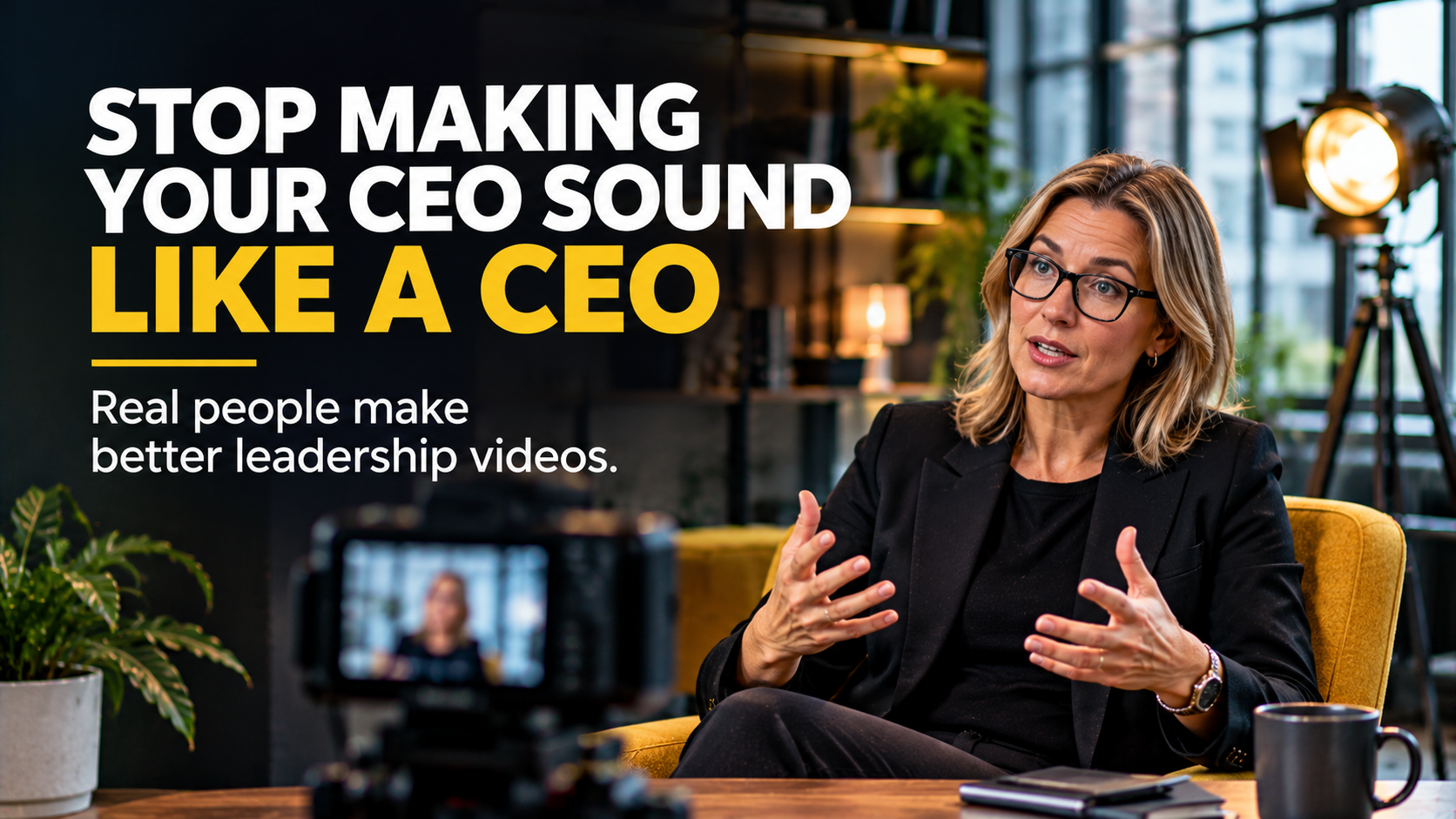
Put a camera in front of most CEOs and something strange happens.
The person who is sharp, direct and engaging in everyday meetings suddenly starts speaking like they've swallowed a corporate communications handbook.
"We're passionate about delivering excellence for our valued stakeholders."
"We strive to create innovative solutions that drive meaningful impact."
Nobody talks like that in a normal conversation. And that's precisely why audiences can struggle to connect with it on camera.
The problem isn't that business leaders have nothing interesting to say. Most have years of experience, valuable insights and stories their customers would genuinely want to hear.
The problem is what happens when those thoughts are turned into a polished corporate performance.
The best CEO videos don't make leaders sound more corporate. They make them sound more like themselves.
Why the Corporate Voice Doesn't Work
Audiences don't just listen to the words in a CEO video. They notice how those words are delivered.
Does the speaker sound comfortable? Do their answers feel genuine? Does the message appear to come from personal experience?
A perfectly delivered script can still feel unconvincing when the language sounds unnatural.
Compare these two statements:
Corporate version:
"We are committed to delivering innovative solutions that empower our clients to achieve sustainable business growth."
Human version:
"We want to help businesses solve problems that are holding them back. That's what our team comes to work to do."
The second statement is easier to understand because it sounds like something a person might actually say. It also gives the audience a clearer idea of what the business does.
Professional communication doesn't require complicated language. A CEO can demonstrate authority, expertise and confidence without relying on corporate terminology.
The objective is to remove the unnecessary performance that gets between the speaker and the message.
Why CEOs Suddenly Sound Different on Camera
There are several reasons why confident business leaders can become unusually formal when recording a video.
The Script: When Someone Else Writes Your Personality
A communications team prepares a script for a company introduction, announcement or leadership message. It goes through approval and eventually lands in front of the CEO.
The language might look perfectly acceptable on paper, but it may not sound anything like the person expected to deliver it.
A naturally direct leader is suddenly trying to remember carefully constructed sentences rather than explain something they understand.
Instead, establish the key messages first and allow the CEO to explain them in their own language. The production team can shape the narrative during editing without forcing the speaker to memorise every sentence.
The Autocue: Reading Is Not the Same as Talking
Autocues are useful when exact wording is essential, such as formal announcements or broadcast-style presentations.
However, they aren't always the best option for leadership videos.
Reading from a screen can shift the speaker's attention towards delivering the written words rather than communicating the meaning behind them.
For many CEO interviews, an off-camera interviewer and a series of well-prepared questions can produce a more natural result. The CEO listens, thinks and responds, while the production team builds the final video around the strongest answers.
The Pressure: Everyone Thinks It's a Big Performance
When a video has been approved by senior management and organised over several weeks, the person appearing in it knows it matters.
That pressure can make them overthink every sentence. They try to sound authoritative, avoid mistakes and deliver something suitably important.
A better approach is to make the recording feel like a conversation rather than a major speech.
How to Film Leaders People Want to Listen To
Good CEO videos require preparation, thoughtful questions and an environment that allows the speaker to relax.
Interview, Don't Ask Them to Recite
Instead of handing a CEO a finished script, start with the subjects the video needs to cover.
Prepare questions that encourage them to explain their experiences, opinions and decisions.
For example:
What problem did the business originally set out to solve?
What do customers commonly misunderstand about your service?
What has the business learned from its biggest challenges?
What makes your team approach its work differently?
A skilled interviewer can explore interesting answers, ask follow-up questions and encourage the CEO to explain points in greater detail.
The final edit can then have a clear narrative without sounding like a rehearsed speech.
Ask Questions That Produce Stories
Questions such as "What makes your company innovative?" often produce predictable answers.
Try asking something more specific:
What was the biggest mistake you made when starting the business?
Can you remember a customer problem that changed how you work?
What is something about your industry that people misunderstand?
What decision looked risky at the time but turned out to be right?
Specific experiences are often more memorable than general statements about company values. They give audiences something useful while revealing more about the person behind the business.
Give the Camera Time to Become Normal
The first few minutes of an interview aren't always the most useful.
The speaker may be adjusting to the environment, thinking about the camera or worrying about how they sound. That's normal.
Start with straightforward subjects and allow the conversation to develop before moving into more important questions.
Some of the strongest answers arrive after the initial warm-up, when the speaker becomes more comfortable and focuses on the conversation rather than the recording equipment.
Don't Edit Out Every Human Moment
There is a difference between an unclear answer and a natural human moment.
A pause while someone thinks, a brief laugh or a speaker correcting themselves can make an interview feel genuine.
Editing should remove unnecessary repetition and distracting mistakes, but removing every pause and spontaneous moment can make the final video feel artificially polished.
The objective is clarity, not perfection.
One Interview Can Create More Than One Video
A CEO interview doesn't have to become a standalone corporate film that is published once and forgotten.
With the right planning, one recording session can produce several useful pieces of content:
Company introduction: A structured film explaining the organisation's purpose, expertise and direction.
LinkedIn leadership clips: Short extracts featuring the CEO's opinions and industry insights.
Customer education: Answers to common questions that help prospects understand the business.
Recruitment content: Conversations about leadership, company culture and the organisation's people.
Website content: Videos supporting About pages, service pages and relevant landing pages.
Sales support: Specific answers that help address questions from potential customers.
Not every answer will become a separate video, and not every clip needs to be published. The important thing is to plan for multiple uses before filming.
A consistent video production and content strategy can help businesses make better use of their leadership expertise.
What If Your CEO Doesn't Like Being Filmed?
Not every business leader is naturally comfortable on camera. Some are confident speakers but dislike being recorded. Others need time to organise their thoughts.
That doesn't mean they shouldn't appear in video content. It means the production approach needs to suit the individual.
Start with a conversation before filming. Explain the video's purpose, who will watch it and what subjects will be covered. Use an interviewer who can make the discussion feel natural, and choose a comfortable filming environment.
It's also worth reminding contributors that the final video will be edited. They don't need to deliver every answer perfectly in one take.
Authenticity doesn't mean abandoning preparation or editorial control. It means creating the conditions for a leader to communicate naturally while keeping the message accurate and appropriate.
Stop Directing a Performance. Start Capturing a Person.
Your CEO probably doesn't speak in corporate slogans during a normal conversation. They explain problems, tell stories, make decisions and share opinions.
Those are the qualities that make them interesting to listen to.
A better leadership video starts with the person, not the script. Ask better questions, create a relaxed interview environment and give the speaker time to find their rhythm.
At Title Productions, we produce corporate videos, leadership interviews and branded content designed to communicate business expertise in a clear and engaging way.
You can explore examples of our previous production work to see how different stories and messages can be brought to life.
If your leadership videos feel overly scripted or your executives struggle to communicate naturally on camera, talk to our team about your next production.
Your CEO doesn't need to sound more like a CEO. They need to sound like the person people already trust.