Most advice about minimum viable products is written by people who advised on one. We built ours, ran it as a business for years, and sold it — so this is what the decision actually looked like from the inside.
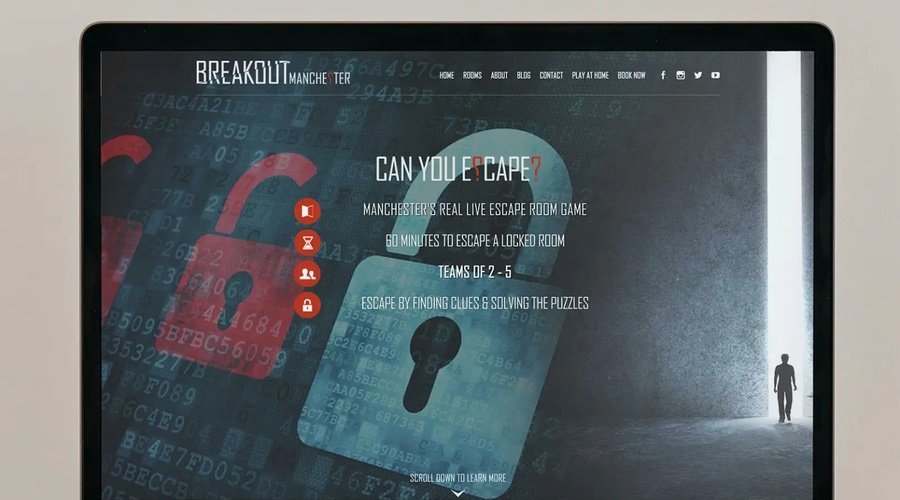
In the early 2010s a client called Breakout was opening an escape room in Manchester. They needed online booking. We went looking for a platform to plug in and found nothing that fitted how attractions actually operate — the way availability works, the way staff handle a walk-in, the way a venue takes money.
So we built one. The ambition was a booking platform for an entire industry. The first release was a booking platform for one venue on Church Street.
What we cut
Multi-venue reporting. Obviously essential for a platform serving hundreds of venues. Completely irrelevant to a platform serving one. It could wait until we had venues to report across, and by then we knew which numbers operators actually looked at — which was not the list we'd have built from.
Marketing automation. Every competitor had it. Every prospect asked about it. We shipped without it and found out that what operators wanted first was for the booking to not go wrong. Features that sell in a demo and features people use daily are frequently different features.
Every integration except payments. One integration blocked the core journey. The rest were assumptions about what a customer might want to connect to. Assumptions are cheaper to test than to build.
What we refused to cut
Three things got built properly even though the product was tiny: how each venue's data stays separated from every other venue's, how roles and permissions work inside an account, and how payments behave when a card is declined or a booking is refunded.
None of those are features. They're structure. You can add a reporting screen to a well-built platform in a fortnight; you cannot retrofit tenancy onto a product that assumed one customer without effectively rewriting it. That's the line we'd draw again: narrow in surface area, sound underneath.
What happened
It launched alongside Breakout's opening and took hundreds of bookings in the first few weeks. Then something we didn't predict — it spread well beyond escape rooms, into trampoline parks, tours, activity centres, anything with a schedule and a queue. Resova ended up serving more than 1,000 venues across 20+ countries and processing billions of dollars in payments before Clubspeed acquired it in 2022.
The foundations from that first release were still holding at the end. The feature list from that first release was unrecognisable.
That's the trade worth making. If we'd built the version all of us could describe on day one, we'd have spent a year building for an industry we didn't yet understand, and launched something worse.
We now do this for other people, scoping and building first releases for founders and product teams. If you're weighing up what goes in yours, we've written in more detail about what actually drives an MVP timeline, and the full Resova story is here.