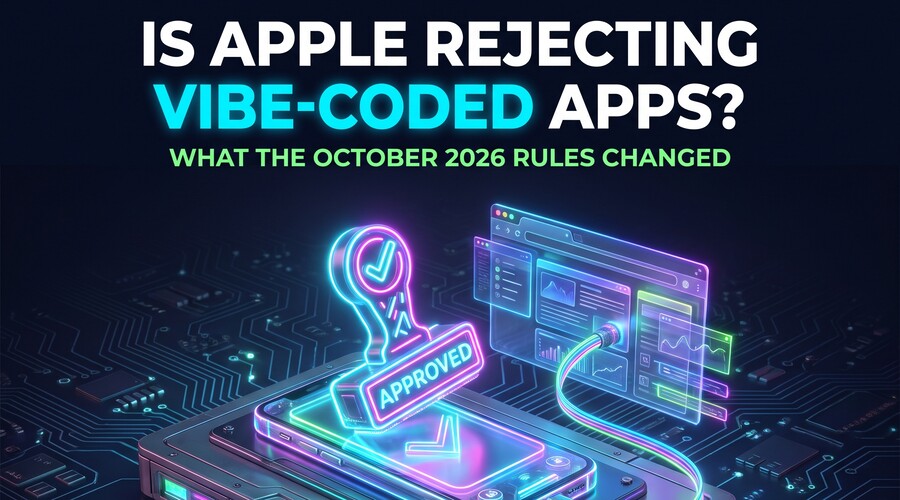
In October 2026 Apple gave its ban on hidden app features a guideline of its own, and said that hiding features in the app binary is grounds for terminating a developer account. If your business app is really your website inside an app wrapper, that change deserves ten minutes with whoever builds it.
Plenty of UK small-business apps work this way: a thin shell around a website, so one team can update the web and mobile versions together. AI builders such as Lovable and Base44 have made them much quicker to produce.
What Apple changed
The new rule, guideline 2.5.19, says: “Don’t include any hidden, dormant, or undocumented features in your app; your app’s functionality should be clear to end users and App Review.” A second sentence says that “attempting to hide undocumented features in your app binary” is “grounds for removal of your app from the App Store and termination of your developer account.”
The ban itself was old. Apple said the rule “clarifies long-standing policy” from an earlier guideline. What was new was a sentence tying account termination to hiding features directly. Before, the termination wording in that guideline was about misleading marketing. Termination is also hard to undo. In 2025, Apple’s Transparency Report shows, 499 of 10,127 appeals against account terminations succeeded. For a business whose customers book, pay or log in through its app, losing the account means losing the app.
Why it matters if your app shows your website
In a WIRED report on 2 November 2026 about apps that hid deepfake features, Apple said it had removed 19 of them. Its spokesperson, Adam Dema, explained how they got through: “these apps complied with our rules when we reviewed them … After approval, their developers changed the website the app pulls its content from”.
Those developers acted in bad faith, and most businesses don’t. But changing the website is exactly how a wrapped app gets updated: every change reaches your customers’ phones without Apple reviewing it. Fixes and new content are fine. Our concern is a paid tier or a customer forum added to the website that shows up in the iOS app as a feature Apple never saw. The binary hasn’t changed, so 2.5.19’s termination sentence doesn’t literally apply. Apple’s announcement, though, aimed the rule at apps that change after approval and said they “are subject to removal from the App Store and removal from the Apple Developer Program”. Its guidelines also expect new features to be described to reviewers, and a website deploy never is.
What it doesn’t mean
Wrapped apps aren’t banned, and nothing in Apple’s guidelines asks how an app was built or names a build tool. (When Apple held back updates to AI builder apps such as Replit in March 2026, it said it has no rules specifically against vibe coding apps.) Developers did report a wave of rejections from October, with whole batches of apps turned down in the same minute and sent the same nine questions about their audience, testing, shared code and templates. Those reports included apps written by hand, and written answers to the questions got some of them approved with no code changes.
Four questions for your developer
- When the website changes, who decides whether the app needs a new submission?
- Do the review notes Apple sees describe every feature, including anything switched on by a setting later?
- Is the app published from our own Apple Developer account? Apple’s guideline 4.2.6 rejects apps from app generation services unless the content owner submits them, and one of the nine questions asks why an app is under the developer’s account and not the client’s.
- If customers can post content or use AI tools in the app, can they report it and block other users? Apple’s guideline 1.2 has named “AI content creation apps” since October 2026.
Apple also required answers to new age-rating questions on every app update from 16 November 2026, and from all apps by 12 January 2027, so check that yours were filed.
Where to read more
Our full guide covers the 4.3 and 4.2.6 rejections, the nine questions, AI features and a pre-submission checklist: Is Apple Rejecting Vibe-Coded Apps? What the October 2026 App Store Rules Actually Changed. If you built your app with an AI tool and want a second opinion before the next submission, our vibe code to production service starts with a free check.
Foresight Mobile is a Manchester-based mobile app development and maintenance company. We take apps built with AI tools such as Lovable and Base44 to the App Store and Google Play, and we submit every client app from the client’s own developer account. If you’re not sure where your app stands, get in touch.