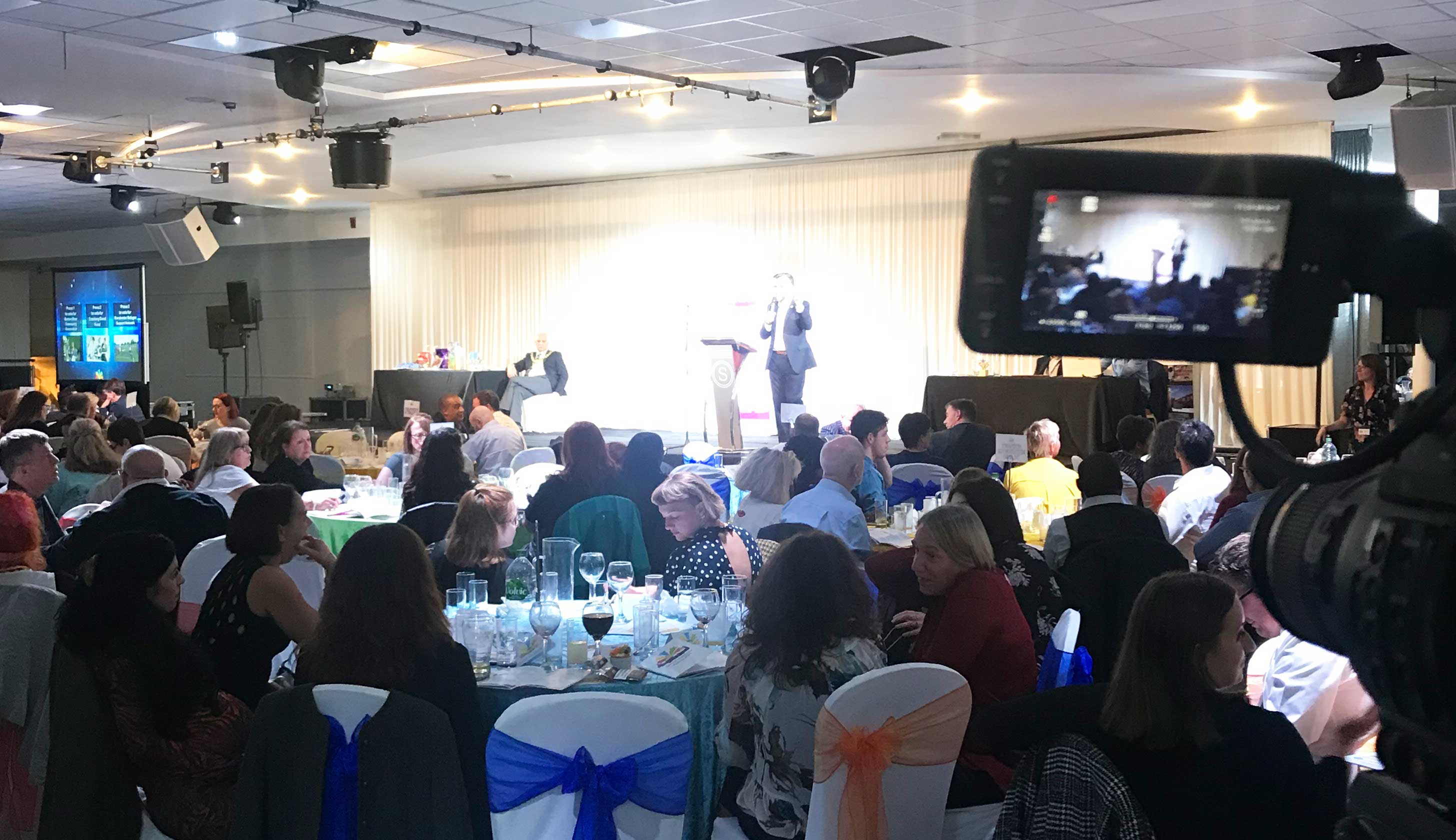
Since 2018, we've delivered more than 500 video projects from our base in Bolton, working with organisations across different industries, from local authorities and universities to manufacturers, charities, recruiters and growing businesses.
Our work has included corporate films, recruitment campaigns, customer testimonials, promotional videos, training content and wider marketing campaigns.
Every project has had its own audience, budget and objectives. But across those different experiences, some lessons have become clear: the business videos that work best are not always the most expensive or visually elaborate. They are the ones built around a clear purpose.
Here are eight lessons that have shaped how we approach business video production.
A specific message matters more than cinematic visuals
Professional cameras, dramatic lighting, drone footage and carefully composed shots can all improve a production. But they cannot make an unclear message meaningful.
A manufacturer explaining how it solves a particular production challenge gives viewers something specific to understand. An employee describing their experience gives potential recruits a more realistic picture of the workplace. A customer explaining how a problem was resolved provides evidence that prospective buyers can relate to.
Compare that with a corporate film filled with familiar statements about excellence, innovation and customer satisfaction.
Production quality helps establish credibility, but relevance gives people a reason to watch. When budgets are limited, sharpening the message can be more valuable than making an ordinary idea look extraordinary.
The opening needs to earn the viewer's attention
People make quick decisions about what deserves their attention, particularly on social media.
Long logo animations, slow establishing shots and extended musical introductions can delay the very thing viewers came to see.
A stronger opening gets to the subject quickly. It might begin with a customer describing a challenge, an employee answering an interesting question or a statement that reflects something the audience is experiencing.
For example, a recruitment video could open by asking an employee: "What surprised you most when you started working here?"
That creates a more human introduction than beginning with the company's history. Branding and context still have their place, but they should support the story rather than hold it back.
Real people often make more convincing contributors
Businesses sometimes prepare employees with detailed scripts and expect them to deliver polished statements directly to camera.
The result can be technically correct but lack personality.
An engineer explaining a process they understand, a member of staff describing their experience or a customer discussing a genuine challenge can communicate something a generic script struggles to reproduce: personal experience.
Preparation is still important. Contributors should understand the video's purpose and feel comfortable with the subject. But they should not feel as though they need to become professional presenters.
A good interview process gives people room to speak naturally. Editing can then shape the conversation while preserving the personality and meaning that make it credible.
Subtitles should be planned from the beginning
A video may have excellent visuals and clear dialogue, but that does not mean everyone will watch it with the sound on.
People encounter business content in offices, on public transport, during breaks and while scrolling through social media. Subtitles help viewers follow the message in these situations and make content more accessible to people who have hearing difficulties or prefer reading alongside listening.
They also need to be accurate, readable and properly timed. Technical terminology, names and industry-specific language should be checked rather than accepted automatically from transcription software.
Captions are not simply a finishing touch. They are part of making a video usable across different viewing environments.
The second video can be more valuable than the first
Publishing one corporate film can create a useful moment of attention. But if the business does not produce anything else for another six months, that momentum can disappear.
A more consistent approach gives audiences several opportunities to understand the organisation.
They might first see a short service introduction, later encounter an employee interview and eventually watch a customer testimonial. Each piece adds another layer of understanding.
This changes how businesses should approach production. Instead of asking what one video can achieve, consider what a filming session could provide over several weeks or months.
A production day might create a main film, shorter social edits, interview clips and additional photography. The exact deliverables depend on the project, but planning for reuse before filming makes the production more purposeful.
Too many approvals can weaken the original idea
Corporate video projects often involve marketing teams, senior management, legal departments and different business units. Their feedback can be important, particularly when accuracy and brand consistency are involved.
Problems arise when every stakeholder has equal authority to reshape the creative direction.
A clear story can gradually become a collection of approved statements. Interesting language disappears, additional messages are introduced and the original objective becomes harder to recognise.
The solution is to establish the approval process before production begins. Agree on the main objective, appoint someone to coordinate feedback and identify who has final approval.
Reviewing content should make it better, not simply make it acceptable to the largest possible number of people.
Distribution is part of the production strategy
Publishing a video does not mean the work is finished.
A business might invest in a carefully planned production, upload the final film to its website and share it once on LinkedIn. If very few relevant people encounter it, the opportunity remains limited.
Before filming, consider where the video will appear and how the intended audience will discover it.
A corporate film might support a website, sales presentations and conversations with prospective clients. Shorter edits could be used on LinkedIn, while recruitment footage might appear on careers pages and relevant recruitment channels.
Paid promotion may also help when organic distribution is unlikely to reach the intended audience.
The important point is to consider distribution as part of the original plan and budget, rather than expecting the video to find its audience by itself.
A camera cannot fix a weak strategy

Perhaps the most important lesson is that production expertise cannot compensate for a project without a clear purpose.
Before filming begins, a business should understand who the video is for, what that audience needs to know, what the main message is and what should happen after someone watches.
If those questions cannot be answered, the brief needs more work.
A good production partner should be prepared to challenge unclear instructions, question whether too many messages are being squeezed into one film and suggest a different format when it would communicate the idea more effectively.
The camera captures the story. It cannot invent the reason the story matters.
What experience has changed about our approach
Working on more than 500 projects has reinforced the importance of understanding the objective before discussing equipment or filming schedules.
At Title Productions, we encourage clients to think beyond a single finished film. We consider how footage might be reused, which formats are appropriate for different platforms and what practical details will make the final content more effective.
That includes subtitles, shorter edits and vertical versions where they suit the audience and purpose.
Based in Bolton, we work with organisations across Greater Manchester and beyond, delivering video production and wider media services for different industries and communication needs.
The tools and platforms will continue to change, but the fundamentals remain consistent: understand the audience, communicate something specific, use credible contributors and plan what happens after publication.
The best business videos are not necessarily the most complicated or expensive. They are the ones that give the right people a reason to care.
If you're planning a corporate film, recruitment video, customer testimonial or wider content campaign, explore our video production and media services or talk to our team about your project.
After more than 500 projects, we'd still rather start with a good question than an expensive camera.